


Reading is the key to success in almost every subject across the school curriculum and research has shown that it is the biggest driver of vocabulary acquisition. The more kids read, the more words they learn from context and the more texts they can access.
Understanding how different text types work also helps them improve their critical thinking skills and engage with the ideas presented, in addition to becoming better writers. So, if reading does so many wonderful things, how do you get children to pick up a book and start reading?
There are two kinds of motivation
Intrinsic motivation
First, it’s essential to understand how motivation works to ensure your efforts are effective. The most powerful kind of motivation comes from within and is referred to as intrinsic motivation. It is possible to foster intrinsic motivation by guiding kids to the right kind of books.
Usually, these are on topics they like and at a difficulty-level that suits their ability. However, it’s important to allow kids to make the final decisions about what they read. You can also try introducing a positive role model to inspire them or celebrating their efforts by charting their success.
For example, count up the number of pages they read a day over the course of a week and challenge them to beat their record.
Extrinsic motivation
The motivation in play when parents provide external rewards, such as the promise of toys, fun activities or candy in exchange for reading is called extrinsic motivation. Not only is it less effective than intrinsic motivation but when applied to tasks that children already enjoy doing, research shows it can actually reduce a child’s enjoyment factor as they begin to do the task simply to earn the reward.
Learn more about the importance of motivation for children.

When kids don’t want to read
Insisting on negative consequences for failure to do a task is a form of extrinsic motivation that translates to forcing a child to read a book, … or else! While it may seem like the only option for a child who refuses to read, it can have disastrous consequences in the long run.
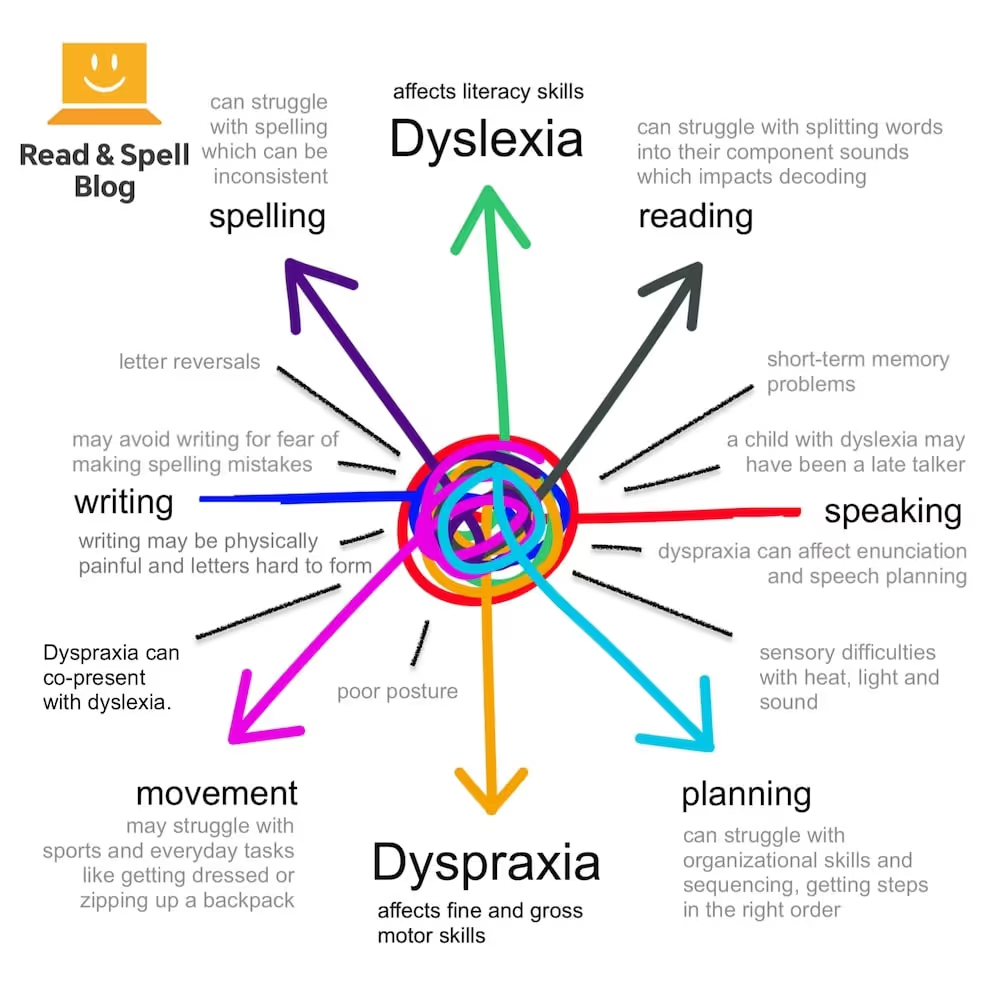
That’s because kids don’t avoid reading for no good reason. Sometimes there is an undiagnosed learning difficulty, such as dyslexia or ADHD, or an emotional issue that is discouraging the child and inhibiting literacy skills development. If reading produces anxiety and fear, then kids will avoid it at all costs.
Over time, the situation can worsen and lead to a lack of confidence in the classroom and a child who acts out because of low self-esteem.
Pre-literacy skills
Before children learn how to read at school, they spend the first 3-4 years of their life at home developing the pre-literacy skills they will need to get them started. These can include becoming familiar with print, learning the letters of the alphabet, acquiring a wide range of known vocabulary (because it’s a lot easier to learn to read a word you already know!) and understanding how narrative works.
It’s also important for kids to be familiar with books and to have had positive experiences with them. Learn more about how parents can help their children develop these skills.
Early readers
Early reading means being able to map sounds to letters in order to sound out or decode words. As kids become more familiar with frequently encountered vocabulary, they learn to recognize whole words by sight and this makes them faster readers because they can skip the decoding process altogether.
Some children may even deliberately study sight words at school. Also known as Dolch words, these terms are the 200 most frequent service words that appear in texts for children. For more on how reading works, visit this article on teaching children to read.

Tips for parents and educators
Motivating kids to read is about helping them discover their own interests and enthusiasm for books. Show them that pages are full of wonderful stories and help them see the fun in reading so they become readers for life.
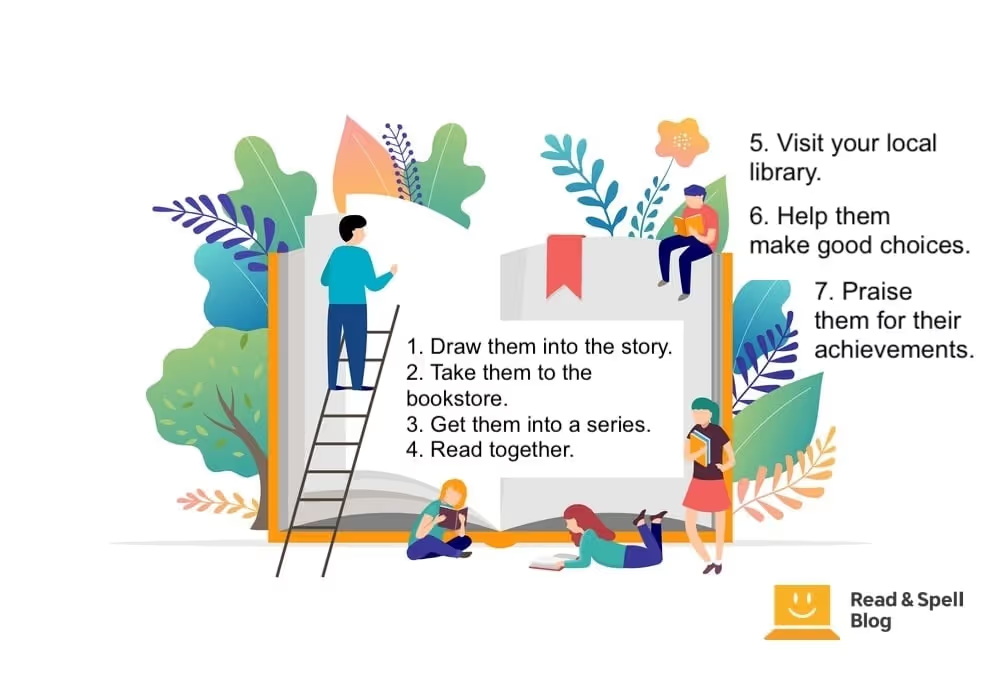
Here are some additional things you can try:
- Draw them into the story. In the same way that a preview for a film encourages us to go out and see the movie, telling kids what they can expect from a story might just pique their interest and get them to read a few chapters to learn how it ends. You don’t need to pick a page-turner thriller for this; any narrative with attractive characters and a few unexpected twists will do.
- Take them to the bookstore. Not only does browsing for books get kids to read the back covers (which is great for building summary skills), it is a fun pastime that can be shared between parents and their children. Every Saturday morning the whole family can go home with a new book or head to a park or café to have an hour of free reading time, adults included. Modelling your own interest in books will inspire your children to want to read in order to be like you!
- Get them into a series. Particularly when it comes to books for young-adults, it’s easy to find a series in which the same characters become involved in different events or a similar theme is present. Once the child has a positive experience with one book, they are more likely to continue on with others in the same set.
- Read together. This can be done from the day a child is born. Reading to and with your child means they associate reading with spending positive time with the most important people in their lives – their parents. Kids love getting attention so spoil them with personal reading time. Take turns reading, talk about the story in between pages, discuss how it relates to your daily life and make guesses and predictions about what might happen.
- Visit your local library. Most libraries have a children’s room and a vested interest in fostering a love of books for readers of all ages. They also typically have a program of events that includes story-time in which children come together to be read to, reading programs that provide rewards and recognition for kids, particularly during summer breaks, and other opportunities such as meeting local authors.
- Help them make good choices. While ultimately it is up to kids to choose what they want to read, you can guide them in the right direction and caution them when you think something might be beyond their level. It will either mean they rise to the challenge and try to read it anyway or choose a backup book you have selected that might be more appropriate. TIP: Reading becomes frustrating and cognitively overloading when a child is not familiar with the majority of the vocabulary they will encounter. Try reading a paragraph out loud and raising a finger every time you reach a word they are not likely to know. If all five of your fingers are raised by the end of the paragraph, the text is probably too hard for the moment.
- Praise them for their achievements. Recognition and positive feedback can be much stronger drivers than physical rewards because they make kids feel more confident in their own abilities. Create a reading chart and keep a record of what and how much they are reading. You might even turn it into a game that involves checking off boxes for different genres and types of books to encourage them to become adventurous in their choices.

Touch-type Read and Spell
If your child is struggling with a learning difficulty or if you simply want to encourage them to develop their literacy skills, you can always give Touch-type Read and Spell a try. Designed to help kids with learning difficulties, it teaches touch-typing by presenting high frequency vocabulary that is both displayed on the screen and read aloud.
As students type the words, they reinforce sight recognition, phonics and spelling skills. They also acquire touch-typing skills that will help them develop as writers.
Do you have any tips on motivating children to read? Join the discussion!