



Typing and literacy support for students with Down syndrome
A program to help children and young-adults with Down syndrome learn touch-typing skills, while strengthening reading and spelling abilities
Featured in



We love TTRS!
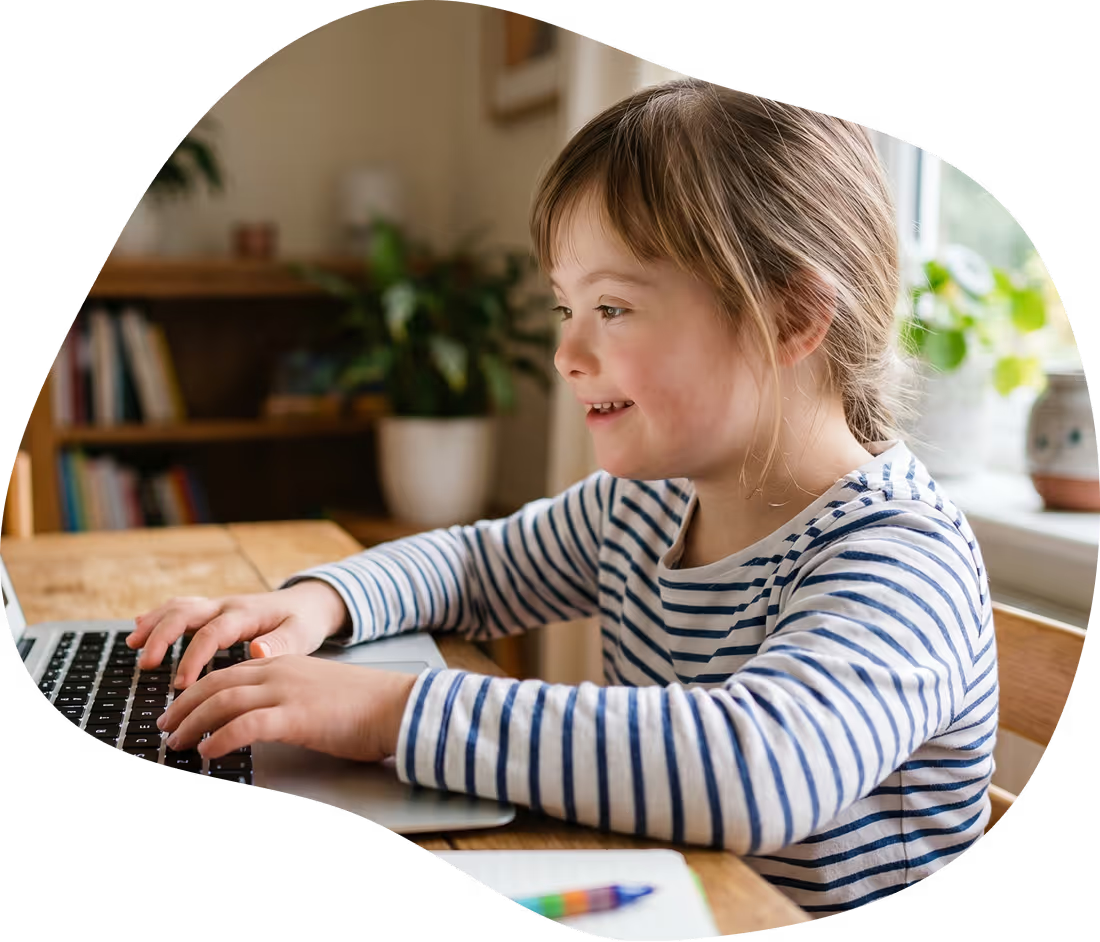
My daughter is 16, has Downs syndrome and is learning to type. Her low-muscle tone makes manual writing pretty difficult, and her verbal language can be hard to understand, but this course is opening doors for her! With typing she can get her thoughts and words down, so even people who don't know her can understand her. We love Touch-type Read and Spell!
What are the advantages of typing for children with Down syndrome?
They can...
- Build confidence and independence in communicationTyping provides another way for individuals to express themselves, especially if speech is difficult. It can boost confidence when they can write messages, schoolwork, or emails on their own.
- Strengthen language ability in a fun wayA phonics-based curriculum enhances decoding and spelling skills, offering a structured and multi-sensory approach to literacy development.
- Develop fine motor skills and dexterityTyping is a great way to work on muscle coordination and strength in the fingers and hands.
- Have fun and unlock surprises and awardsLearning to type and spell words is fun! Plus effort is rewarded with applause, games, surprise typing screens, trophies and printable certificates.
Find the solution that’s right for you
Explore our tailored subscriptions and find the perfect fit


TTRS is designed for learners of every age and ability level
Build more confidence and enhance your typing skills with each completed module
- Learn keyboarding in a predictable and controlled wayTTRS is designed to support learners with Down syndrome, helping them to establish a familiar learning routine and become more more confident on the computer.
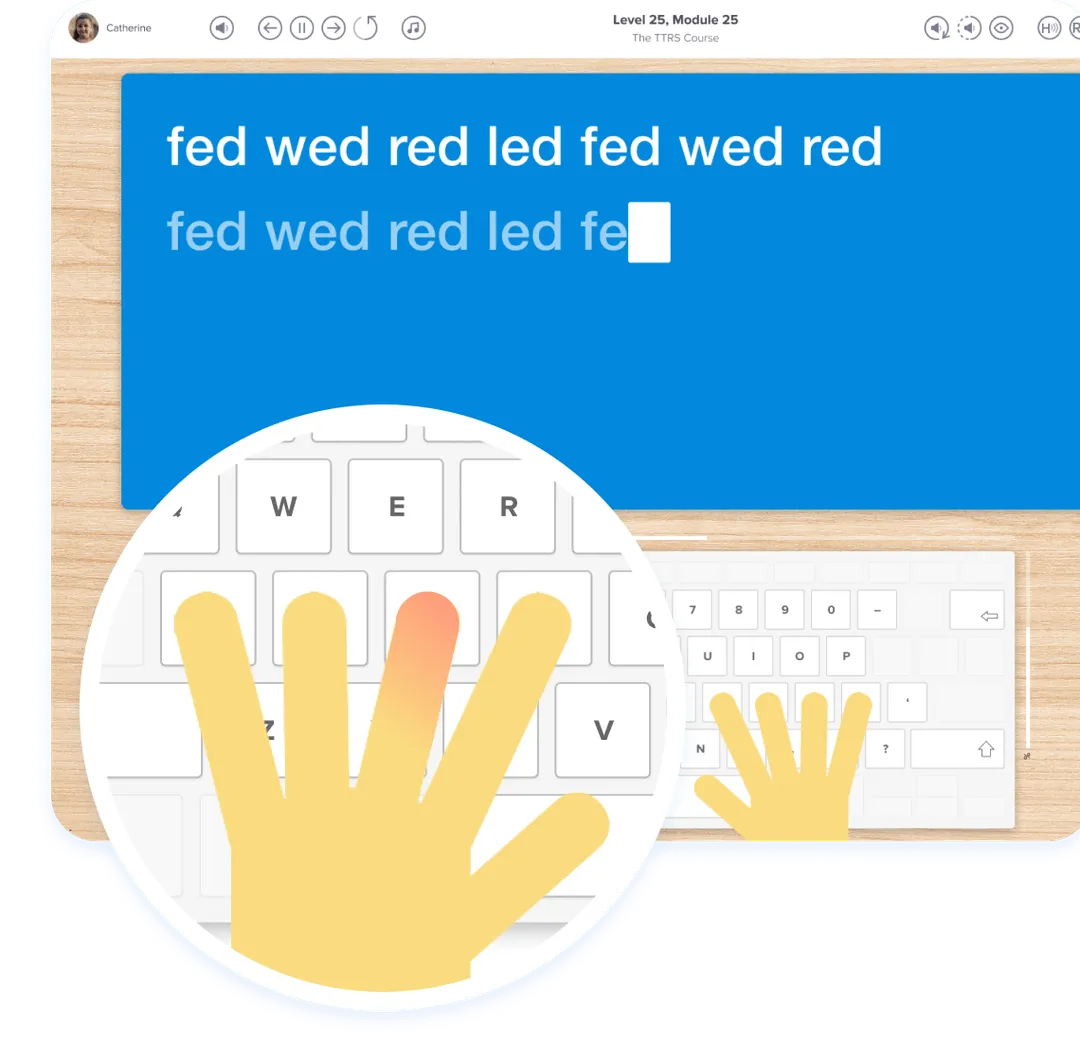
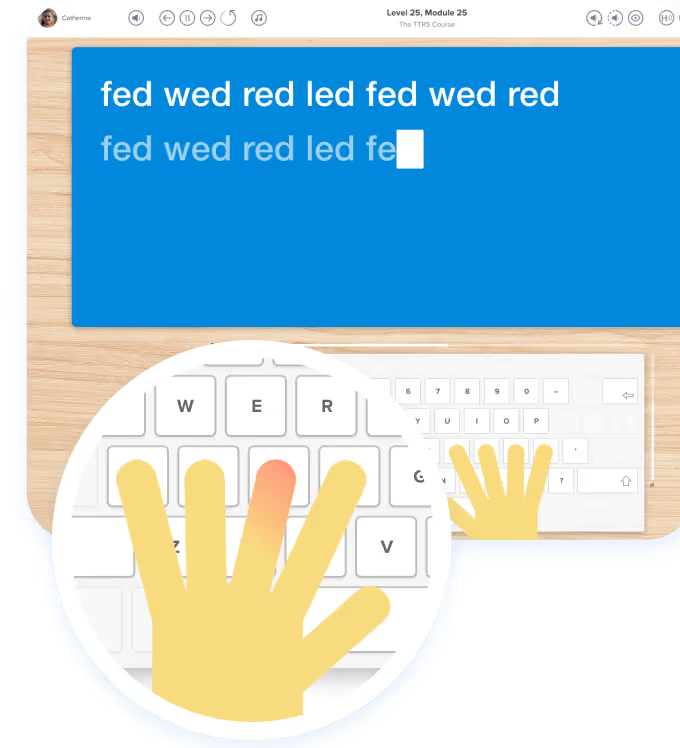
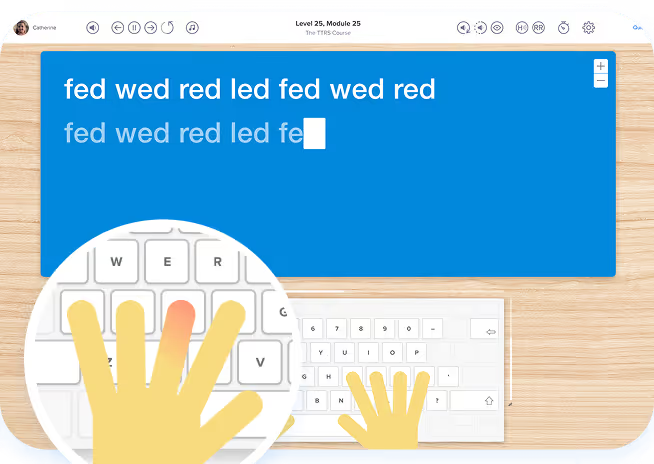
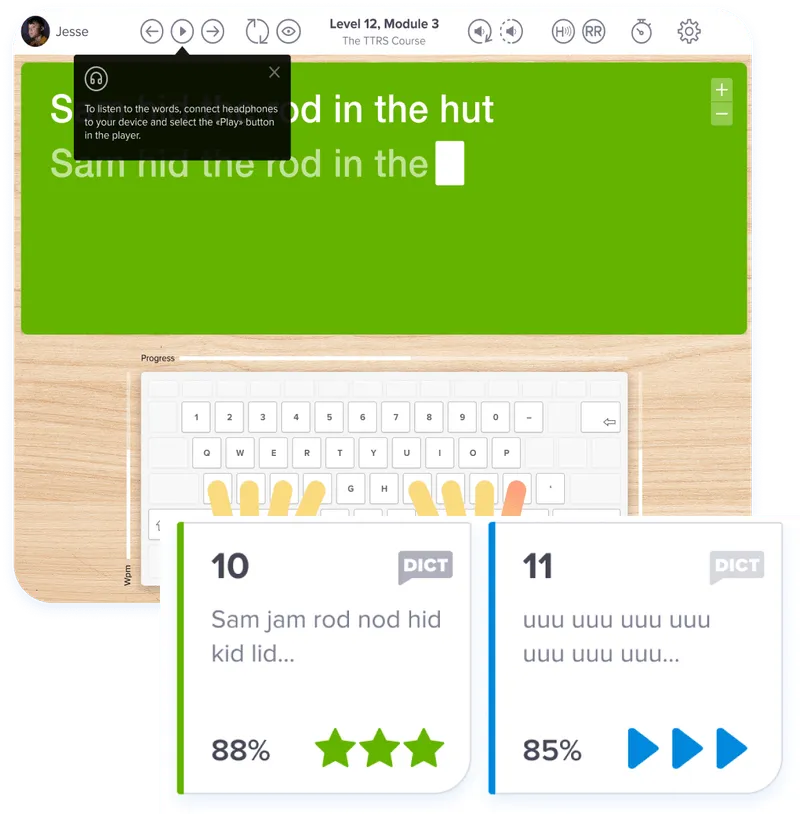
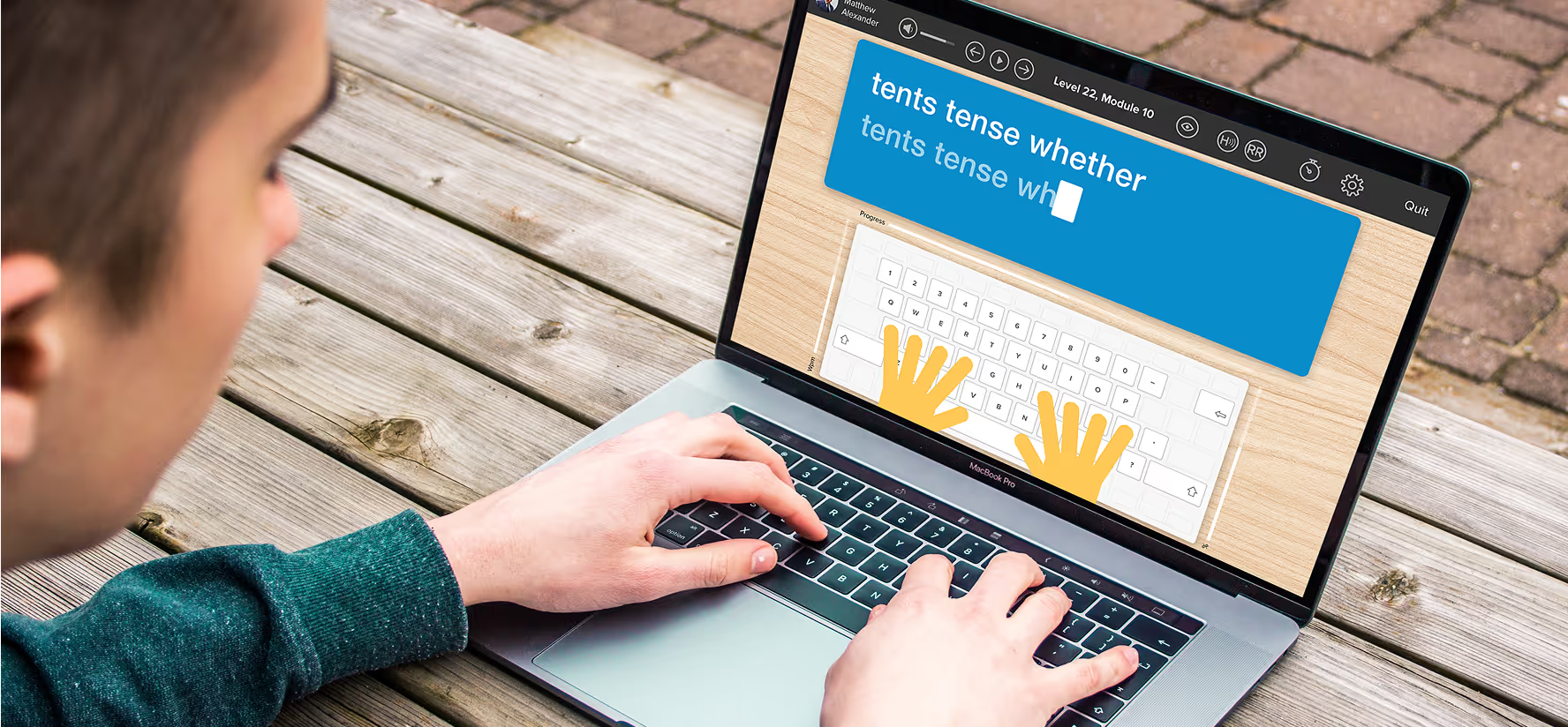
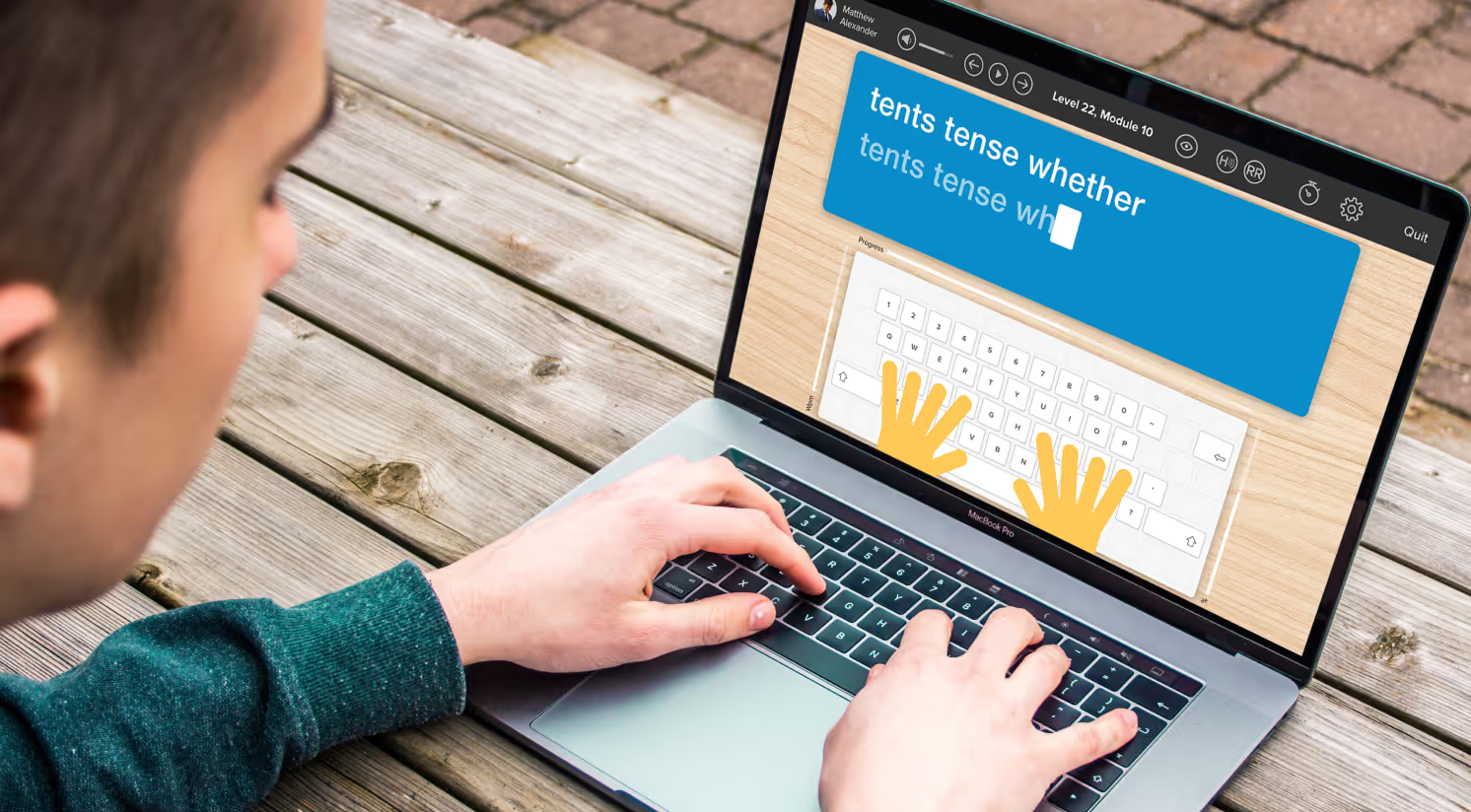
- Boost spelling and improve reading fluencyLearn groups of words that share the same sounds and spelling patterns. Hear them played aloud, see them on the screen and follow the hand guides to type the correct keys.
- Build independence through self-directed learningEncourage learners to progress at their own pace, repeating modules as necessary and only moving on when they're ready
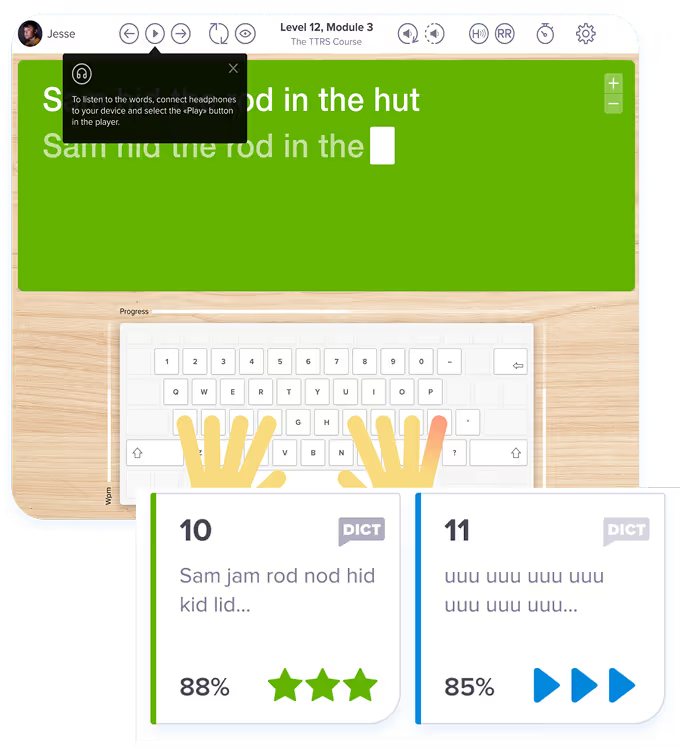
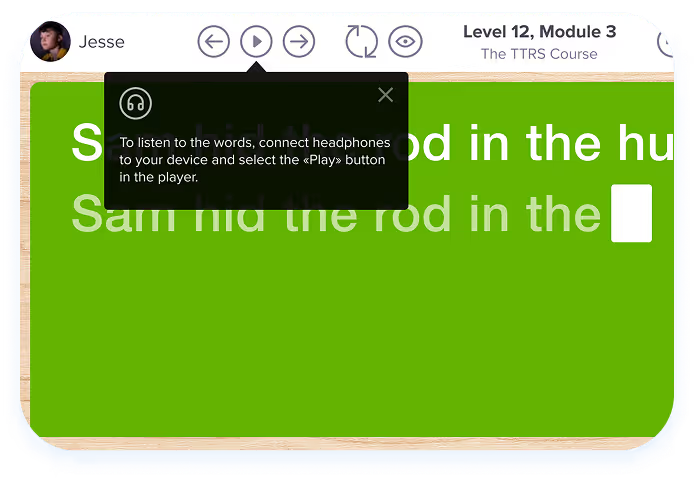
The TTRS platform offers typing, spelling, reading and writing support in one course
- Learn 4,500+ wordsMaster over 4,500 English words, building typing, reading, and spelling skills together.
- Improve spelling with muscle memoryDevelop muscle memory in the fingers to help with spelling.
- Whole word approach from the startType whole words from Day 1 – no confusing letter combinations
- Structured, supported learningEnjoy a step-by-step, supportive learning experience designed for success.


With Touch-type Read and Spell…
Typing, spelling, reading and writing support are bundled into one solution
Material is presented in bite-size chunks
Learning is multi-sensory
The initial focus is on accuracy vs. speed
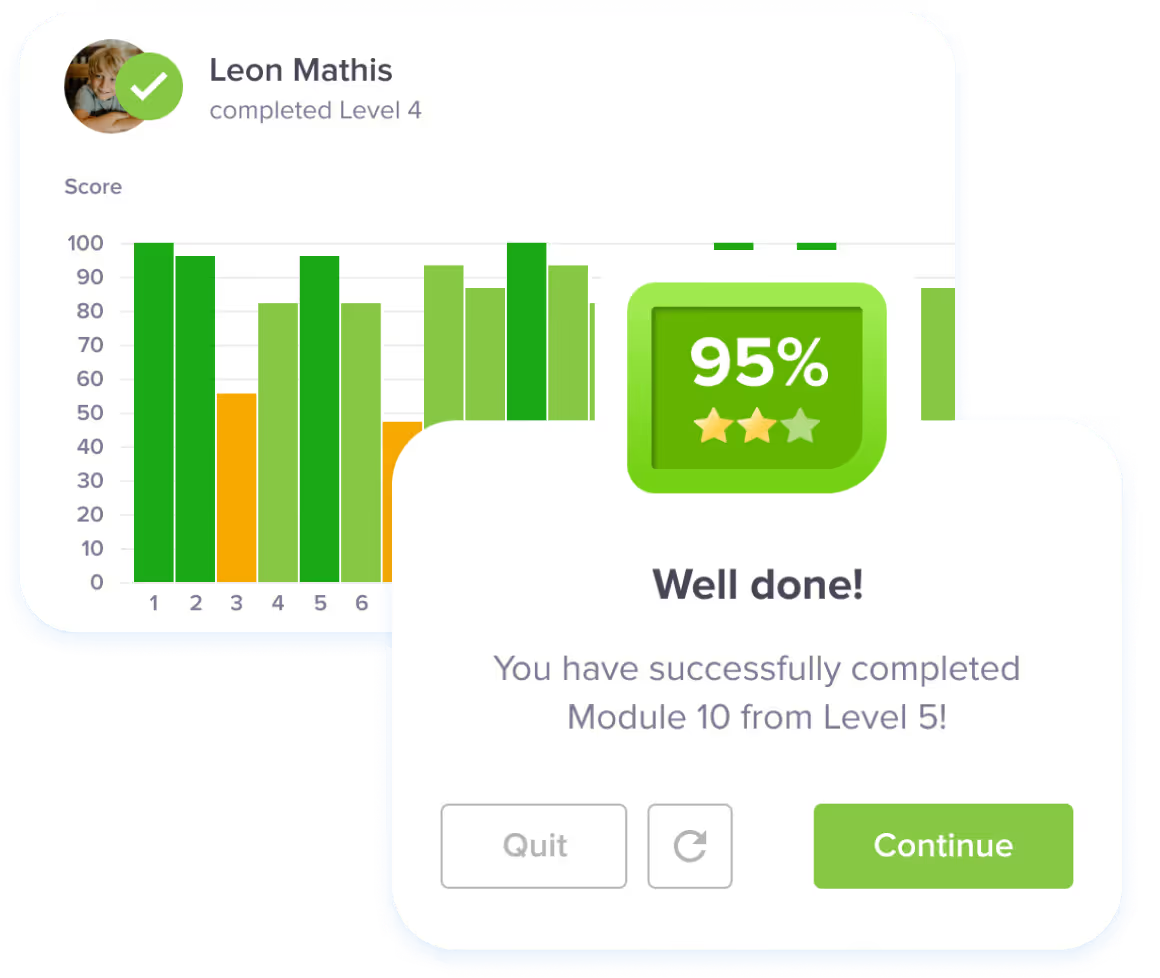
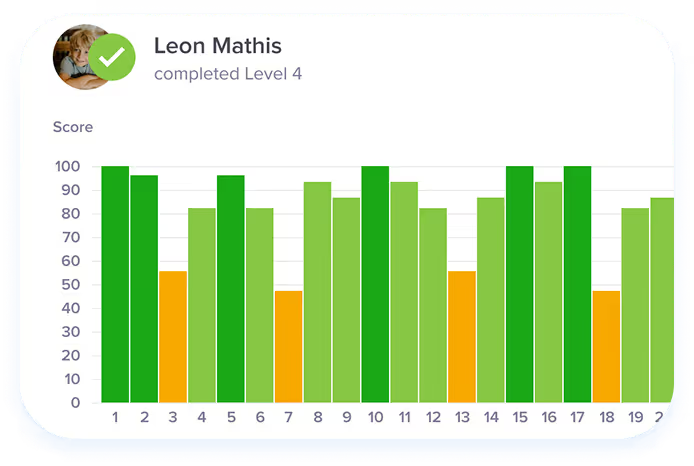
Progress is displayed in easy-to-read charts and reports
Confidence and self-esteem develop

Over 30 years of expertise
TTRS provides a high-quality, phonics and spelling-based, online typing course that teaches touch-typing at the same time as developing the power of literacy.
Based on extensive research
Our course teaches typing skills in a unique, multi-sensory way by following a structured literacy curriculum. Core content is based on the work of Orton and Gillingham.
Transform your struggles into success
TTRS empowers both kids and adults to build confidence and improve typing, reading, writing and spelling skills
Testimonials and reviews
Hear first-hand from our incredible community of users
Denise, Parent of a learner with Down syndrome
My son Josiah is 12 and he has Down syndrome. He can’t spell very well so we have the TTRS Settings set to Remember & Repeat. In this way he sees, hears and types a word and then the word goes away so he has to type it again. This helps strengthen his memory for the written forms. I'm pleased with TTRS because while Josiah doesn’t have a lot of words per minute, he is actually touch-typing. Eventually, he’ll get faster, but for right now he’s doing great and he feels very proud of himself – and that’s what counts!

Enid, Parent of a learner with Down syndrome
We had looked into typing before but had been at a bit of a loss as to where to go for a course that would be easy and clear enough for Fintan to do. With TTRS it was different. We met with Carol, a local TTRS tutor, who recommended starting the program at home. We signed up and my son just took to it like a duck to water. The interface was so clear and straightforward! Plus, the typing covered so much; it was helping his spelling and reading skills as well as his dexterity. Every time he gets close to finishing a level he’s delighted to see his scores and can’t wait to see his progress. There’s a big cheer that comes with the score on-screen and he gets so excited!

He became quite competent at keyboarding...
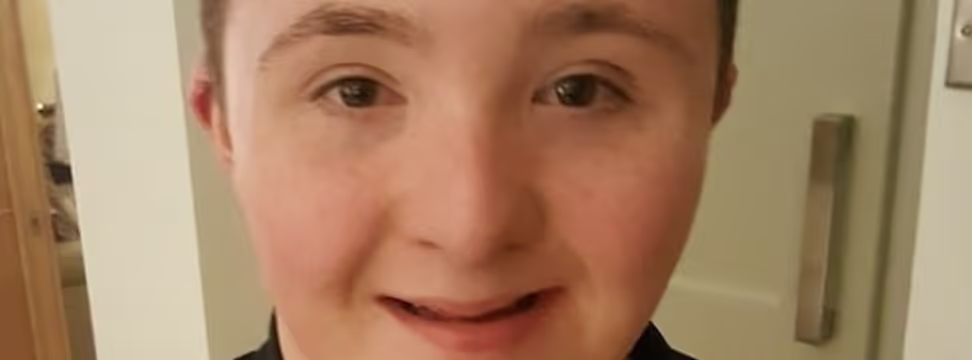
My grandson was 14 when we started using TTRS and he has Down syndrome. He has a difficult time with small motor skills such as using a pencil. Over the two years that he used TTRS, he became quite competent at keyboarding, which helped him tremendously with his spelling.
She completed a module and didn’t want to stop
My adult child with Down syndrome can’t spell so we are trying TTRS for muscle memory and to build skills with computers. On her first try she completed a module and didn’t want to stop. Thanks for helping her as she is learning to type, spell, and do computer work all at once.
He is able to teach himself typing and spelling
My student with Down syndrome likes that he is able to teach himself typing and spelling. He considers it a sort of game and his dad is very pleased with the program. As a tutor, I'm most impressed because I was unable to break through the concept of phonics and reading with him. Yet several months into the TTRS program, he is reading words...


Frequently asked questions

Used by






Find the solution that’s right for you
Explore our tailored subscriptions and find the perfect fit