



Typing and Literacy Support for Students with Special Educational Needs
A program to help children and young-adults with special educational needs (SEN) learn touch-typing skills, while strengthening spelling and writing abilities
Featured in



A program that truly works for my kids
TTRS has been a wonderful program for our dyslexic & dysgraphic child. It’s very effective and efficient - our child is making great strides without it even registering as yet another literacy program. We’re very pleased with how easy it is to use. The versatility of adding in our own subjects such as vocabulary or special spelling lists makes this a practical approach to support learning across all subject areas.
What are the advantages of touch-typing for students with Special Educational Needs?
They can...
- Produce clear, legible textTyping takes care of letter formation and formatting so students with special educational needs can focus on expressing their ideas.
- Use spelling and grammar toolsUsing a computer for writing provides immediate spelling and grammar feedback, helping learners make revisions and build independence without the embarrassment of red pen.
- Strengthen literacy with phonics-based learningUsing a typing program with a phonics-based curriculum enhances decoding and spelling skills, offering a structured approach that feels different from traditional literacy lessons.
- Access online learning programsKnowing how to type makes it easier to use other apps and online learning platforms that provide much needed support for children in special education./for children with special educational needs.
- Boost self-esteem and confidencePositive feedback from accessible typing activities can improve self-esteem and motivation, especially for those learners with a history of educational failure.

Learn how TTRS can support students with:
Dyslexia
TTRS is designed for individuals with diverse learning needs, including those who struggle with dyslexia
Dysgraphia
Children who find writing difficult often benefit from learning the keyboard with an accessible program like TTRS
Dyspraxia
Pressing a key may be easier than letter formation but these special learners need a program they can take at their own pace
ADD/ADHD
The interface reduces distractions to ensure learning material is accessible for children and young-adults with attention difficulties
Down Syndrome
The program builds confidence and self-esteem through a gentle and manageable approach
TTRS is designed for learners of every age and ability level
Build more confidence and enhance your typing skills with each completed module
- Learn keyboarding in a fun wayTTRS is specifically designed to support learners with special educational needs, promoting confidence and ease in typing.
- Boost spelling and improve reading fluencyEnhance spelling skills and reading fluency through a structured, supportive approach.
- Build independence through self-directed learningEncourage learners to progress at their own pace, building independence and confidence.
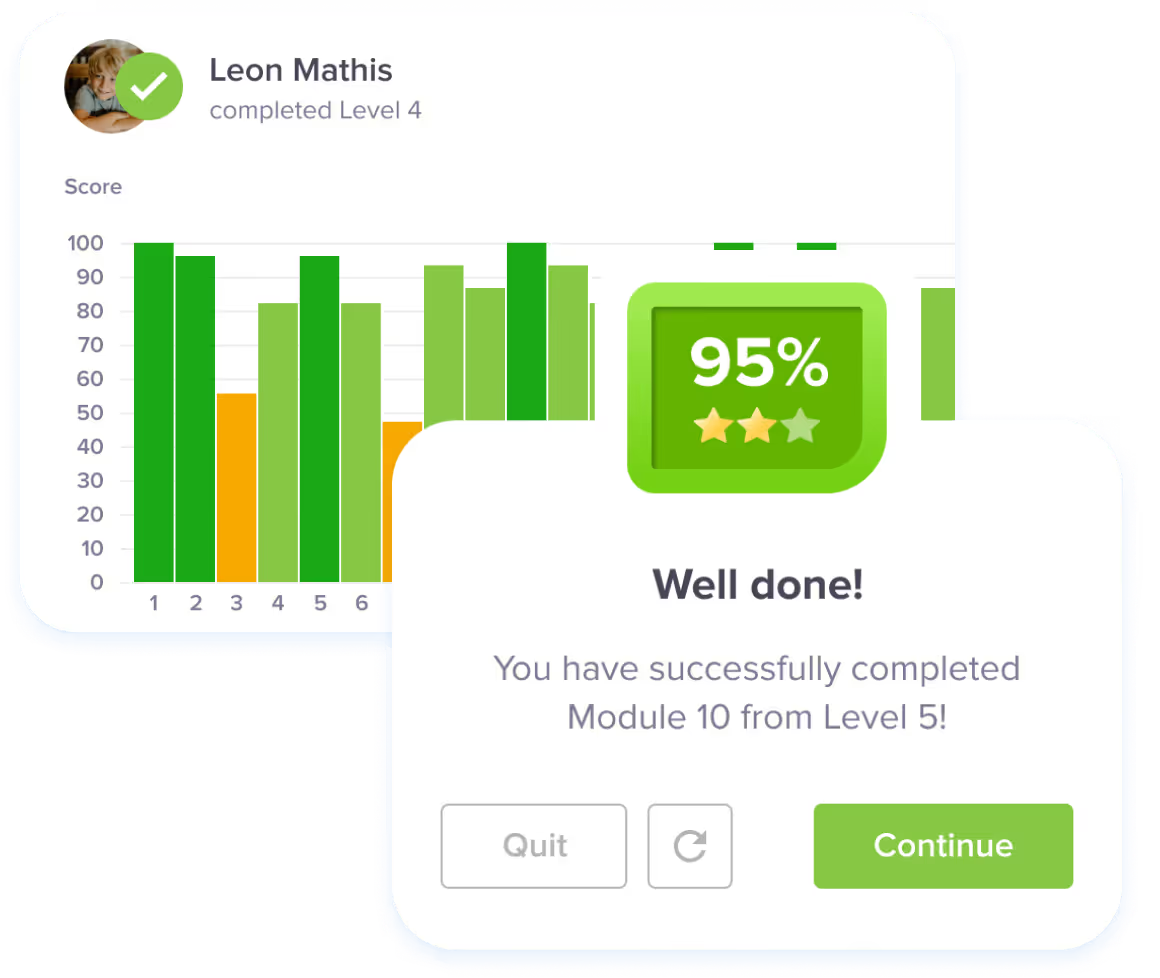
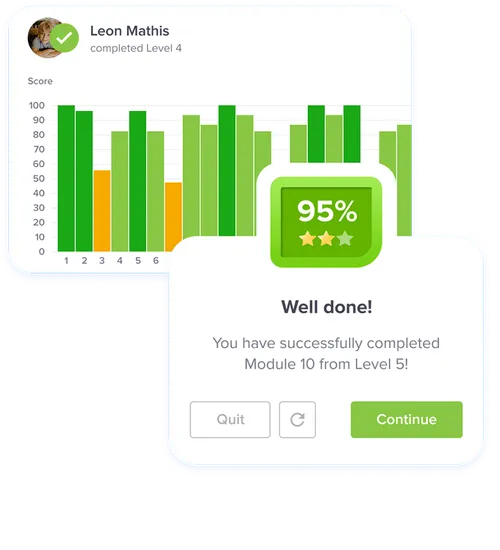
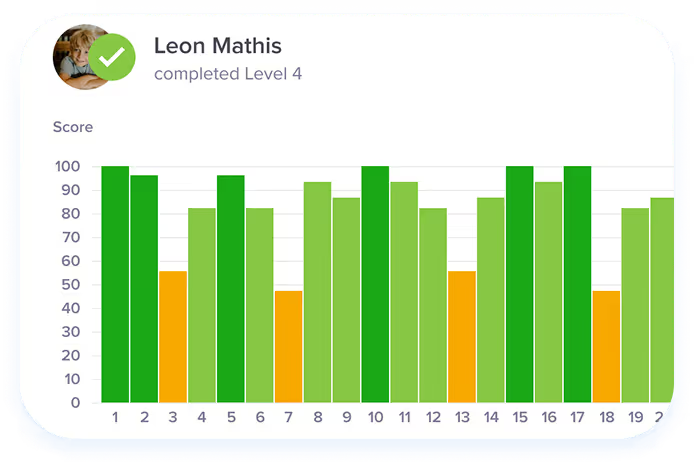
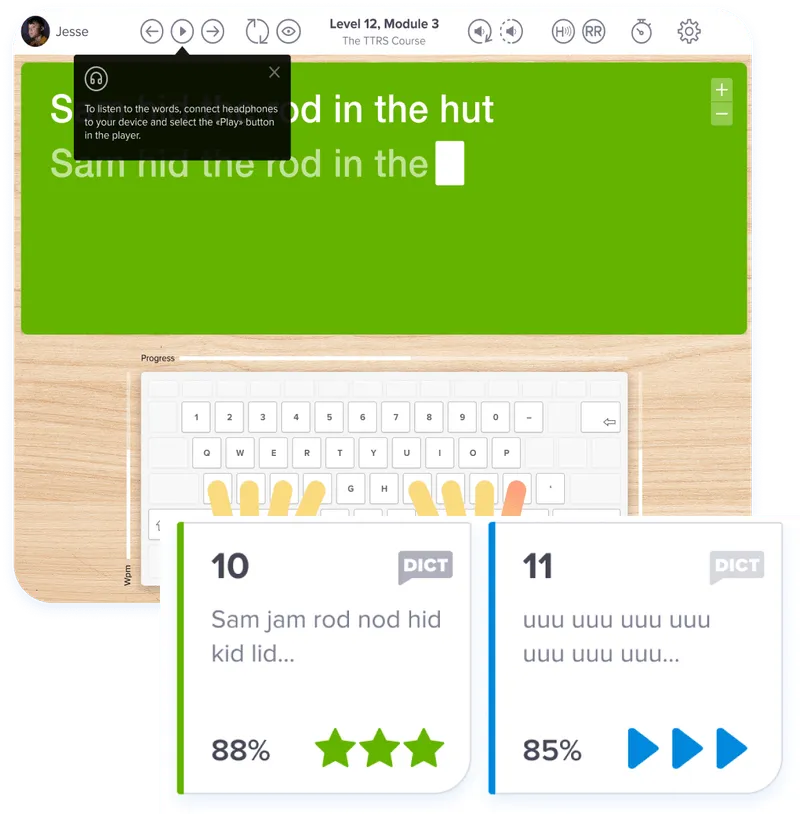
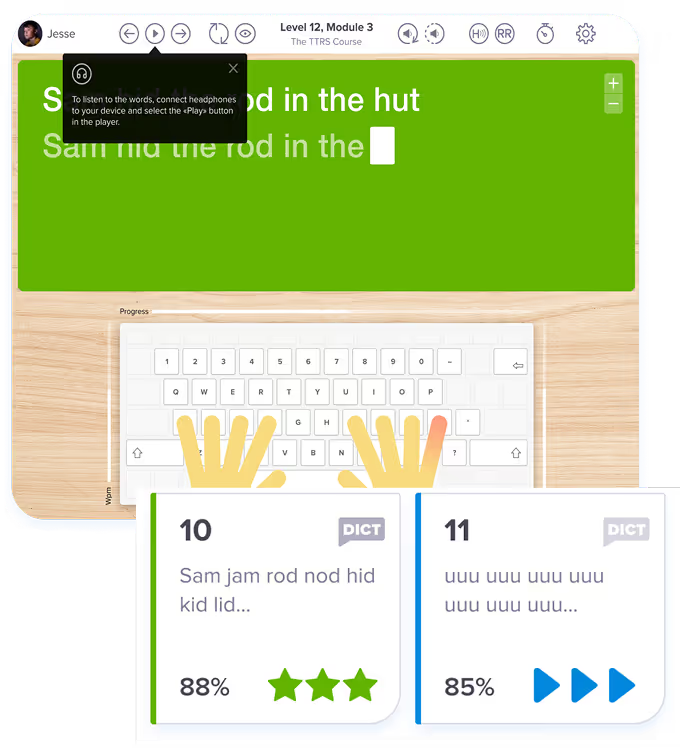
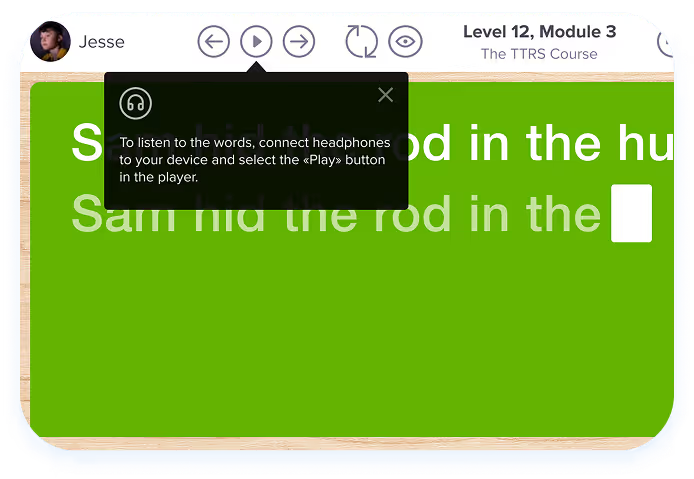
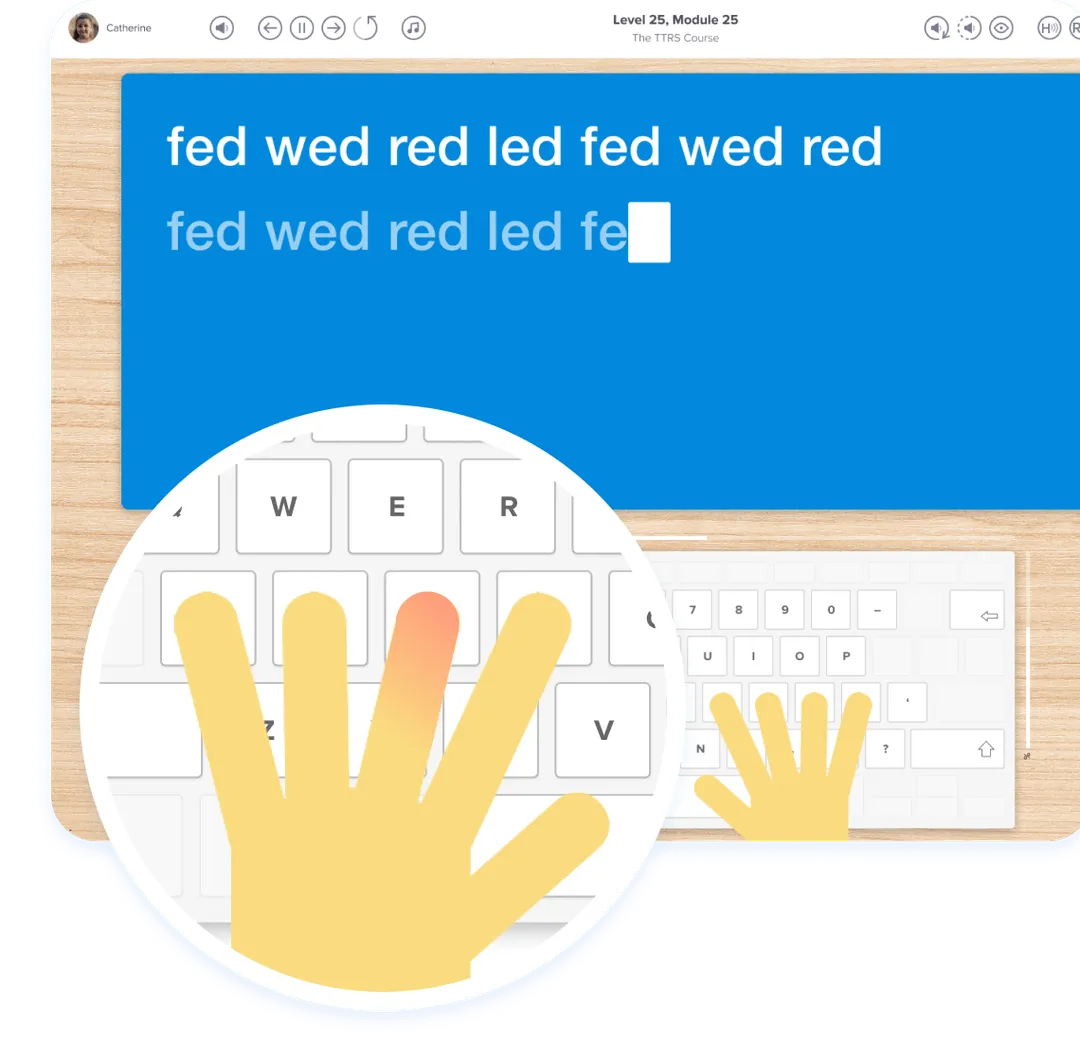
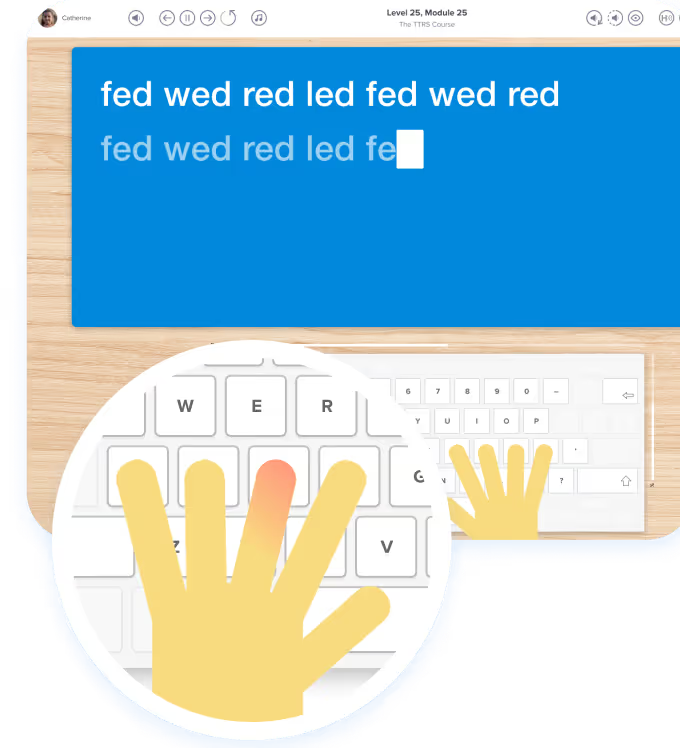
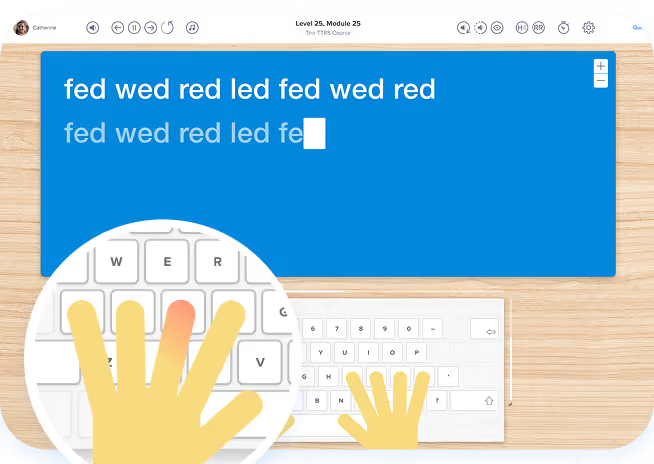
The TTRS platform offers typing, spelling, reading and writing support in one course
- Learn 4,500+ wordsMaster over 4,500 English words, building typing, reading, and spelling skills together.
- Improve spelling with muscle memoryDevelop muscle memory in the fingers to help with spelling.
- Whole word approach from the startType whole words from Day 1 – no confusing letter combinations
- Structured, supported learningEnjoy a step-by-step, supportive learning experience designed for success.


With Touch-type Read and Spell…
Typing, spelling, reading and writing support are bundled into one solution
Material is presented in bite-size chunks
Learning is multi-sensory
The initial focus is on accuracy vs. speed
Progress is displayed in easy-to-read charts and reports
Confidence and self-esteem booster

Over 30 years of expertise
TTRS provides a high-quality, phonics and spelling-based, online typing course that teaches touch-typing at the same time as developing the power of literacy.
Based on extensive research
Our course teaches typing skills in a unique, multi-sensory way by following a structured literacy curriculum. Core content is based on the work of Orton and Gillingham.
Find the solution that’s right for you
Explore our tailored subscriptions and find the perfect fit


Testimonials and reviews
Hear first-hand from our incredible community of users
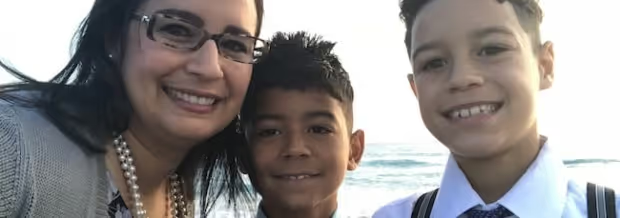
Yvette, Parent of a gifted child with dysgraphia
My son has dysgraphia which affects his ability to write things out by hand. He also struggles with sensory issues, which means he can easily get distracted. I wanted him to learn typing because I didn’t want to see his creativity and ideas being hindered in any way. In TTRS he’s having to type a word over and over again, and seeing and hearing it as he goes. This means he’s actually learning how to spell the word too, which is making it much easier for him to write in all other areas of his academics.


Frequently asked questions
Used by





Find the solution that’s right for you
Explore our tailored subscriptions and find the perfect fit