



Case studies

Gemma, Parent of a child with dyspraxia
My son started using the Touch-type Read and Spell course with a tutor about two years ago. When he finished this April, we had a little celebration for him out in the garden. He felt such a sense of achievement from having completed TTRS and I couldn’t be prouder of him! Shane now brings his laptop to school and uses it when there are writing assignments. In addition to his typing skills, we’ve seen an impact on his spelling as well.

Claire, Parent of a child with dyslexia and dyspraxia
We started using Touch-type Read and Spell when my son was in Year 6 at Primary School. He is dyslexic and dyspraxic and having to write by hand made it hard for him to get his thoughts down on paper. My son used to hate English at Primary School, but he actually enjoys it these days. It’s a combination of factors but definitely being able to type has freed him up so he can express himself more fluently in writing.
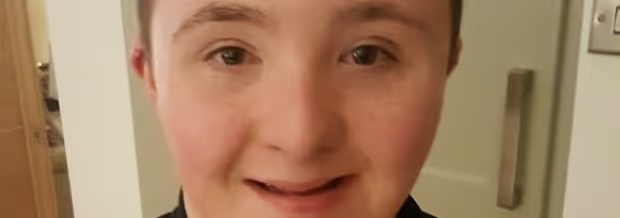
Enid, Parent of a learner with Down syndrome
We had looked into typing before but had been at a bit of a loss as to where to go for a course that would be easy and clear enough for Fintan to do. With TTRS it was different. We met with Carol, a local TTRS tutor, who recommended starting the program at home. We began in February and we’re up to Level 7 now. There’s a big cheer that comes with the score on-screen and he gets so excited!

Becky, Homeschooler of four children
We found out about Touch-type Read and Spell through our homeschool co-op. My oldest son was 8 or 9 at the time, but I have four children and as they grew up each one was able to go through the course. A lot of the learning for homeschool these days is online and so my kids needed to know how to type. What I liked most about TTRS is that it caters to different learning styles. We don’t have any specific learning difficulties in the family, but it really supported and bolstered them as they were learning how to read.

Denise, Parent of a learner with Down syndrome
My son Josiah is 12 and he has Down syndrome. He can’t spell very well so we have the TTRS Settings set to Remember & Repeat. In this way he sees, hears and types a word and then the word goes away so he has to type it again. This helps strengthen his memory for the written forms. I'm pleased with TTRS because while Josiah doesn’t have a lot of words per minute, he is actually touch-typing. Eventually, he’ll get faster, but for right now he’s doing great and he feels very proud of himself – and that’s what counts!
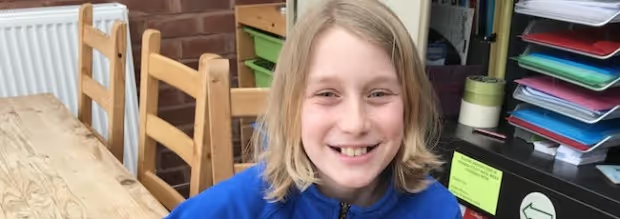
Carrie, Parent of a child with dyslexia and dyspraxia
I was looking for something to help a child who learns best with visual support, and this program was recommended to me. Having the hand and finger guide on the screen showing which keys to press, really worked for my son. TTRS was easy for him to navigate and he could go at his own pace. I also liked that he could do one module in ten to fifteen minutes. It made it easy to fit in regular practice sessions.

Lisa, Parent of a 7th grader with dyslexia, dysgraphia, and apraxia
A deciding factor for me was the multi-sensory teaching aspect of TTRS. These kinds of methods are exactly what students with dyslexia and dysgraphia need. TTRS checks so many boxes: word lists, academic vocabulary by subjects, sight words, word endings, homophones. We also love being able to customize the visual display of the program. My son does about three modules each day -- they are quick and painless. And the best part is he is learning!

Suzanne, Homeschooler of a child with ADD and dyslexia
My son was diagnosed with ADD, auditory processing disorder, dyslexia and dysgraphia in early elementary school. I signed up for a trial of TTRS and discovered he really liked the program and that it was helping him bring things together in terms of his reading, spelling and typing. The course also made a difference for his note-taking skills, mainly thanks to the dictation exercises where you listen to words and type them out at the same time.
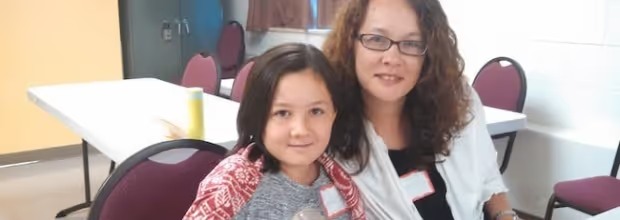
Amylee, Parent of a middle-school student struggling with spelling
My middle daughter was having some problems with literacy skills. When I told her that we weren’t going to do spelling anymore, just keyboarding, we were both relieved. She felt less stressed and I knew we wouldn’t be butting heads. The first thing I noticed was a shift from her saying “I have no idea how to spell it,” to being able to give me the first few letters. It wasn’t an overnight change, but gradually, her spelling improved.