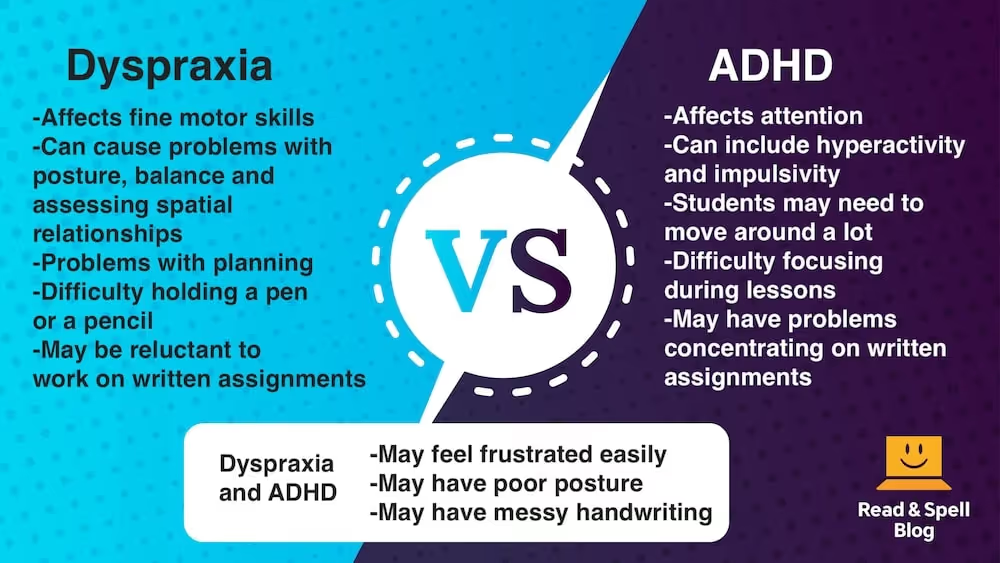




Attention deficit hyperactivity disorder (ADHD) is an umbrella term for attention disorders with and without hyperactivity. A child who struggles with ADHD can have a hard time paying attention at home and in school. He or she may become easily distracted, struggle to follow instructions, and/or find it challenging to stay on task.
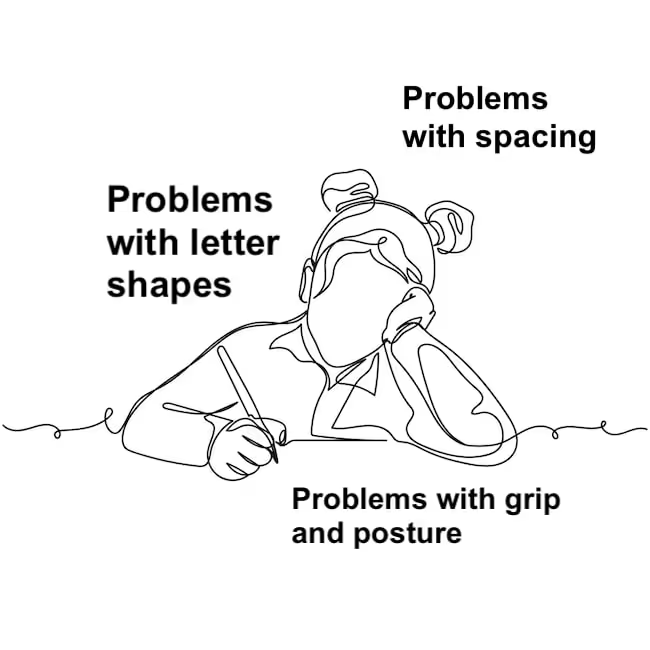
Reading comprehension can be a problem and writing difficulties such as poor spelling, messy handwriting and run-on sentences may be observed. Additionally, when hyperactivity is present, a child might be fidgety or impulsive which can lead to social and behavioral problems.
Because attention disorders can affect academic performance, when they go undiagnosed children with ADHD may believe they are less capable or not as intelligent as their peers. Having a negative self-image can lead to low self-esteem and a lack of confidence, which in turn may result in acting out and disciplinary action at school.
Over time, kids with ADHD are at risk for developing negative attitudes towards school and learning. This can shape a young-person’s path and affect their career options as adults. Having low self-esteem also increases the chances that a person will suffer from depression or anxiety. Untreated ADHD in adults may cause individuals to have difficulty maintaining relationships and holding down a job. It can make them less able to deal with the challenges life presents and in certain cases the pressures may be linked with substance abuse.
That’s why it’s so important to address attention disorders and low self-esteem early on, to ensure students have access to the academic and emotional support they need. This includes having the right classroom accommodations in place and receiving training in coping strategies. It also helps for learners to have regular one-on-one meetings with teachers to go over progress and put things in perspective. Lastly, both kids and adults require plenty of encouragement and access to confidence building activities.
ADD vs. ADHD
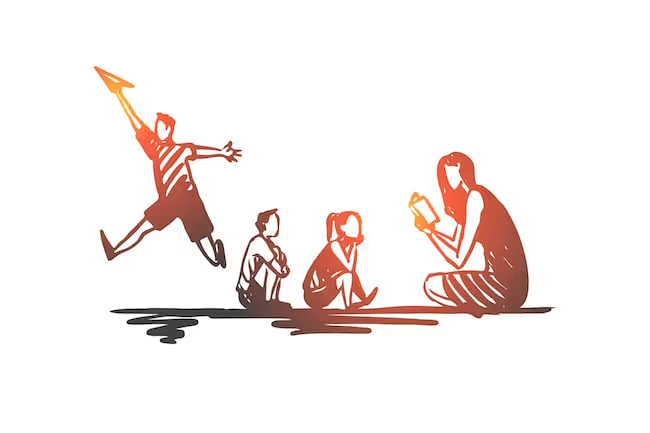
ADHD likely brings to mind the image of a young child "bouncing off the walls" and disrupting classroom learning. But while hyperactivity can be a part of ADHD, it isn’t always present. That’s because today ADHD is a term used to describe attention disorders with and without the hyperactivity. Children and adults can therefore present with 1) primarily attention difficulties, 2) primarily hyperactivity and impulsivity, or 3) a combination of the two.
Hyperactivity brings with it many challenges, but it does make it easier for people to see the condition. Attention disorders without hyperactivity, formerly referred to in the US as ADD (a term still in use in the UK) are less visible. A student with ADD may appear to be paying attention in class. He or she can be sociable with peers and avoid calling attention to him or herself. The learner may be silently struggling to focus on a lesson or assignment but still may not ask for help because of a sense of shame or guilt in not being able to perform. A problem may only become apparent when poor performance at school either points to a lack of effort or a learning difficulty.
Self-esteem and confidence
Self-esteem is a term used to describe the way in which an individual feels about him or herself. This can be influenced by words and/or nonverbal feedback received from others, indirect messages from the society in which one lives, and/or the events a person experiences, particularly in childhood. Individuals who have a healthy sense of self-esteem believe they are good people who are deserving of love and attention. A student with high self-esteem may be better able to handle failures and process constructive feedback at school compared to a child with low self-esteem.
On the other hand, consistently failing to meet a teacher’s expectations at school, comparing one’s own performance to that of peers and frequently getting in trouble in class can cause a child with ADHD to feel bad about themselves. This can lead to depression and social withdrawal. Another way of dealing with these emotions is behaving in a way so that attention is received for bad behavior instead of a perceived academic deficit.
When it comes to the influence of societal norms and values on the self-esteem of a child with ADHD, it’s important to consider the impact of terminology. In the past, ADHD and ADD were referred to as learning disabilities. This implies people who struggle with attention disorders are somehow impaired and/or less able than others. In reality, children and adults with ADHD processes information in a different way than people who are neurotypical. Thus, using the term learning difference may be more appropriate. It’s also common to hear learning difficulty, which implies the issue causes a challenge which can be overcome.
While low self-esteem and a lack of confidence commonly present together, it is possible to have one without the other. For example, some people may be confident in their academic abilities but have low self-esteem because of insecurities related to appearance or social relationships. Self-esteem is different from confidence, which is concerned with an assessment of one’s abilities and skills in a certain area. Learn more about the difference between self-esteem and confidence and how to help improve self-esteem in children with learning difficulties in these articles.
How to raise low self-esteem
- Discuss feelings and encourage emotional processing
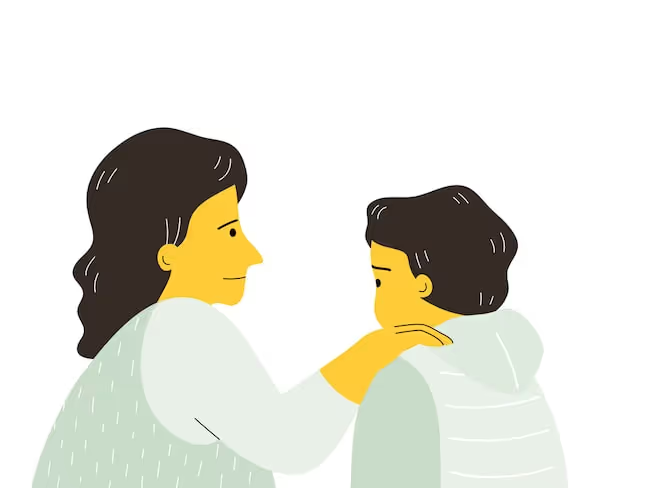
When young people with ADHD experience difficult situations, they may have trouble processing their emotions and thoughts. Especially when it comes to adjusting to new settings and/or requirements, it helps to have adults there who can guide a learner and help them process in a positive way. For example, teachers and parents can be there to clarify that a student may have behaved in an inappropriate way but that they themselves are not bad. You can then look together at what may have caused the bad behavior, such as not having enough sleep, being hungry, or having had to concentrate for too long a stretch without getting up to move around.
- Remind a student of their positive qualities
It helps to make lists of positive qualities and keep them somewhere visible so the child can revisit them on a daily basis. For example, many people with ADHD are described as having an unparalleled zest for life and a can-do attitude that motivates and inspires others. If the child can’t think of anything to add to the list you may try reviewing a pre-populated list and talking about how each item relates to the child in different ways.
- Give them time to find their strengths
Not every individual knows what he or she is good at and sometimes it takes some experimentation in different subject areas to discover hidden talents. Having something you’re good at is a great way to boost self-esteem. People with ADHD may be especially creative in storytelling, excel in sports, or channel risk-taking behavior into problem-solving skills and out-of-the-box thinking which is helpful in a science or math context. TOP TIP: Have a look at this article on 7 ADHD Strengths
- Create opportunities for success
Creating opportunities for success helps with motivation and self-esteem and creates positive attitudes that can influence performance across the school curriculum. If a student with ADHD is struggling to understand long reading passages, you might try breaking text down into smaller paragraphs and creating comprehension-based exercises that address one point at a time. In this way a student builds confidence while also strengthening focus and reading skills. If writing by hand is a challenge, you could introduce a fun typing program so students build keyboarding skills and feel successful, which in turn can help with confidence in writing.
Discover a platform that can boost self-esteem in students with ADHD
Touch-type Read and Spell is a touch-typing program designed specifically for children and adults who struggle with learning difficulties like ADHD and dyslexia. It presents a distraction free interface that is easy to navigate and opens up directly to the last module a student was working on. Individuals work at their own pace and receive positive feedback for success.

How to help a child with ADHD be successful
Show them how to stay organized
It’s easy for a child with ADHD to get lost in his or her schoolwork and feel overwhelmed and demotivated by the number of tasks there are to do. Using a planner, weekly schedule, and/or to-do list can help reduce the number of things there are to think about at once. It can help with homework completion and generally lower the amount of noise and anxiety created by competing tasks. This teaches a child with ADHD how to prioritize tasks and work on one thing at a time. Folder systems are helpful too, as they prevent homework and paperwork from getting lost in the transfer from school to home.
Create a distraction free workspace
Organizing physical workspace is also important. A child with ADHD can find it hard to focus when there are visual or sensory distractions in his or her environment. For example, a cluttered desk, noisy air conditioner or overly bright overhead lights can be distracting. At school, choose a seat for the child close to the front of the room and away from windows and doors. At home, introduce storage baskets so items can be put away and surfaces remain uncluttered. If a child’s room is always in a state of chaos, you might consider setting up a small desk or workspace in a different room – just make sure it is not a common area where competing conversations from family members introduce additional distractions.
Review progress periodically
It’s important to regularly review a child’s progress. Look at positive results and effort put in and talk about areas of school that have become easier, instead of just focusing on subjects that need more work. Carefully select the time-period you look at so you can underscore the impact of new interventions and help a child see the value in using learning strategies.
Ensure learning is step by step
Breaking learning down into chunks allows a student with ADHD to take breaks between them. This can help them concentrate for longer stretches. It’s also good for building self-efficacy and momentum. Completing one step allows you to look back and see what’s been accomplished, which can in turn can provide the motivation needed to complete the rest of the task.
Find role models that can inspire the learner
Young people are always learning from the adults around them. You can help to influence which qualities they pick up on by presenting them with inspirational role models to follow as examples. These may be celebrities, including adults who have written memoirs about their ADHD, or everyday people who have overcome adversity in life.
Incorporate lessons and assignments on a child’s favorite topics
One way to encourage a child with ADHD to put more effort into their studies is to select favorite topics as the subject of school assignments. In this way, you are encouraging learning and creating positive experiences, while still practicing and developing target skills.

Touch-type Read and Spell
Because of the difficulties many learners with ADHD face when it comes to handwriting, it’s sometimes recommended they learn touch-typing. Typing on a computer using the Touch-type Read and Spell platform can help with spelling because it automatizes letter order, encoding it as a series of muscle movements built into a whole word approach. Writing on a computer also removes many of the handwriting issues seen with ADHD.
It means that when impulsivity leads to disorganized text or run-on sentences, edits can easily be made and red-pen avoided, which may help protect self-esteem.
TTRS is a multi-sensory typing program made especially for individuals with learning difficulties and attention disorders. In TTRS, lessons are divided into modules that can be completed in 5-10 minutes and repetition is encouraged until a target level of accuracy is achieved. Learning is multi-sensory, students see a word on screen, hear it and type it. The kinesthetic element is especially helpful for learners with ADHD with hyperactivity.
Moreover, a program of phonics informs the words used to practice typing, so spelling and reading skills increase as the student moves through the course. In TTRS there’s plenty of encouragement through automatized feedback. It’s also easy to review progress and issue certificates, which helps with motivation.