
Back to article

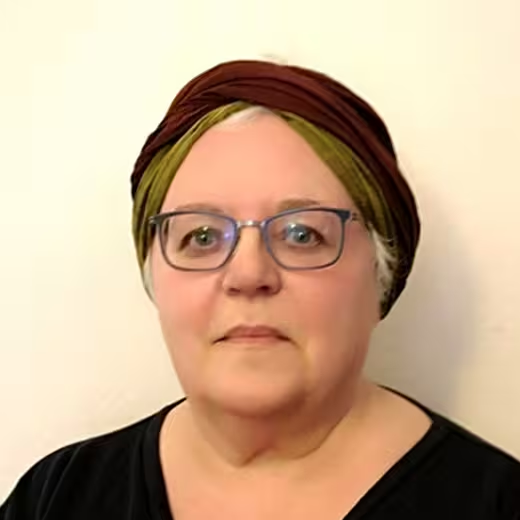
Chris Freeman

Chris Freeman holds a BA in Sociology (cum laude) and has undertaken postgraduate studies in education and educational technology. She brings over 20 years of experience in public health and the charity sector, where her work has been shaped by a strong focus on communication and community engagement.

Alongside her professional career, Chris has built a diverse creative portfolio. She has taught English and photography, worked as a scriptwriter and restaurateur, and written as a journalist for a Canadian newspaper. Her work reflects a long-standing interest in storytelling, culture, and everyday life.

Articles from this author:

Different types of dyslexia

So far, TTRS has made a big difference in her literacy and typing skills. But what my daughter and I like best about the program is it doesn't make her feel stupid. We've tried a lot of different tools, and many of them can be quite demoralizing. Not TTRS. In fact, it's the opposite. Learning to type has been a huge confidence booster for her.
This is some text inside of a div block.

Dyspraxia vs. ADHD

Both of my boys were diagnosed with dyslexia when they were around age seven. The elder boy also has ADHD. We started off with a program that had more animation. But we found it hard to institute a daily regime because with games it's just a bit too flexible. Especially with my eldest, he needed more structure. Then we tried Touch-type Read and Spell and it really worked!

This is some text inside of a div block.

Strategies for students with autism

TTRS provides the auditory input my son really needs. We use it to help with reading, as well as typing and spelling. With TTRS it was the first time since we had started trying different reading programs that I could see he was really comfortable. He would finish a lesson and feel like 'I can do this, I'm successful at this, and I'm making progress,' instead of just feeling overwhelmed or like he's failing.

This is some text inside of a div block.

7 Activities for stroke patients

When I used to do e-mails it was a nightmare, but now, what would take me half an hour I can do in five minutes. It's been two years since I started using the Touch-type Read and Spell course. In the beginning, one or two modules might have taken me half an hour and I’d try and do that every day. These days I’m much faster and I can do up to ten modules in one sitting. TTRS has given me confidence.

This is some text inside of a div block.

7 Dysgraphia symptoms in children

My youngest son who is 11 right now has dysgraphia. He’s a very smart child who can write when he’s dictating, but the physical act of writing really frustrates him. I read about how typing might help with the dysgraphia and my son started using Touch-type Read and Spell. Since then, he’s just done wonderfully and that’s why we keep signing up.

This is some text inside of a div block.

3 Reading aids for kids

I homeschool my children who are in fourth and fifth grade. We got Touch-type Read and Spell for typing, but with the phonics support it’s benefited their spelling skills as well. They both do one lesson a day. I’ve noticed they’re more confident and that there’s been an improvement in their ability to sound out words too.

This is some text inside of a div block.

Dyscalculia in adults

I had always really struggled with my dyslexia on an emotional level. At 15, my confidence had been at rock bottom and I had felt I was going nowhere. But once I got a diagnosis, it was such a relief! I started over again; I literally went back to the beginning. I like the way Touch-type Read and Spell is laid out. It’s very user-friendly. The material is systematic and there’s repetition, which is so important. One thing I’ll say is it is key to get into the habit of using it regularly.

This is some text inside of a div block.

How to touch type

Over the years I’ve sort of self-taught myself typing, but I really like learning with Touch-type Read and Spell and it’s made a difference for me at work already! That’s because it makes me think about what I’m typing. When I write emails I normally look up and there are about ten red lines with errors. Now it’s about half that, and that’s only from using TTRS for 3-4 weeks.

This is some text inside of a div block.

Teaching phonemic awareness

I have a ten year-old son who has dyslexia and a daughter who is in eighth grade - she also uses Touch-type Read and Spell. My son came up to me the other day and said ‘so comb has a silent b.’ He’s noticing it because he’s hearing it, seeing it and typing it, multiple times over - and this is from only 15 minutes a day.

This is some text inside of a div block.

Famous people with dyslexia

So far, TTRS has made a big difference in her literacy and typing skills. But what my daughter and I like best about the program is it doesn’t make her feel stupid. We’ve tried a lot of different tools, and many of them can be quite demoralizing. Not TTRS. In fact, it’s the opposite. Learning to type has been a huge confidence booster for her.

This is some text inside of a div block.

Typing spelling words

When I told her that we weren’t going to do spelling anymore, just keyboarding, we were both relieved. She felt less stressed and I knew we wouldn’t be butting heads. The first thing I noticed was a shift from her saying “I have no idea how to spell it,” to being able to give me the first few letters. Having to physically type the words and use her body helped her remember them.

This is some text inside of a div block.

How to build a homeschool reading program

I homeschool my children who are in fourth and fifth grade. We got Touch-type Read and Spell for typing, but with the phonics support it's benefited their spelling skills as well. They both do one lesson a day. I've noticed they're more confident and that there's been an improvement in their ability to sound out words too.

This is some text inside of a div block.

A multi-sensory approach to reading

A lot of the learning for homeschool these days is online and so my kids needed to know how to type. What I liked most about TTRS is that it caters to different learning styles. We don’t have any specific learning difficulties in the family, but it really supported and bolstered my kids as they were learning how to read.

This is some text inside of a div block.

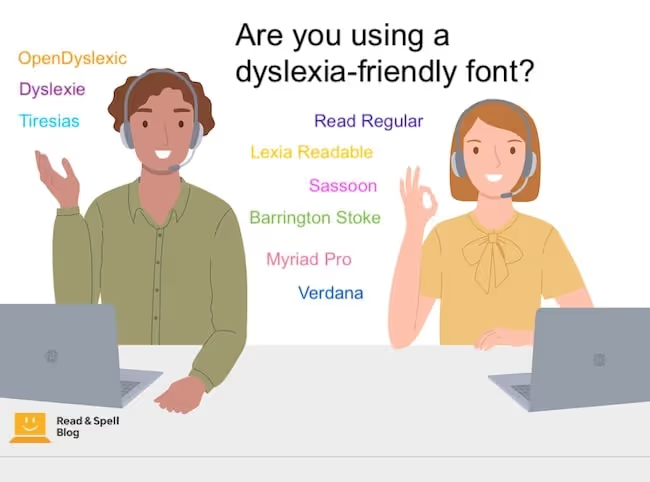
What's the best font for dyslexia?

I’ve found that children with dyslexia really benefit from the TTRS course, as do English as an Additional Language (EAL) learners and students with motor-skills difficulties. Following the lessons improves their concentration, confidence and spelling, and gives them invaluable typing skills they can use when handwriting is too difficult. The students are always saying to us ‘When are we going to do our touch-typing!’

This is some text inside of a div block.

Dysgraphia in adults

For adults who struggle with literacy, it can be difficult to admit there is a problem and even harder to seek help. We were looking for typing software that would teach keyboarding and ensure our students improved their reading and spelling skills. With Touch-type Read and Spell, the adults in our program gained new skills without experiencing the embarrassment they might feel in a classroom setting.

This is some text inside of a div block.

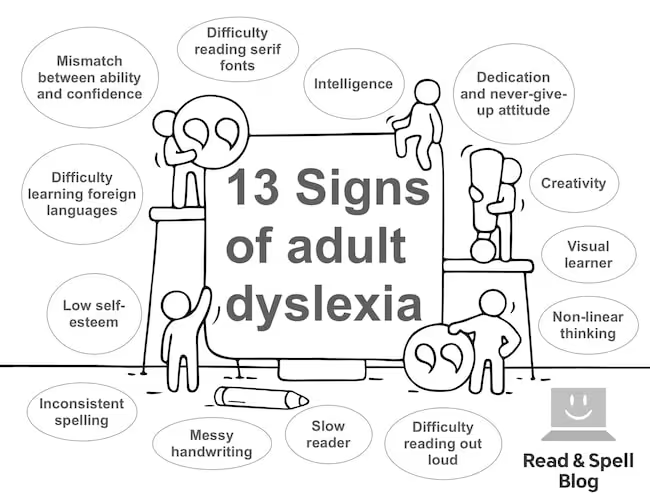
13 Signs of dyslexia in adults

I had always really struggled with my dyslexia on an emotional level. At 15, my confidence had been at rock bottom and I had felt I was going nowhere. But once I got a diagnosis, it was such a relief! I started over again; I literally went back to the beginning. I like the way Touch-type Read and Spell is laid out. It’s very user-friendly. The material is systematic and there’s repetition, which is so important. One thing I’ll say is it is key to get into the habit of using it regularly.

This is some text inside of a div block.

Augmentative and alternative communication

TTRS provides the auditory input my son really needs. We use it to help with reading, as well as typing and spelling. With TTRS it was the first time since we had started trying different reading programs that I could see he was really comfortable. He would finish a lesson and feel like “I can do this, I’m successful at this, and I’m making progress,” instead of just feeling overwhelmed or like he’s failing.

This is some text inside of a div block.

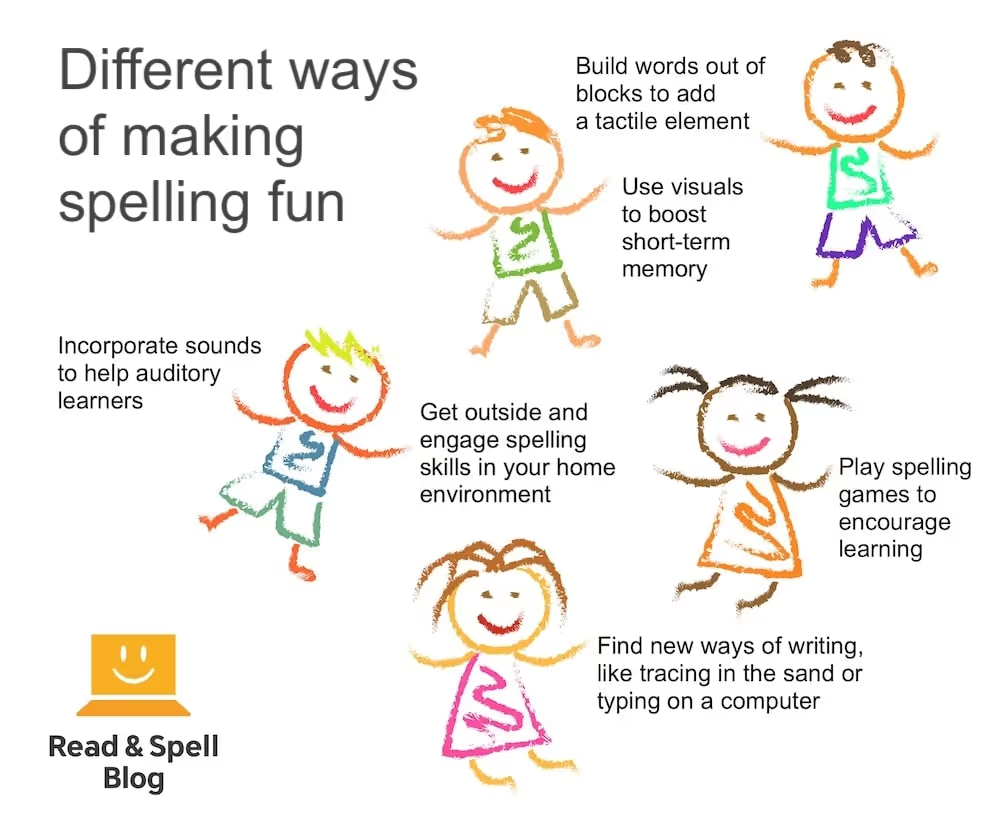
7 Ways of making spelling fun

I homeschool my children who are in fourth and fifth grade. We got Touch-type Read and Spell for typing, but with the phonics support it’s benefited their spelling skills as well. They both do one lesson a day. I’ve noticed they’re more confident and that there’s been an improvement in their ability to sound out words too.

This is some text inside of a div block.

Typing for the blind

In addition to teaching my kids to type, the program also hugely benefited my son with dyslexia in terms of his spelling and writing. We first noticed my son was dyslexic and might need extra support when his development just wasn’t in line with his general cognition. He is extremely bright but he was not getting on with his schoolwork in a way that you would have expected for a child of his age, with his background and experience.

This is some text inside of a div block.

Typing programs for schools

So far, TTRS has made a big difference in her literacy and typing skills. But what my daughter and I like best about the program is it doesn't make her feel stupid. We've tried a lot of different tools, and many of them can be quite demoralizing. Not TTRS. In fact, it's the opposite. Learning to type has been a huge confidence booster for her.

This is some text inside of a div block.

7 Tips for working with dyslexia

I work at a children's book publisher and I do most of my writing on the computer. Listening to the words in TTRS really helps me. I tend to struggle with vowel sounds and I'm always one letter off. TTRS is great because it helps me see these issues. I've also found it's easy and convenient to work on at home and in the office. Plus, I like it and I actually look forward to doing it!

This is some text inside of a div block.

Typing without looking and why it's so hard

Over the years I’ve sort of self-taught myself typing, but I really like learning with Touch-type Read and Spell and it’s made a difference for me at work already! That’s because it makes me think about what I’m typing. When I write emails I normally look up and there are about ten red lines with errors. Now it’s about half that, and that’s only from using TTRS for 3-4 weeks.

This is some text inside of a div block.

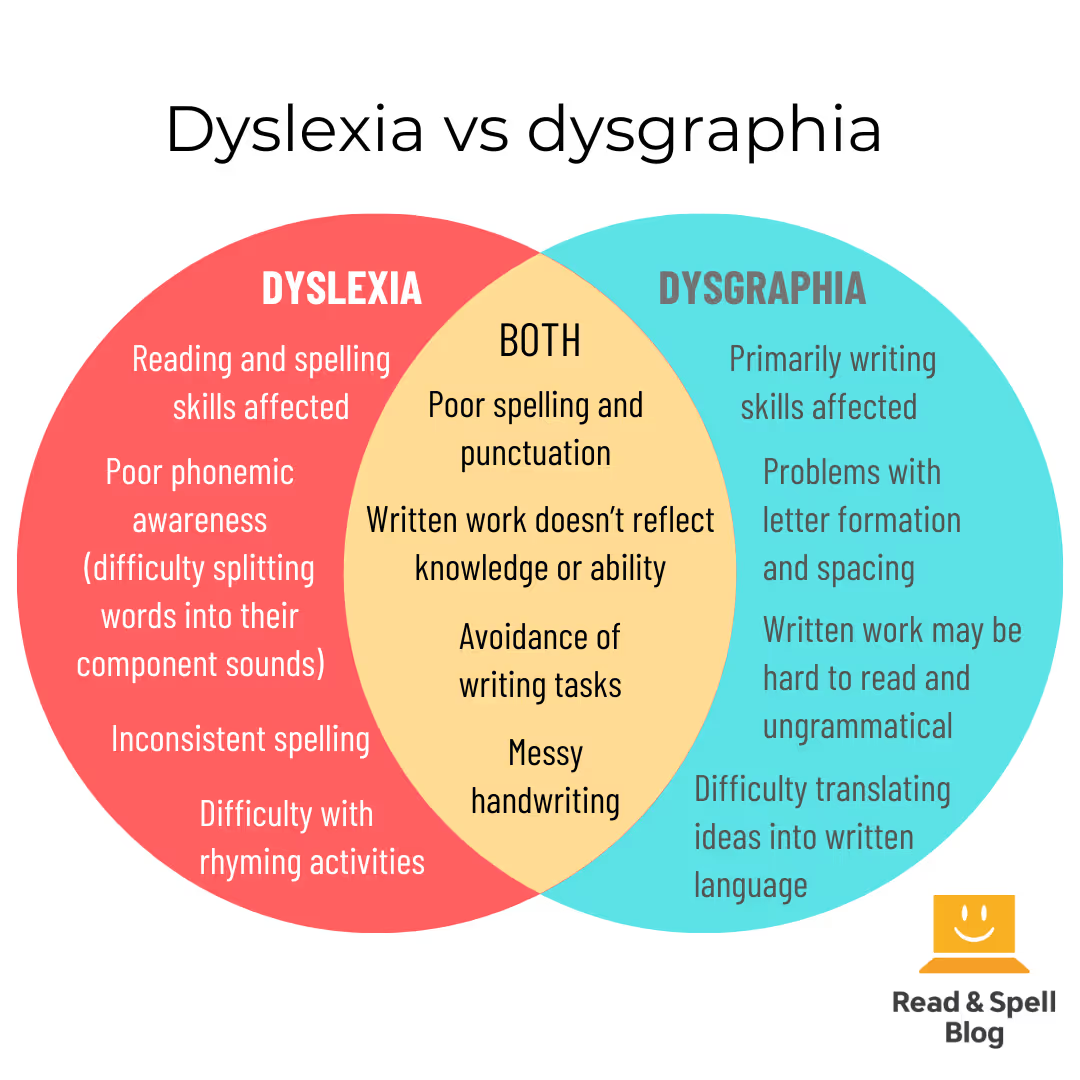
Dyslexia and dysgraphia - what's the difference?

So far, TTRS has made a big difference in her literacy and typing skills. But what my daughter and I like best about the program is it doesn’t make her feel stupid. We’ve tried a lot of different tools, and many of them can be quite demoralizing. Not TTRS. In fact, it’s the opposite. Learning to type has been a huge confidence booster for her.

This is some text inside of a div block.

3 Dyslexia programs for adults

I was assessed for dyslexia when I was 8 and then again at 17. It’s nice to know that someone is finally interested in helping adults with dyslexia. I understand that most programs are geared towards kids with dyslexia because they need to catch it early on, but adults need help too! With TTRS, I love that it’s teaching me typing skills, which I really need for my degree, but that I’m getting help with the spelling, reading and grammar as well.

This is some text inside of a div block.

Finger placement for typing

Because I’m a single parent, I really like the flexibility of working from home. Right now, I do mainly home crafting - but it doesn’t bring in enough income. Touch-type Read and Spell has been useful for me because it’s helping me with my touch-typing and my dyslexia. In the beginning, I was really slow at typing, but after a few weeks of Touch-type Read and Spell, I went up from 25 to 45-50 words per minute.

This is some text inside of a div block.

Teaching adults to read

I'm fifty years-old and I'm a hairstylist but I've endured a lifetime of struggles because of my dyslexia. If it weren't for my computer, I would still be completely illiterate. I do my typing for a half hour every night. I put that in my schedule and make it a priority. The fact that I have to think about my fingers, while I'm listening to and seeing the words – it helps me bring things together.

This is some text inside of a div block.

9 Teaching strategies for students with ADHD

Both of my boys were diagnosed with dyslexia when they were around age seven. The elder boy also has ADHD. We started off with a program that had more animation. But we found it hard to institute a daily regime because with games it's just a bit too flexible. Especially with my eldest, he needed more structure. Then we tried Touch-type Read and Spell and it really worked!

This is some text inside of a div block.

Stroke therapy at home

When I used to do e-mails it was a nightmare, but now, what would take me half an hour I can do in five minutes. It's been two years since I started using the Touch-type Read and Spell course. In the beginning, one or two modules might have taken me half an hour and I’d try and do that every day. These days I’m much faster and I can do up to ten modules in one sitting. TTRS has given me confidence.

This is some text inside of a div block.

ADHD and self-esteem

My son was diagnosed with ADD, auditory processing disorder, dyslexia and dysgraphia in early elementary school. Before TTRS, he could only verbally tell me what he wanted to say. It took so much effort and time for him to write it out. Learning how to touch-type really helped push his skills ahead and he’s at grade-level now!

This is some text inside of a div block.

Regaining speech after a stroke

When I used to do e-mails it was a nightmare, but now, what would take me half an hour I can do in five minutes. It's been two years since I started using the Touch-type Read and Spell course. In the beginning, one or two modules might have taken me half an hour and I’d try and do that every day. These days I’m much faster and I can do up to ten modules in one sitting. TTRS has given me confidence.

This is some text inside of a div block.

Dyslexia and foreign language learning

So far, TTRS has made a big difference in her literacy and typing skills. But what my daughter and I like best about the program is it doesn't make her feel stupid. We've tried a lot of different tools, and many of them can be quite demoralizing. Not TTRS. In fact, it's the opposite. Learning to type has been a huge confidence booster for her.

This is some text inside of a div block.

Autism and typing

TTRS provides the auditory input my son really needs. We use it to help with reading, as well as typing and spelling. With TTRS it was the first time since we had started trying different reading programs that I could see he was really comfortable. He would finish a lesson and feel like “I can do this, I’m successful at this, and I’m making progress,” instead of just feeling overwhelmed or like he’s failing.

This is some text inside of a div block.

How to teach typing

I’ve found that children with dyslexia really benefit from the TTRS course, as do English as an Additional Language (EAL) learners and students with motor-skills difficulties. Following the lessons improves their concentration, confidence and spelling, and gives them invaluable typing skills they can use when handwriting is too difficult. The students are always saying to us ‘When are we going to do our touch-typing!’

This is some text inside of a div block.

Autism and reading comprehension

TTRS provides the auditory input my son really needs. We use it to help with reading, as well as typing and spelling. With TTRS it was the first time since we had started trying different reading programs that I could see he was really comfortable. He would finish a lesson and feel like 'I can do this, I'm successful at this, and I'm making progress,' instead of just feeling overwhelmed or like he's failing.

This is some text inside of a div block.

Aphasia recovery time following a stroke

When I used to do e-mails it was a nightmare, but now, what would take me half an hour I can do in five minutes. It's been two years since I started using the Touch-type Read and Spell course. In the beginning, one or two modules might have taken me half an hour and I’d try and do that every day. These days I’m much faster and I can do up to ten modules in one sitting. TTRS has given me confidence.

This is some text inside of a div block.

An Adult ADD / ADHD Checklist

I had always really struggled with my dyslexia on an emotional level. At 15, my confidence had been at rock bottom and I had felt I was going nowhere. But once I got a diagnosis, it was such a relief! I started over again; I literally went back to the beginning. I like the way Touch-type Read and Spell is laid out. It’s very user-friendly. The material is systematic and there’s repetition, which is so important. One thing I’ll say is it is key to get into the habit of using it regularly.

This is some text inside of a div block.

Visual impairment in the classroom

I’ve found that children with dyslexia really benefit from the TTRS course, as do English as an Additional Language (EAL) learners and students with motor-skills difficulties. Following the lessons improves their concentration, confidence and spelling, and gives them invaluable typing skills they can use when handwriting is too difficult. The students are always saying to us ‘When are we going to do our touch-typing!’

This is some text inside of a div block.

How long does it take to learn to touch type?

I homeschool my children who are in fourth and fifth grade. We got Touch-type Read and Spell for typing, but with the phonics support it’s benefited their spelling skills as well. They both do one lesson a day. I’ve noticed they’re more confident and that there’s been an improvement in their ability to sound out words too.

This is some text inside of a div block.

ADHD Reading problems

Both of my boys were diagnosed with dyslexia when they were around age seven. The elder boy also has ADHD. We started off with a program that had more animation. But we found it hard to institute a daily regime because with games it's just a bit too flexible. Especially with my eldest, he needed more structure. Then we tried Touch-type Read and Spell and it really worked!

This is some text inside of a div block.

9 Quotes about dyslexia

So far, TTRS has made a big difference in her literacy and typing skills. But what my daughter and I like best about the program is it doesn’t make her feel stupid. We’ve tried a lot of different tools, and many of them can be quite demoralizing. Not TTRS. In fact, it’s the opposite. Learning to type has been a huge confidence booster for her.

This is some text inside of a div block.

Is dyslexia a disability?

I work at a children’s book publisher and I do most of my writing on the computer. Listening to the words in TTRS really helps me. I tend to struggle with vowel sounds and I’m always one letter off. TTRS is great because it helps me see these issues. I’ve also found it’s easy and convenient to work on at home and in the office. Plus, I like it and I actually look forward to doing it!

This is some text inside of a div block.

9 Strategies for dysgraphia

My son has dysgraphia which affects his ability to write things out by hand. He also struggles with sensory issues, which means he can easily get distracted. I knew I wanted him to learn typing because I didn't want to see his creativity and ideas being hindered in any way.

This is some text inside of a div block.

3 Common reading problems for students

A lot of the learning for homeschool these days is online and so my kids needed to know how to type. What I liked most about TTRS is that it caters to different learning styles. We don’t have any specific learning difficulties in the family, but it really supported and bolstered my kids as they were learning how to read.

This is some text inside of a div block.

How common is functional illiteracy?

I’m fifty years-old and I’m a hairstylist but I’ve endured a lifetime of struggles because of my dyslexia. If it weren’t for my computer, I would still be completely illiterate. I do my typing for a half hour every night. I put that in my schedule and make it a priority. The fact that I have to think about my fingers, while I’m listening to and seeing the words – it helps me bring things together.

This is some text inside of a div block.

TTRS typing - how is it different from other typing programs?

I homeschool my children who are in fourth and fifth grade. We got Touch-type Read and Spell for typing, but with the phonics support it’s benefited their spelling skills as well. They both do one lesson a day. I’ve noticed they’re more confident and that there’s been an improvement in their ability to sound out words too.

This is some text inside of a div block.

Touch typing for dyslexics

I have a ten year-old son who has dyslexia and a daughter who is in eighth grade - she also uses Touch-type Read and Spell. My son came up to me the other day and said 'so comb has a silent b.' He's noticing it because he's hearing it, seeing it and typing it, multiple times over - and this is from only 15 minutes a day.

This is some text inside of a div block.

10 Fluency strategies for struggling readers

A lot of the learning for homeschool these days is online and so my kids needed to know how to type. What I liked most about TTRS is that it caters to different learning styles. We don’t have any specific learning difficulties in the family, but it really supported and bolstered my kids as they were learning how to read.

This is some text inside of a div block.