

Left-handed and dyslexic

Is it more common for people to be left-handed and dyslexic? Learn about the genetic origins of handedness and why some people associate it with dyslexia.

Left-handed and dyslexic

Is it more common for people to be left-handed and dyslexic? Learn about the genetic origins of handedness and why some people associate it with dyslexia.

Left-handed and dyslexic

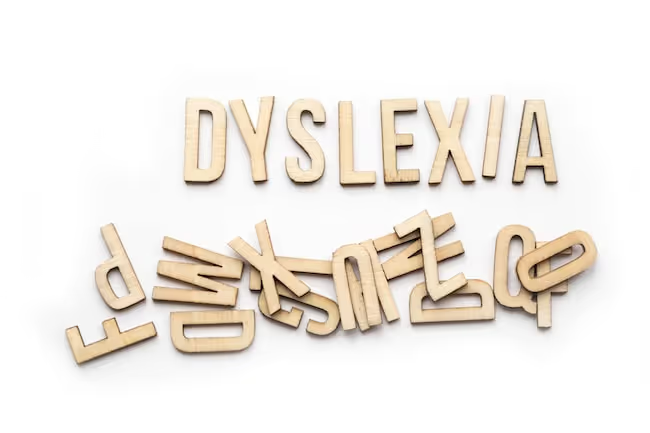
It is sometimes said that certain mood disorders and learning difficulties are more common in people who favor their left hand. Researchers have not yet found a genetic link between dyslexia and handedness and individuals with dyslexia, a learning difficulty that affects reading, writing and spelling abilities, are split 50:50 between right and left-handedness.

However, there are fewer left-handed people in the world. In fact, the difference is 90:10. This means that dyslexia may be more commonly found in left-handed people but the relationship is not necessarily causal. There is also the question of whether or not it is more common in boys than girls.

Some evidence suggests dyslexia is just as prevalent in girls as boys but not as well recognized, while other studies (Quinn & Wagner 2015) have found reading difficulties occur more often in male individuals.
Are handedness and dyslexia related?


Genetic origins of handedness

Human beings tend to favor one hand over the other when it comes to writing and performing other personal tasks, such as grooming and eating. In the US, about 89% of the population is right-handed, 10% is left-handed and 1% is mixed-handed or ambidextrous, which is when a person chooses to use their right or left hand depending on the task.

Though there are other species that show handedness preferences, such as chimpanzees, they tend to be split 50:50 in choosing their right or left hand. This makes explaining the right hand bias in humans a challenge for researchers studying its genetic origins.

Handedness is not a simple case of recessive vs. dominant traits. Mutations across multiple genes contribute to whether or not a person chooses to use their right or left hand more often. Recent research has revealed that the same genes implicated in handedness control the positioning of organs in the body.

Handedness may also be related to asymmetry, with the parts that control language commonly found on the left-side of the brain. To some extent there is also a question of nature vs. nurture, as not all identical twins share handedness and studies have indicated that low birth weight and mothers who are stressed while pregnant can make it more likely that children will be left-handed.

Given they were in the minority, left-handed people were historically treated as different. The left hand was considered dirty and sometimes associated with the devil. Today, in some cultures it is still forbidden to use the left hand for certain tasks, such as ritual prayer or eating.

And while educators in the US and UK no longer force left-handed children to learn how to write using their right hand, kids still require different desks, special scissors and instruction in how to place their paper to avoid smudging ink.

What is dyslexia?

Dyslexia is a brain-based learning difficulty that affects up to 10% of people in the world. It has nothing to do with intelligence and people who have dyslexia are not lazy, they simply process information in a different way. Dyslexia can vary in its severity and no two individuals will experience the same set of symptoms.

Nonetheless, most dyslexic people struggle with splitting words into their component sounds. Problems with phonemic awareness can make it difficult to spell and decode words, a crucial step in early reading skills development.

Some people with dyslexia also have difficulty interpreting visual information and identifying spatial and right-left relationships.

Strategies for dyslexic students

Strategies for dyslexic students

It can help for dyslexic students to strengthen phonemic awareness and get extra practice with certain vocabulary.

For example, if high frequency words are recognized by sight during reading, it enhances reading comprehension and eliminates the need for children to sound them out. The sooner dyslexia is identified, the better. This is because dyslexic children who are not taught coping skills can easily fall behind their peers in literacy skills development. They may develop negative associations with school and have low self-esteem.

If a student isn't ready for direct intervention, they might consider Touch-type Read and Spell. It's a typing program designed to support dyslexic children and adults by teaching touch-typing in a multi-sensory way, following a curriculum that builds phonics knowledge. Students see, hear and type a word, which reinforces it in memory and supports sight reading too.

Discover a typing program for students with dyslexia

Using a computer to touch type can also make it easier for dyslexic students to write. Information flows freely through the fingertips and onto the screen and individuals have access to spell checkers.

Learn more about helping dyslexic students in the classroom.

Do you have any experience with handedness and dyslexia to contribute? Send us an email and join the discussion!

References

https://journals.plos.org/plosgenetics/article?id=10.1371/journal.pgen.10...

https://publications.aap.org/pediatrics/article-abstract/125/2/e340/72190/Mixed-Handedness-Is-Linked-to-Mental-Health?redirectedFrom=fulltext

We've been using TTRS since my son was 10. We knew his spelling was below level and I had suspected the dyslexia, but it's only recently that we've had a formal assessment. I wanted him to learn typing because he struggled with handwriting too and I knew that the sooner he learned to type, the better. I chose TTRS because of the literacy skills support.

Anna-Maria, Parent of a child with dyslexia

We've been using TTRS since my son was 10. We knew his spelling was below level and I had suspected the dyslexia, but it's only recently that we've had a formal assessment. I wanted him to learn typing because he struggled with handwriting too and I knew that the sooner he learned to type, the better. I chose TTRS because of the literacy skills support.

Anna-Maria, Parent of a child with dyslexia

Find the solution that’s right for you

Explore our tailored subscriptions and find the perfect fit

Families

For individuals and families, suitable for kids and adults

Schools and tutors

Touch-typing, reading and spelling support for students

Homeschoolers

Touch-typing as part of a homeschool curriculum

More related articles from Read and Spell:

Different types of dyslexia

So far, TTRS has made a big difference in her literacy and typing skills. But what my daughter and I like best about the program is it doesn't make her feel stupid. We've tried a lot of different tools, and many of them can be quite demoralizing. Not TTRS. In fact, it's the opposite. Learning to type has been a huge confidence booster for her.

This is some text inside of a div block.

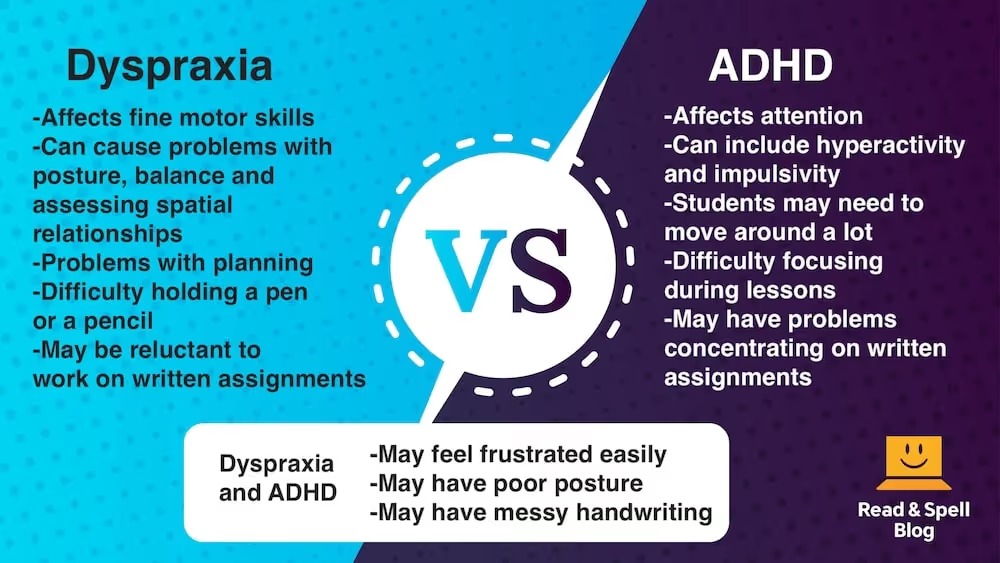
Dyspraxia vs. ADHD

Both of my boys were diagnosed with dyslexia when they were around age seven. The elder boy also has ADHD. We started off with a program that had more animation. But we found it hard to institute a daily regime because with games it's just a bit too flexible. Especially with my eldest, he needed more structure. Then we tried Touch-type Read and Spell and it really worked!

This is some text inside of a div block.

Improve writing skills for kids

We used the Touch-type Read and Spell course to teach my ten-year-old son typing, in order to help him with his writing. He really liked books but was never that keen on the reading bit. He was also quite slow to write by hand. His ideas weren't making it onto the paper and his teachers couldn't always see how intelligent and creative he was. TTRS has helped my son show his strengths!

This is some text inside of a div block.

What motivates students to learn?

Having to write by hand made it hard for my son to get his thoughts down on paper, so we considered typing as an option. We started using Touch-type Read and Spell when my son was in Year 6 at Primary School. I used to have to help him a lot, but with the typing, he does his school work more independently, and I noticed that his spelling has improved.

This is some text inside of a div block.

Strategies for students with autism

TTRS provides the auditory input my son really needs. We use it to help with reading, as well as typing and spelling. With TTRS it was the first time since we had started trying different reading programs that I could see he was really comfortable. He would finish a lesson and feel like 'I can do this, I'm successful at this, and I'm making progress,' instead of just feeling overwhelmed or like he's failing.

This is some text inside of a div block.

The importance of motivation for kids

When I told her that we weren't going to do spelling anymore, just keyboarding, we were both relieved. She felt less stressed and I knew we wouldn't be butting heads. The first thing I noticed was a shift from her saying 'I have no idea how to spell it,' to being able to give me the first few letters. Having to physically type the words and use her body helped her remember them.

This is some text inside of a div block.

Orton-Gillingham reading instruction

A lot of the learning for homeschool these days is online and so my kids needed to know how to type. What I liked most about TTRS is that it caters to different learning styles. We don't have any specific learning difficulties in the family, but it really supported and bolstered my kids as they were learning how to read.

This is some text inside of a div block.

7 Dysgraphia symptoms in children

My youngest son who is 11 right now has dysgraphia. He’s a very smart child who can write when he’s dictating, but the physical act of writing really frustrates him. I read about how typing might help with the dysgraphia and my son started using Touch-type Read and Spell. Since then, he’s just done wonderfully and that’s why we keep signing up.

This is some text inside of a div block.

3 Ways to help students in special education

We started using the Touch-type Read and Spell program because my daughter has quite a high number of special needs. The way her brain works, she looks at a word and can read it, but she can’t copy the spelling of it. This program is teaching her to see the letter patterns. There are no cartoon characters in TTRS, just a program that she can see the purpose of. She feels really grown up doing it by herself!

This is some text inside of a div block.

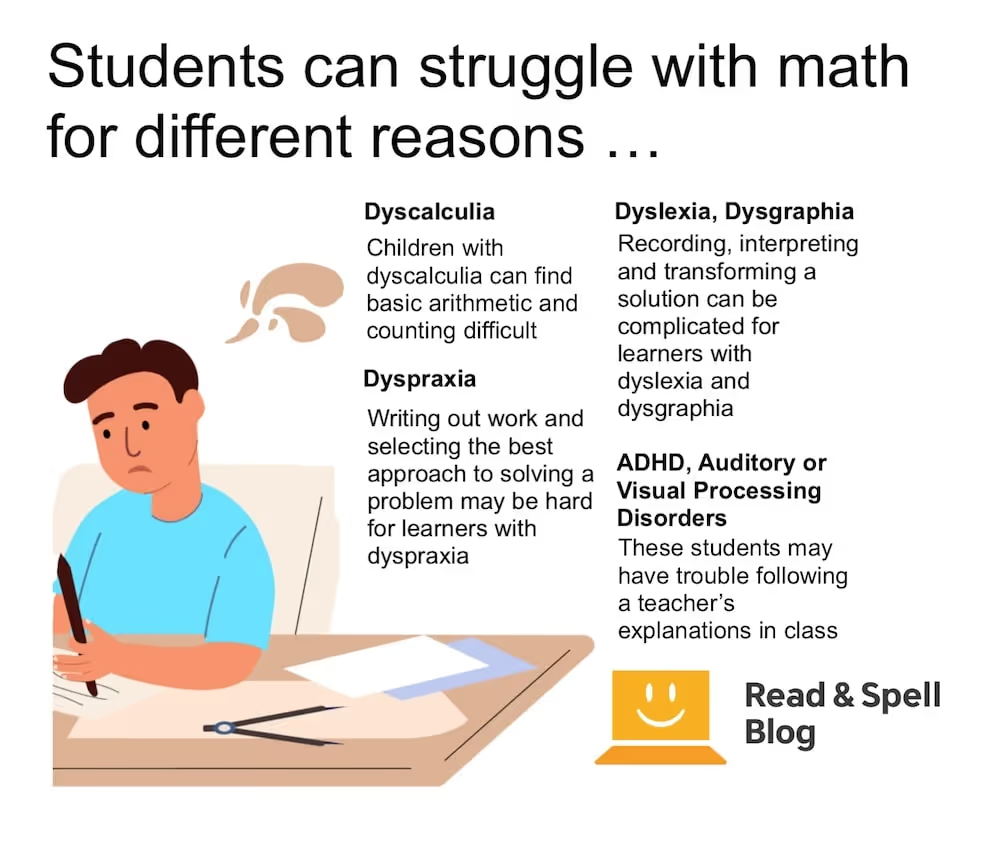
Students struggling with math

I like the TTRS program because I have two very different learners and it works well for both of them. Their typing lessons are reinforcing the vocabulary and concepts they’re learning in other areas of their school day. They have started taking science subjects on TTRS as well and really like them.

This is some text inside of a div block.