


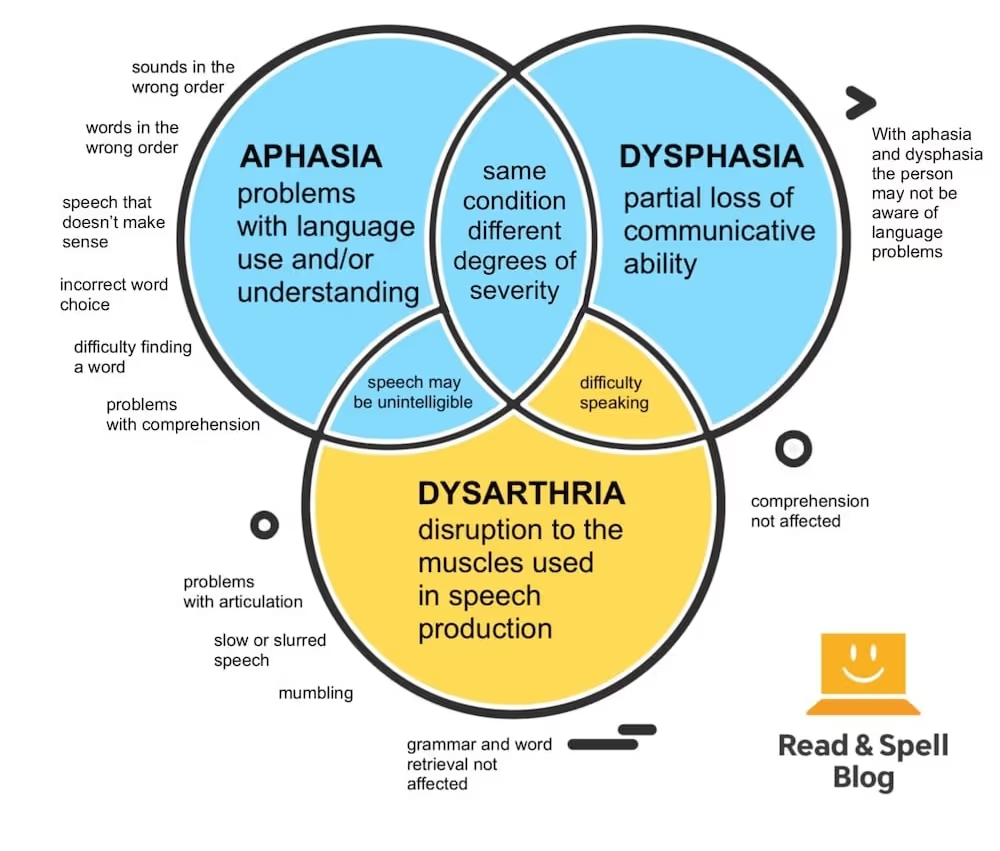
It can be difficult to distinguish between conditions with similar sounding names, particularly when they are co-occurring or have closely related symptoms. This is often the case for aphasia, dysphasia and dysarthria, disorders which affect speech and language use.
What makes them different is the nature and amount of disruption to communicative abilities. In aphasia and dysphasia the brain may have experienced some kind of trauma, due to a head injury or stroke, and as a result, there are problems with language use. Disruptions may be on the productive side (speech/writing) or primarily affect receptive abilities (comprehension).
On the other hand, dysarthria is a disruption to the muscles that are used to produce speech. It does not affect a person’s understanding of the meaning behind words or an individual’s ability to manipulate syntax (grammar).
It’s important to note that aphasia and dysphasia describe different degrees of severity of the same condition. The English affix dys- signifies a partially lacking ability whereas the a- is a complete absence of that ability. Nonetheless, the two terms are often used interchangeably.
Aphasia is widely used in North America, whereas dysphasia is more common in Europe, including Great Britain. Expressive aphasia describes difficulties with speech whereas receptive aphasia refers to comprehension related difficulties. To complicate things further, it is possible for a person to have aphasia/dysphasia and dysarthria!
Aphasia and dysphasia
Individuals who struggle with aphasia and dysphasia can exhibit a range of language related symptoms and no two cases will be exactly alike. Sometimes it is impossible to understand which words the person is using because the sounds are not correct or are uttered in the wrong order.
Comprehension of aphasic speech may also be difficult due to incorrect word choice or arrangement. Symptoms can be restricted to speech or extend to reading and writing. The disruption may be subtle and result in occasionally being unable to find the right word or it can be severe and inhibit even simple object naming.
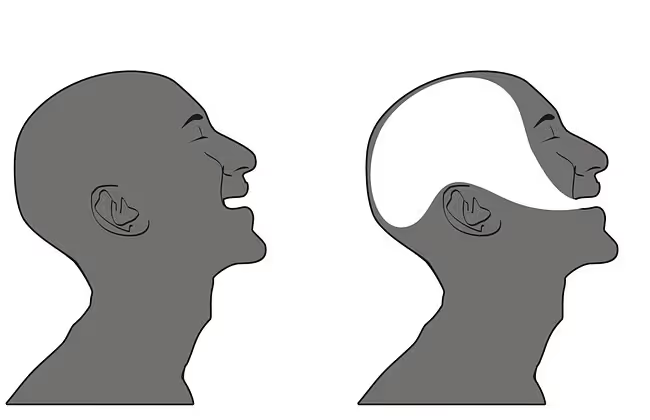
Aphasia following a stroke has been described as a filing cabinet that has fallen over. The words are there in the jumble, but it can be difficult to find them.
Yet while a general language disruption is the hallmark of this condition, learned chunks of formulaic language may be unaffected. This could be due to the automatic nature in which we use formulaic language. Researchers are interested in studying aphasia and dysphasia because these conditions can tell us more about how the brain processes, stores and activates language. For example, past studies have looked at how aphasiacs manipulate different categories of words, including abstract nouns, concrete nouns and verbs.
It’s important to consider that intelligence is not generally affected by aphasia and dysphasia but that the impact on a person’s life can still be quite severe. Telling time and using money become challenging activities and people may quickly become frustrated when others find their language unintelligible or nonsensical. This is because individuals with aphasia and dysphasia do not always realize there is a problem with their language use, particularly if they struggle with both expressive and receptive aphasia.
It is interesting to note that while a person may have difficulty with speech, they may have the ability to sing a whole song without difficulty as music is stored in a different part of the brain than that which has been damaged.
Dysarthria
Dysarthria affects the muscles used to produce speech and can cause slow or slurred speech that is hard to understand. It differs from aphasia and dysphasia in that this disruption to speech is not a result of language selection or processing but rather articulation and pronunciation.
Some people with dysarthria struggle to maintain the correct pitch or volume when speaking. They may appear to mumble or labour over the words they speak. Dysarthria can be temporary or occurring from birth. In addition, many cases are seen in the elderly.
The degree of dysarthria varies depending on the individual, the location of the disruption and the underlying cause. Neurological disorders, including multiple sclerosis and Parkinson’s disease, brain tumors, and medications can all cause dysarthria. It may also be a result of weak or paralyzed facial muscles.
There are many parts of the body involved in speech production from the vocal cords and lungs to the palate, tongue, teeth and lips. Dysarthria can be a result of damage to a localized area or be more general.
Speech and language therapy and stroke recovery
Language difficulties can create stress, depression and loneliness in affected individuals. Depending on the cause of the aphasia, dysphasia or dysarthria, speech and language therapy can sometimes help. For example, individuals with dysarthria may benefit from retraining the muscles needed to facilitate speech production.
Drills are typically developed by a specialist and can be practiced in regular sessions or at home. They may focus on improving an individual’s ability to articulate certain phonemes and produce fluent speech or concentrate on finding alternative ways for them to communicate.
For the large number of stroke survivors who struggle with aphasia, dysphasia and dysarthria, finding the right treatment can make a big difference in quality of life. Treatment may involve a multi-sensory approach, which brings sight, hearing and touch together to reinforce language abilities. Learn more about communicating with people who have had a stroke and review our list of stroke recovery activities that can be done at home.
Touch-type Read and Spell
Touch-type Read and Spell is a multi-sensory touch-typing program that has been used to improve language abilities for people who struggle with aphasia and dysphasia, including when the conditions are present as a result of a stroke. The course takes a phonics based approach to reinforcing language skills via touch-typing.
Individuals hear a sound, see a letter on screen and type the corresponding keys. Soon they are seeing, hearing and typing whole words. This may be helped by saying the word or sound out loud. Individual phonemes can be practiced until users are ready for words and phrases. Learning the skill of touch-typing may also provide a suitable alternative form of communication when speech abilities cannot be recovered.