


Dyspraxia is a motor skills difficulty that can also affect learning. Symptoms range in severity and can make it difficult for a child to dress themselves, hold a pen or pencil and perform other daily activities. According to the Foundation for People with Learning Disabilities, it is estimated that dyspraxia affects up to 6% of the UK population, with 2% being more severely affected.
Apraxia is a related neurological condition. It represents difficulty with planning and coordinating motor skills, impairing a person in a particular capacity. There are different kinds of apraxia, but in the case of apraxia of speech, the brain has difficulty planning and coordinating the precise movements of the muscles involved in speech, such as the tongue, lips, jaw, and palate, even though the muscles themselves are not weak.
Because dyspraxia and apraxia affect the body’s ability to communicate with certain muscles, writing and speaking can be a challenge. Children may also be at risk of experiencing low self-esteem, which can impact their confidence and engagement at school.
In both cases, it’s important to have an early diagnosis or identification of needs to allow individuals to receive appropriate treatment. This might include physical therapy or speech therapy, and learning coping strategies to help them achieve their full potential in and outside of the classroom.
Dyspraxia
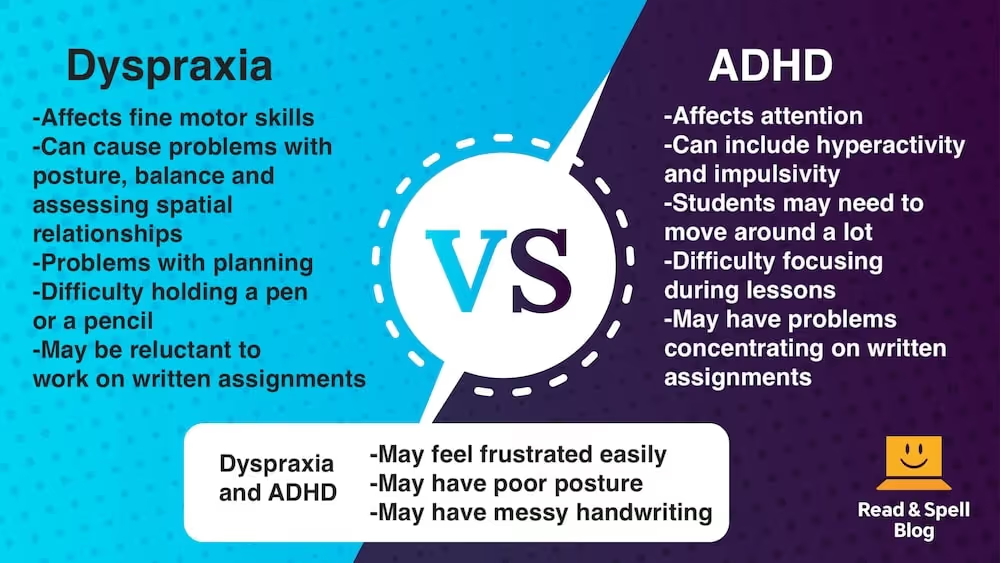
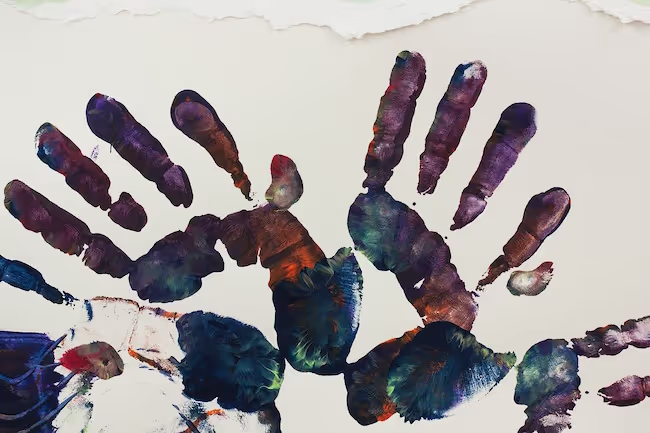
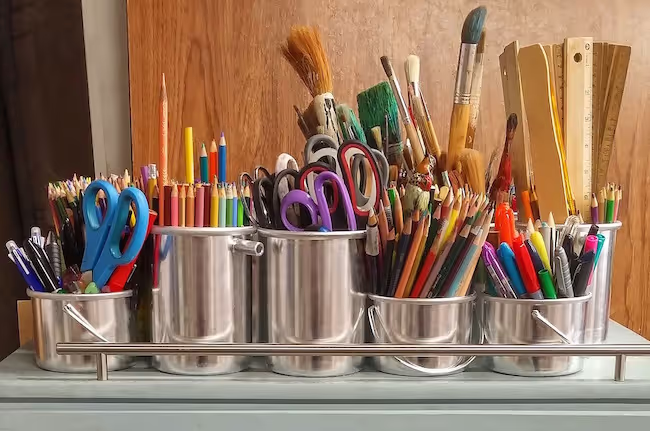
Everyone with dyspraxia is unique, and the type and severity of difficulties they experience can vary widely. Children with dyspraxia may find certain school activities more challenging, such as completing written assignments, handling paintbrushes or drawing tools in art class, using scissors, playing musical instruments, and/or participating in physical education lessons.
Everyday tasks like zipping up a backpack or entering a code on a locker door can also require extra effort.
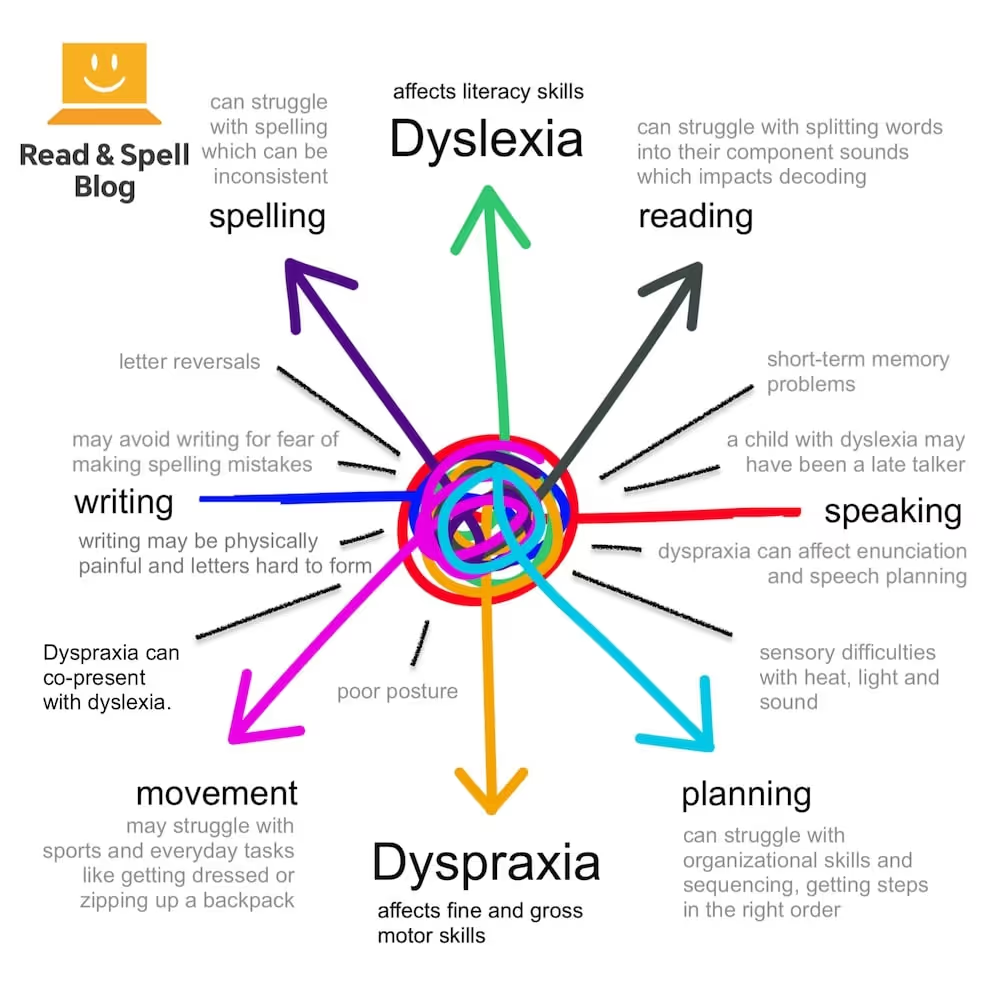
Dyspraxia is sometimes confused with dyslexia, but dyslexia is an entirely distinct condition. Dyslexia does not involve movement challenges, rather it is a language-based learning difficulty that primarily affects reading and spelling skills and is linked to differences in phonological processing. Nonetheless, it's important to be aware that dyslexia and dyspraxia can occur together. Learn more in this article.
Helping a child with dyspraxia
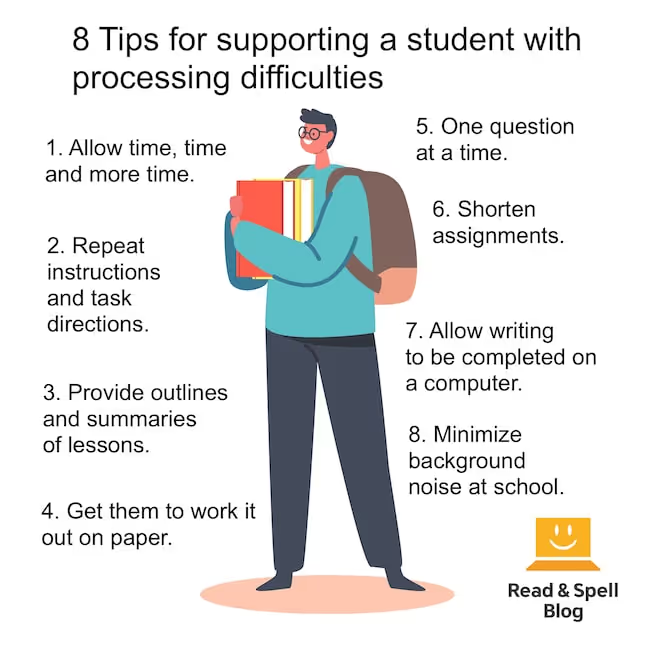
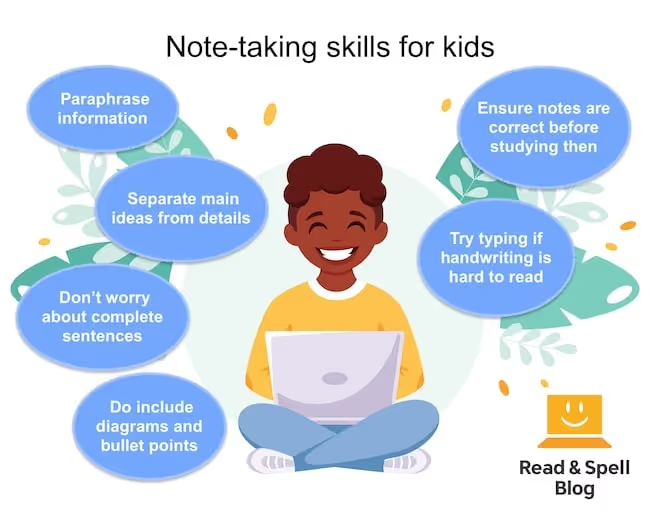
Because of the difficulty children with dyspraxia experience when writing by hand, taking notes in class can be particularly problematic. That’s why it may be advantageous for teachers to pair kids up with a note-taking buddy or provide access to class notes in advance. Offering tools like folders and planners can additionally support executive functioning skills such as planning and time management.
It’s also recommended that children and adults learn how to touch type. This is because, just like for individuals with dysgraphia, a keyboard can be much easier to manipulate than holding a pen or pencil. It eliminates any messiness or embarrassment due to poorly formed letters and spacing. Learning to type can also enhance reading and spelling ability.
Learn more about supporting students with dyspraxia in the classroom.

What is Apraxia?
Apraxia is a neurological condition that affects a person’s ability to plan and carry out purposeful movements, even though their muscles and senses are otherwise healthy and they are motivated to complete the action. It is considered less well-understood than some other motor planning conditions, and research is ongoing to better understand its causes, including potential genetic factors. Symptoms and severity can vary widely between individuals.
There are several types of apraxia, but all involve a disruption in how the brain plans and sends signals for movement. The specific type depends on which actions are affected, for example:
- Limb-kinetic apraxia affects precise voluntary movements of the arms and legs, making tasks like waving or kicking more difficult.
- Ideomotor apraxia impacts the ability to carry out learned movements in response to verbal commands.
- Ideational apraxia disrupts the sequence of actions needed to complete tasks involving multiple steps, such as using a tool or preparing food.
- Buccofacial (or orofacial) apraxia affects the facial muscles, making it hard to perform movements like whistling, coughing, or winking voluntarily.
- Oculomotor apraxia impairs the ability to control purposeful eye movements, affecting activities like reading or shifting gaze.
Apraxia of Speech
Apraxia of speech, sometimes referred to as Childhood Apraxia of Speech (CAS) when diagnosed in children, is a motor speech disorder in which the brain has difficulty planning and coordinating the precise movements needed for clear speech. The muscles of the face, mouth, and throat are not weak, but the brain struggles to send the correct movement signals required for speaking.
Childhood Apraxia of Speech can be present from birth (developmental) or acquired later due to events such as a brain injury, stroke, or other neurological conditions. In very young children (under the age of 2), healthcare providers may delay a formal diagnosis of apraxia to rule out other causes of delayed speech, such as general late language emergence. Unlike in aphasia, which affects language comprehension and/or expression, in apraxia of speech, language comprehension typically remains strong. However, children with Childhood Apraxia of Speech often babble less than their peers during infancy and may be delayed in producing their first words.
Treatment for Childhood Apraxia of Speech needs to take a nuanced individual approach that best matches the needs of the individual. There should be a strong focus on motor planning and movement practice for speech. Certain speech sounds (phonemes) may be easier to produce than others, and progress often requires frequent, intensive sessions guided by a speech-language therapist who is experienced in motor speech disorders. Activities such as repeated rhythmic or melodic speech patterns, engaging in playful sound games, and using activities that combine movement and speech (such as singing songs with exaggerated stress patterns) can help build phonemic awareness and support speech development.
Building confidence and self-esteem
Both apraxia of speech and dyspraxia affect learning ability but are not related to intelligence. In the case of dyspraxia, parents and teachers may wish to encourage children to pursue alternative sports, hobbies or activities that are comfortable to perform.
While speech therapy is important for a child with Childhood Apraxia of Speech, so is teaching alternative ways to communicate, including providing instruction in sign language. It doesn’t have to be a standard version; you can simply create your own signs or hand motions that come naturally—anything to make communication less frustrating.
Learning typing can also be helpful because it allows a child to express more complex ideas in writing when speech is not available.
Any activities that enable kids to develop a positive self-image and build confidence in their abilities are helpful.
Additional resources
For many students, developing typing skills is the key to overcoming the challenges posed by motor skills and speech difficulty and achieving success at school. Kids can learn how to type as soon as their hands fit comfortably on the keyboard. This is usually at 6 or 7 years old.
Touch-type Read and Spell (TTRS) has a touch-typing program that provides kids with dyspraxia and CAS a multi-sensory method of learning to type. This means they hear a word spoken, see it on the screen and then type the corresponding keys which helps to reinforce learning in memory and enhances reading and spelling ability at the same time.
For those students who also struggle with dyslexia, ADD or ADHD, TTRS is recommended by the British Dyslexia Association as it takes an Orton-Gillingham phonics based approach to teaching typing. The course has also been used to teach children with Down syndrome, those with sensory impairments, and those whose mother tongue is not English.