


Writing information down facilitates its transfer into long-term memory and provides an opportunity for learners to engage with content on a deeper level, including through review. Note-taking also strengthens sound-letter mapping and spelling skills, particularly when children copy text from the board.
Making notes while reading can aid with comprehension. Notes may be used as a glossary or evidence of new vocabulary learned at school. Notes can also serve as a record of group work and in some cases provide insight into problem solving approaches. When students perform poorly on assessment measures, teachers are sometimes able to learn more about what happened (e.g. did they not study or did they study the wrong thing?) by consulting a child’s notes.
There is more than one correct way of taking notes
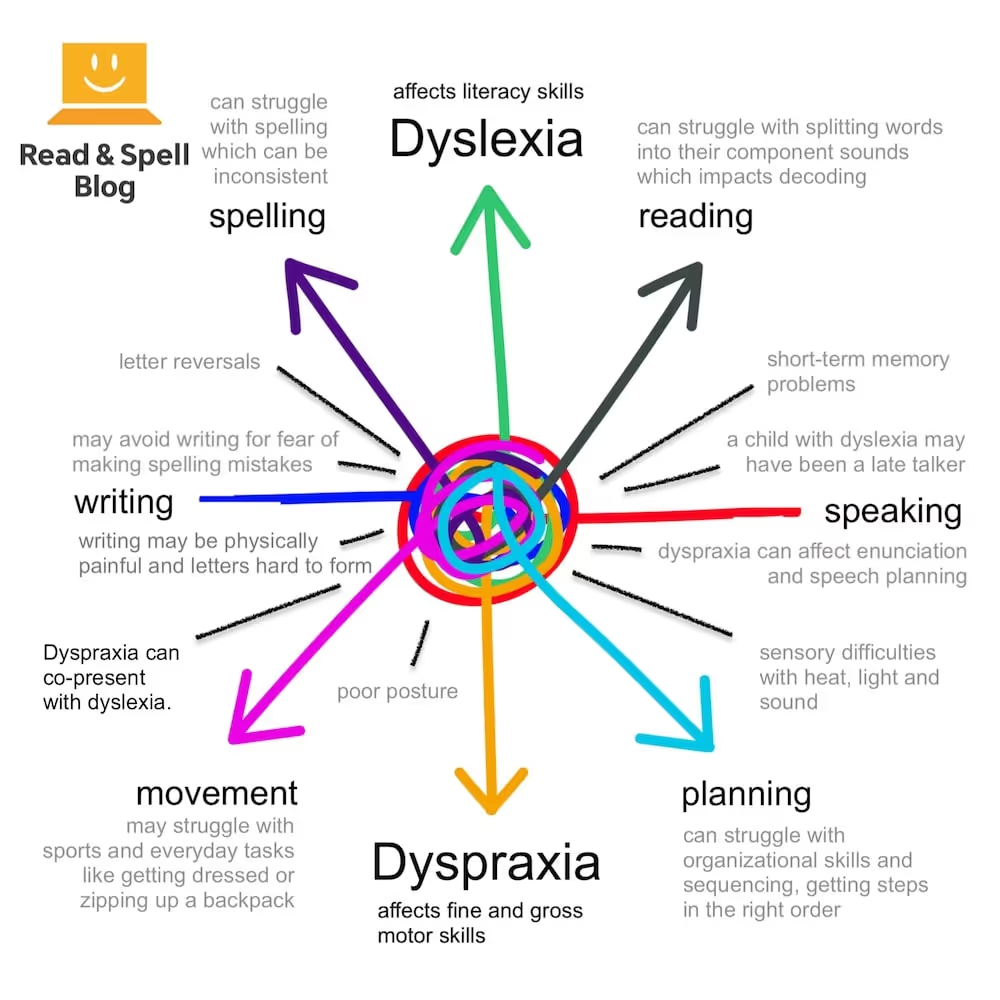
Learners will want to vary their approach depending on the material, task and their individual needs. However, it can help for teachers to introduce and model different styles of note-taking at school, particularly for younger children. Play practice games as a follow up and try out different activities that test the skill. Tutors may also wish to allow notes to be taken on the computer or on a tablet. This is recommended in the case of individuals with dysgraphia and dyspraxia who have trouble with handwriting.
If a student complains that taking notes is not necessary because he or she is listening and paying attention already, teachers could create a situation in which notes are essential for a quiz or completing a homework assignment. There may also be instances in which note-taking is not appropriate and will only be a distraction from school lessons. It is best to reassure students that they will not need notes for the activity and then have them clear their desks to remove the temptation.
Why notes are important
When we listen we rely on working memory to capture new content from spoken input. We must then process it and flag it for storage in long-term memory. Aptitude can sometimes be attributed to short-term memory capacity, which is why writing things down is a useful exercise that relieves the brain and creates an external record. It makes it easier for students to review at a later date and reinforce their memory of what they learned at school. It’s also essential for children with slow processing as it gives them more time to reflect on what has been said.
Sometimes lessons move in unexpected ways so relying on a worksheet or a set of slides instead of their own notes means students may miss out on important points. Consider too that notes aren’t just for exam preparation. School teaches us how to learn and notes are a great tool for focusing attention during a lesson or any kind of talk in which information must be received and stored. Paring receptive and productive activities encourages students to engage with material, reflect on what they are learning and pinpoint gaps in their knowledge.

When learning difficulties get in the way
In some cases, students may reject note-taking because of an un-diagnosed specific learning difficulty like dysgraphia, ADHD, or dyslexia. Depending on the situation teachers may wish to pair these learners up with a note-taking buddy or find an alternative medium for recording notes, such as making an audio recording. Kids who struggle with letter formation due to dysgraphia and dyspraxia should be permitted to type notes on a computer at school.
The key for teachers is to identify attitudes and poor note-taking skills as early as possible, before kids fall behind. With the right strategies and training, every child can learn to take excellent notes and achieve their full potential in the classroom.
Top tips for note-taking
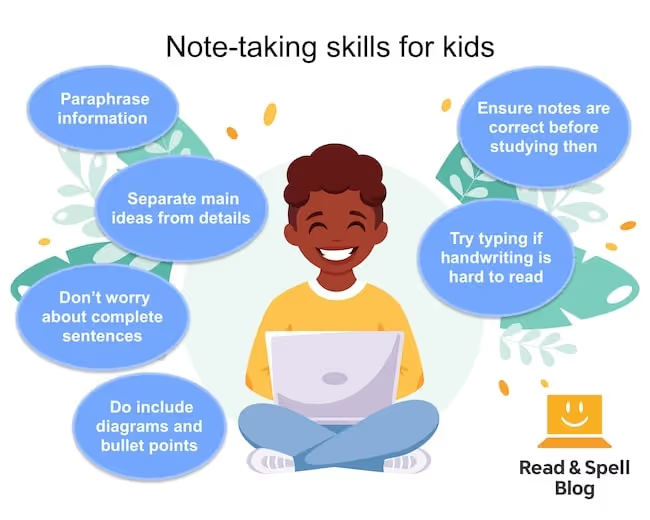
Encourage kids by providing them with instruction on a variety of approaches. Notes may vary depending on the context and school assignment. Give learners a chance to select the most appropriate style for a given task and emphasize the following best practices:
1. Paraphrase information. Copying text can be helpful but so is putting ideas into their own words to reinforce meaning. It alerts students to gaps in their understanding and can encourage use of new vocabulary words.
2. Separate main ideas from details. Structure content in a way that makes it easy to quickly identify gist and specific details during review. Highlighting, color coding, underlining, and using punctuation and large size or capital letters, are effective ways to signal different kinds of information.
3. Don’t worry about complete sentences. Notes are not formal pieces of writing. Fragments and abbreviations are perfectly acceptable as the emphasis should be on the ideas vs. the language and format used to express them. Here’s where mind maps can be effective.
4. Ensure notes are correct before studying them. Reviewing notes that do not reflect a true understanding of the original lesson can lead to poor performance on exams despite the learner having spent ample time studying. This is discouraging for kids and can lead to a drop in confidence and an unhealthy self-image over time. Teachers should check students’ notes after a lesson, especially if a student is struggling in the classroom. TOP TIP: In some cases, as with a child or young person who is extremely dyslexic, it’s appropriate for the teacher to provide the notes. Dyslexic students may have a problem with organization and may need help making sense of notes and their order.
5. Do include diagrams and bullet points. Notes allow learners to structure text in innovative ways so students should include diagrams and drawings where appropriate. Bullet points are recommended over recording ideas in a block of text.
6. Ensure handwritten text is easy to read. Notes are often taken quickly, particularly if they must serve as a record of information the student has heard rather than seen. This means they may not be overly neat but that doesn’t mean they shouldn’t be legible. Some dyslexic students will struggle to read their own handwriting, and this is where being able to touch type is invaluable.
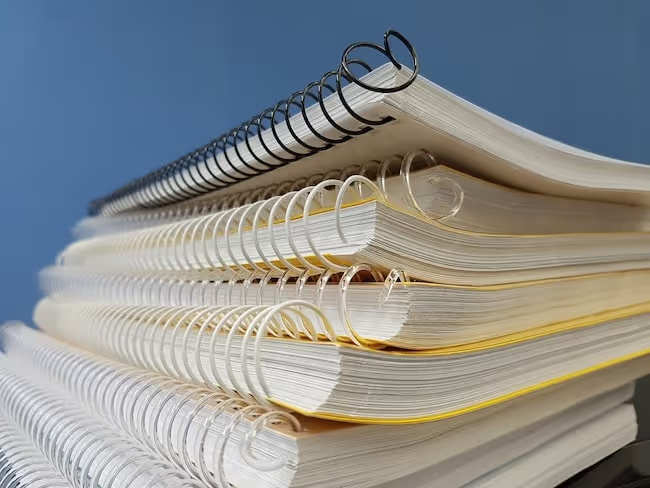
7. Keep notes organized in a binder or folder. It’s a good idea to write the date at the top of notes, along with a title that describes the content. Teachers may have learners keep a note-taking journal.
8. Combine facts with opinion. Notes do not necessarily need to be all facts. Reacting to the information delivered in a school lesson can mean including opinions and thoughts too.
9. Separate notes from assignments and deadlines. Students may be tempted to record assignment due dates along with their notes. This can lead to confusion so always transfer deadlines to a school schedule or calendar planner.
Notes taken on the computer
When students use a computer they have a variety of tools available to them for structuring, formatting and annotating their text. Word processors also make it easier to turn notes taken at school into more formal written work, such as an essay or a homework assignment. Learn more about improving writing skills.
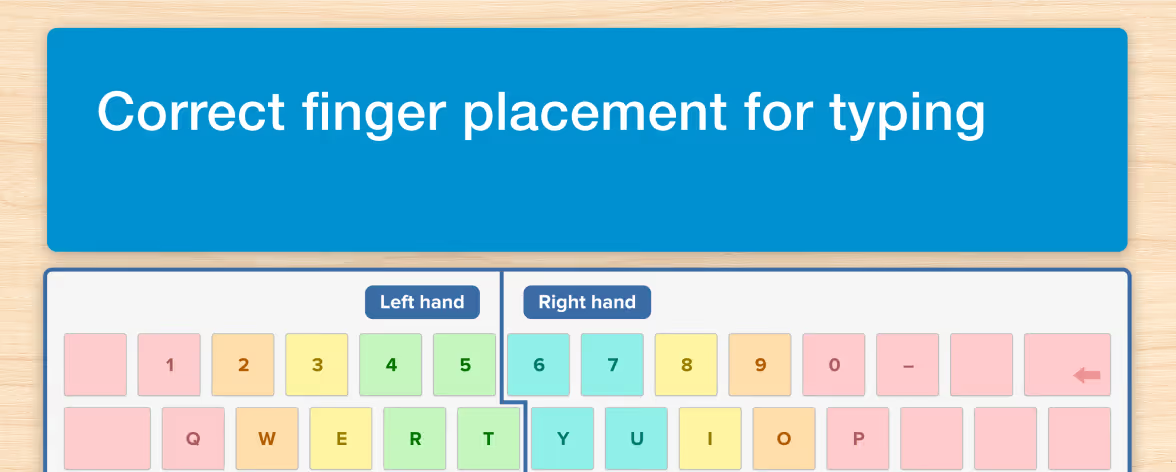
Because lessons often require students to focus on the teacher or stimulus material in front of them, touch-typing is an essential skill for kids who use computers in the classroom. Keyboarding is when a student can type without looking down or at the screen and can be learned beginning at around age 7, when a child’s hands rest comfortably on the keyboard.
Touch-type Read and Spell teaches typing in a dyslexia-friendly way that helps learners enhance their sight-reading and spelling skills at the same time. It is phonics driven and multi-sensory, providing a series of modules that students can work through at a pace that is right for them. Feedback and progress charts encourage self-esteem and confidence building, while older learners enjoy a boost to their literacy skills without the embarrassment of a direct reading intervention.