



Sight words are the English words you most frequently encounter when reading. They're called sight words because if you learn to recognize them by sight, instead of having to sound them out, it makes reading easier.
This is why they are so important to teach.
When a student learns to recognize sight words automatically, it can increase his or her reading fluency and comprehension. They are useful for young children to know, but also a good idea for struggling readers.
English as an additional, second, or foreign language learners, especially those who are just getting started with reading and writing, will also benefit from studying sight words.
Sometimes you'll find sight words referred to as high-frequency words. That's because they are the most common English words used in writing. Mastering them frees up attention for processing harder and lower frequency words.
More about sight words
Most children are introduced to sight words in first or second grade when they begin learning how to read. More than 75% of the average children's book is made up of sight words. A child who is a strong reader from an early age may find he or she acquires sight words effortlessly through repeat exposure from extensive reading.
But these words may require some extra effort and time for other students to learn, particularly if they are struggling to keep up with peers when it comes to reading.

How children learn to read
Children develop pre-literacy skills, including individual sound, letter and word recognition, through conversations with caregivers and being read to from an early age.
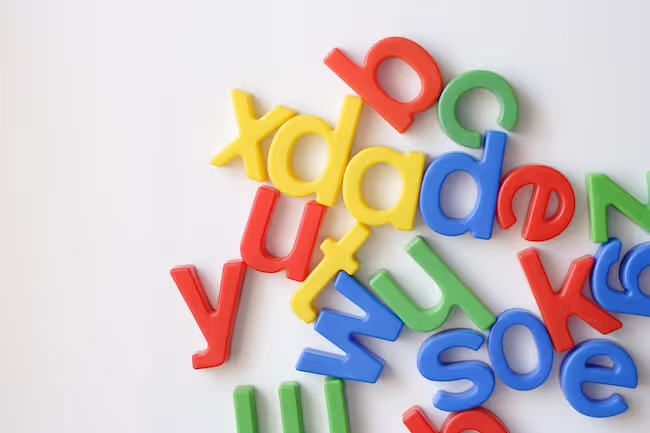
In order to read a word, a child must first be able to recognize individual letters and sets of letters and then map the correct sounds onto them. This process is called decoding.
Sounding out words, or decoding, uses up a lot of cognitive energy and attention. This is why reading can be quite slow in the beginning, when very few words look familiar to the child.
But after a learner has sounded out a word multiple times, he or she will find it easier to recognize by sight, which is to say he or she will be sight reading.
Which words are sight words?
Sight words are sometimes referred to as Dolch words after the man who assembled them into several lists many parents and educators teach today.
Edward William Dolch published a list of sight words in 1948 while he was working at the University of Illinois. In order to create the list, he looked through children's books for the most common words they contained.
Dolch felt that teaching young children to memorize too many words would be counterproductive. He narrowed the sight words list down to 220, leaving out nouns. This means today’s sight words are comprised mostly of service words such as prepositions, adjectives and verbs.
He eventually released an additional list of 95 nouns. Learn more about the Dolch List.

5 Tips for teaching sight words
There are many ways to teach sight words—here are just a few ideas!
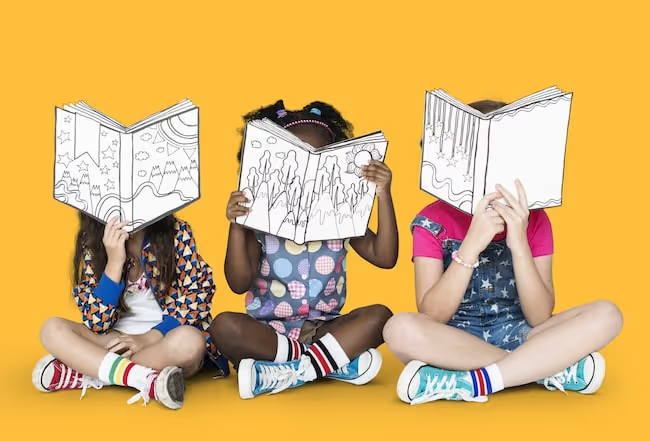
- Look for them in books. Draw a child’s attention to a word by looking for it in children’s books. You can start with Dr. Seuss books as they contain a lot of them! Repeat exposure, pointing a word out, and talking about it provides a much better introduction than simply giving a child a list of terms to learn.
- Hang them around the classroom. Keep the sight words “in sight.” Certain words such as and and the will be hard for children to miss but calling attention to print that contains them is key. You can create big posters of a word, talk about the letters it contains and spend time focusing on its meaning.
- Help children use them. Teaching children to use sight words in their writing, whether it be through illustration, plain old spelling drills, or repetition on a keyboard, can cement learning. A word can be written in isolation or as part of a basic sentence.
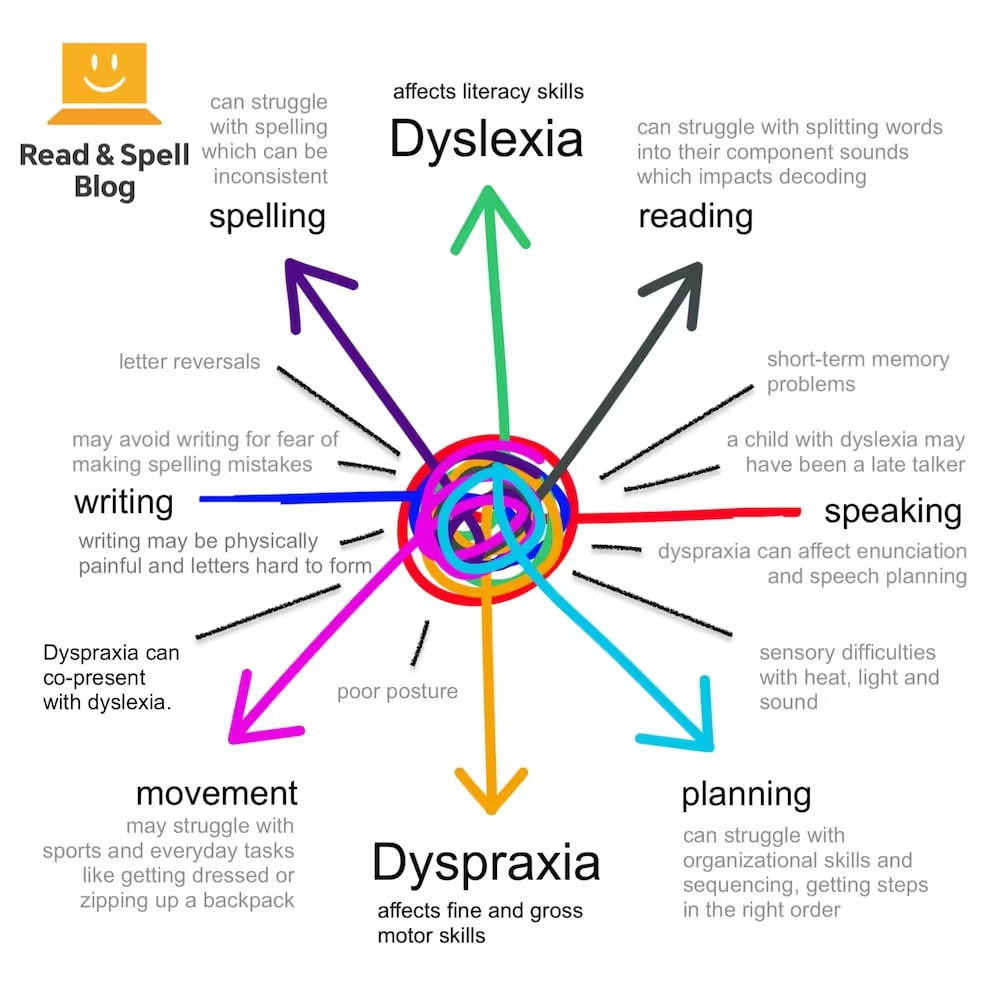
- Re-visit them regularly. Teaching a word over and over again may seem pointless but repeat exposure will eventually do the trick. Children need plenty of practice reading and writing sight words before you can consider them learned. Children with specific learning differences, such as dyslexia, may especially benefit from spending extra time learning sight words.
- Introduce an online typing course. There’s no reason why a young child of age 6 or 7 cannot learn to type at the same time as he or she is learning to read and write. The significant factor is that the hands are mature enough to sit comfortably on a keyboard. Typing can greatly help those learners who struggle with dyslexia or dysgraphia as it teaches them to rely on muscle memory in the hands to help with spelling -- and if you use the TTRS course you can also have them learn to type using modules made up only of sight words!
Who else can benefit from sight words?
Sight words are typically taught as part of phonics and spelling lessons and used by teachers to facilitate reading skills.
They are important for understanding English and that means the bilingual child and English as an additional language adult learner can greatly benefit from covering them in early vocabulary lists.
Of course, for adult learners, Dr. Seuss may not be the most appropriate method of introduction so it is recommended that anyone teaching adults investigate other options, such as a touch-typing course in which students learn to recognize and type sight words on a computer.

When learning sight words is hard
For children who struggle with learning difficulties such as dyslexia, sight words are not always that easy to learn.
Learning any word is tricky, but as sight words tend to be somewhat generic vocabulary, they are less amenable to the mnemonic devices dyslexic students sometimes use to remember vocabulary.
Discover a typing program that supports struggling readers
If a teacher is aware of the learning difficulty, they can ensure the child receives extra help. However, it can be somewhat embarrassing when a student needs to work to keep up with his or her peers.
Introducing a self-study measure that can be completed at a pace set by the learner, after class or at home, may be the solution. For more information on how to use TTRS’s course for teaching sight words to struggling readers, just get in touch with our team!