


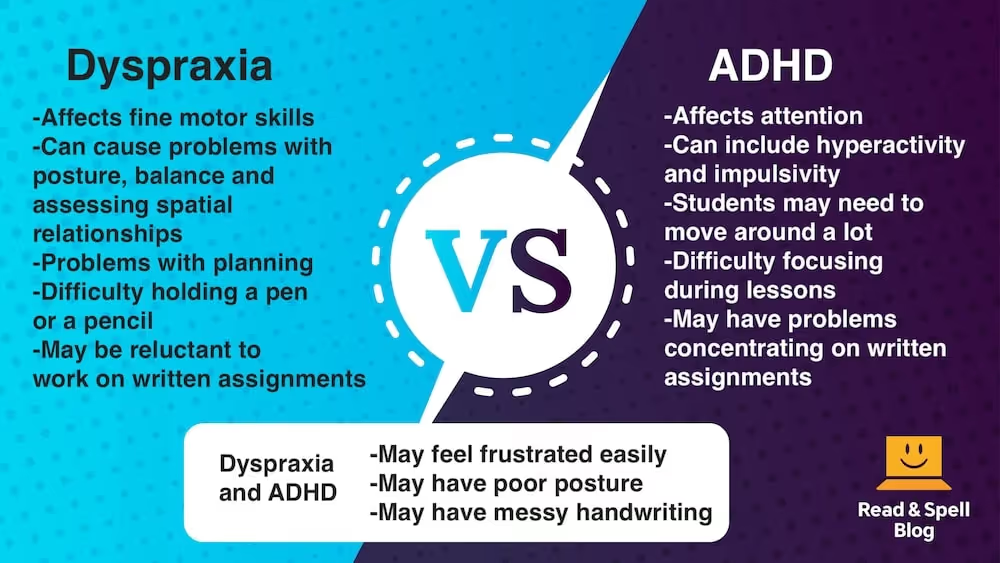
ADHD and dyspraxia can present challenges that make it harder for some children to demonstrate their full potential in traditional classroom settings. While ADHD affects attention, behavior or both, dyspraxia has to do with fine motor skills and planning abilities. It's also possible for dyspraxia to look like the learning difficulty dysgraphia when it leads to difficulties with handwriting.
Both ADHD and dyspraxia can cause poor performance at school and have knock on effects such as low self-esteem and a lack of confidence. They can also co-present and result in affected children experiencing even more frustration with everyday classroom tasks.
But by being aware of a child’s particular symptoms and implementing specific teaching and learning strategies, parents and educators can help children with dyspraxia and/or ADHD overcome these challenges and feel more successful at school.
ADHD
ADHD (Attention-Deficit Hyperactivity Disorder) is the clinical term used and includes different presentations of ADHD: predominantly inattentive, predominantly hyperactive-impulsive, and combined. Predominantly inattentive presentations of ADHD correspond to what used to be called ADD, or attention deficit disorder.
In predominantly inattentive presentations, children have a hard time focusing their attention, which makes it challenging to complete reading and writing tasks and follow the content of lengthy or complicated lessons. These children can be quiet students who on the surface appear to be following along. Without the hyperactivity and impulsivity, teachers may not necessarily notice a child is struggling. Read more about primarily inattentive presentations of ADHD (formerly called ADD) in this article.
Attention disorders have nothing to do with a child’s intelligence, but if a student has trouble paying attention in class, it can affect their performance on assessments. In addition, their written work may lack the complexity of ideas required for the assignment. This is not necessarily due to a lack of writing skills, but rather to an inability to focus while completing the draft.
When hyperactivity is present, students may need to move around a lot which makes sitting still for reading, writing and other classroom activities more difficult. These children can also be impulsive, leading to outbursts in the classroom. Individuals with ADHD may face challenges with emotional regulation and social interactions, which can affect peer relationships. Learn more about ADHD.
Dyspraxic children
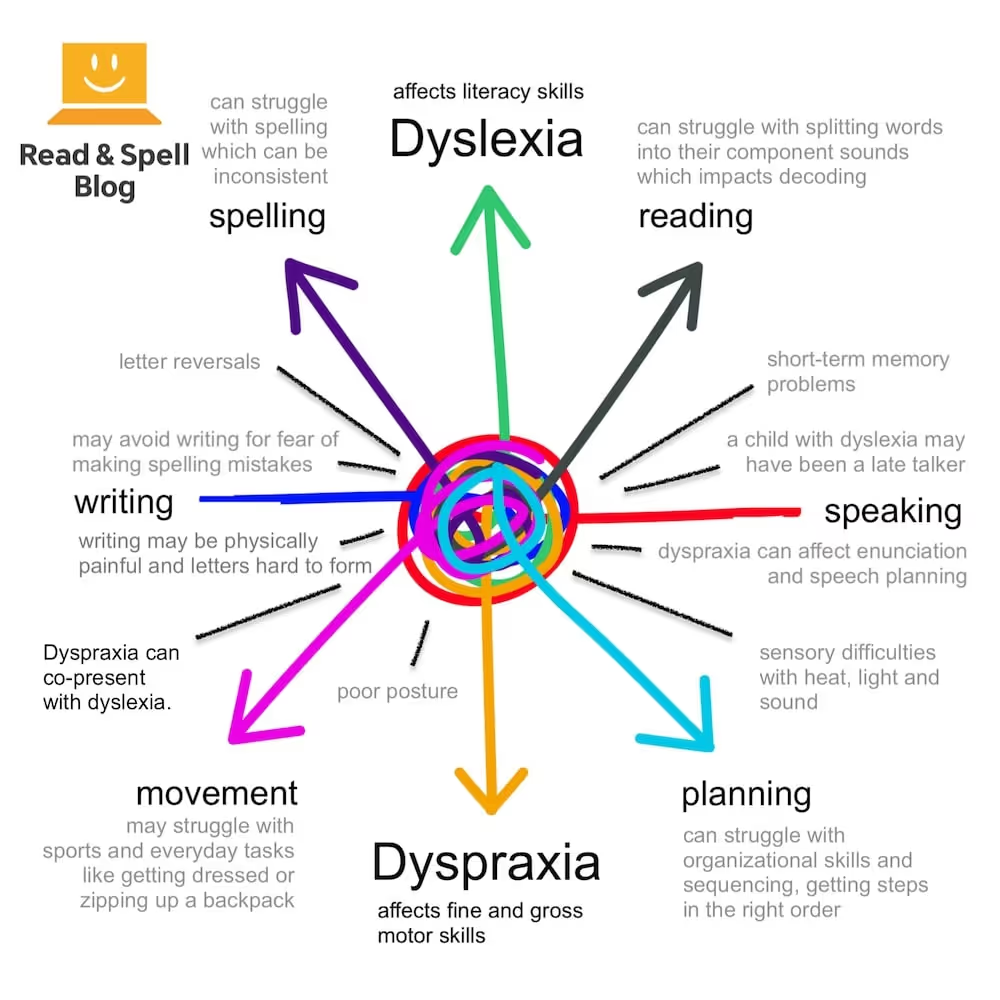
Whereas ADHD is a neurodevelopmental condition, dyspraxia is quite different. Dyspraxia primarily affects motor coordination and planning. It can impact fine and gross motor skills, making everyday tasks like handwriting or physical movements more challenging.
Sometimes dyspraxic children struggle with the fine motor skills required to hold a pen or pencil, similar to what is seen in dysgraphia. They may also have difficulty assessing spatial relationships, which can cause problems with handwriting and letter formation, or trouble completing construction related tasks, such as playing with blocks and/or Lego.
There is a form of dyspraxia that impacts speech ability and causes slurred words. Problems with posture and balance may also occur and dyspraxic individuals tend to have poor planning skills and trouble organizing ideas and activities in a sequence. Social skills may also be affected.
Dyspraxia or ADHD?
It’s not always easy to tell dyspraxia and ADHD apart in the classroom. Children may exhibit many of the same symptoms. Dyspraxic students have a hard time completing written assignments and often turn in messy work full of erasure marks and letters and words that are poorly spaced.
The reason in this case is to do with the fine motor skills required for handwriting. Written work produced by kids with ADHD is often messy due to the impulsivity these kids experience, which means they need to erase and start sentences over again. It can also be a result of their need to move around instead of sitting still and writing.
In observing these children, you may see both dyspraxic kids and those with ADHD slumped in their chairs. In dyspraxia it is because of the muscles needed to maintain good posture, while kids with ADHD may simply be trying out a different position or showing body language that signals they are not paying attention to the lesson and/or need to get up and move around.
Teachers will find that children with both conditions experience frustration during lessons and may give up easily on written tasks. Coupled with poor performance, over time, this can lead them to develop a negative attitude when it comes to schoolwork. They may also have low self-esteem and lack confidence in the classroom. Both can have poor social skills that cause them to feel awkward amongst their peers.
Tips for teachers
Give clear instructions.
Kids may have trouble focusing on abstract information, such as instructions for a new task. Make instructions as clear as possible and provide visual prompts. This is especially important when a child with ADHD also has an auditory processing disorder (which is quite common with ADHD). You may also want to show an example of a completed task, something that is particularly helpful for kids who struggle with slow processing.
If you provide written instructions, read them out loud as well. Repeat instructions several times and be sure students are clear on your expectations before you let them get started.
Break tasks into steps.
Teachers who present complex tasks broken down into multiple steps will ensure students are more likely to complete them. Dyspraxic kids can have trouble planning. If teachers do the work of dividing a task up into logical steps, it’s easier for them to get started. For children with ADHD, it is better to work in small bursts so attention can be maintained and breaks taken when necessary.
Help students stay organized.
Teachers will help students who have difficulty organizing themselves and their work by providing plenty of folders and charts to keep assignments and pieces of paper from getting lost. Calendars and schedules with milestones or goals allow a child with attention problems to focus on one mini-task at a time.

Allow assignments to be typed.
It is often helpful for students with dyspraxia to have the option to type their assignments, as handwriting can be physically demanding, painful, or frustrating. The presentation of written work produced can usually be improved when a child is able to work on a computer.
That’s because editing, revising and correcting can be done without the stigma of eraser marks and crossing out. See below for more on the benefits of teaching kids how to touch type.
Provide positive feedback.
Many students who struggle with dyspraxia, ADHD and learning difficulties like dyslexia and dysgraphia may not be used to receiving positive feedback from teachers. Constructive criticism is necessary at times.
However, when it is all kids hear they may begin to think they are bad at school and develop a poor self-image. That’s why it’s important to identify a child’s strengths, give them opportunities to demonstrate their skills and provide plenty of praise in the classroom.
Universal Design for Learning (UDL)
Universal Design for Learning (UDL) is an educational framework that aims to make learning accessible and effective for all students, regardless of ability, background, or learning style. It encourages flexible teaching methods, materials, and assessments that accommodate many learners.
Many strategies used to support students with ADHD, dyspraxia, or other learning differences, such as breaking tasks into steps, offering visual aids, or allowing typed assignments—are part of a UDL approach. By applying UDL principles, educators create inclusive classrooms where all students can thrive, not just those with formal diagnoses.
What about dyslexia?
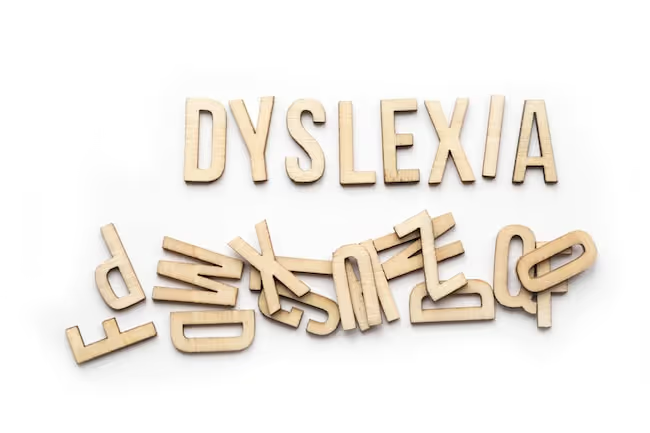
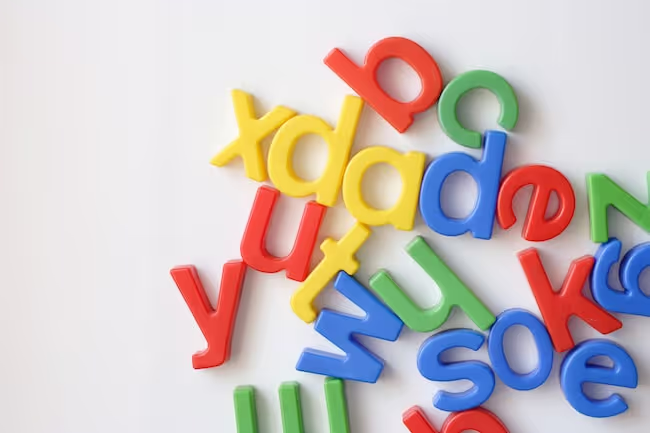
Dyspraxia is sometimes also seen in children who struggle with dyslexia. Dyslexia is a learning difficulty that affects spelling and can cause trouble when it comes to literacy skills.
No two children with dyslexia will have the same symptoms, but it's common for kids to have difficulty with reading and spelling. Learn more about dyslexia and strategies for teaching dyslexic students.
How technology can help
Children who have dyslexia, dyspraxia and ADHD can benefit greatly from learning how to type. That’s because typing is a skill that facilitates writing skills by providing a direct path for the translation of ideas into text.
It also allows kids access to spell checkers and is the best solution for students who have problems handwriting assignments. This is particularly important for dyspraxic children who may struggle with the fine motor skills needed to hold a pen or a pencil.
A multi-sensory touch typing approach involves seeing the words on screen, hearing them read aloud and showing the child how to reach for the correct keys. This helps with the sound-letter mapping needed to strengthen reading skills, familiarizes students with the spelling of high frequency words, and makes sight reading easier.
A modular course, such as the Touch-type Read and Spell program, helps every child work at his or her own pace and provides plenty of positive feedback along the way. This can help kids build self-confidence and a positive attitude that extends into other areas of the classroom.