



Some people believe that when reading words on a page or a screen is difficult, it is not always because of a learning difficulty but rather light sensitivity and visual processing problems. Irlen Syndrome, Meares-Irlen Syndrome, and Scotopic Sensitivity Syndrome are all sometimes used to describe a situation in which an individual experiences difficulty not with actually seeing the letters on a page, but interpreting the incoming visual information. Proponents of Irlen Syndrome believe ease of visual processing can be affected by changing the color of the text background to a particular tint that best suits the reader.
Regulated eye care professionals, however, and special education standard-setting groups offer an alternative explanation for these reading difficulties, citing mainly pattern-related visual stress caused by hypersensitivity to certain patterns which are common in printed text and can lead to cortical hyper-excitability. In recent years there has been an overwhelming push-back against the usage of terms like Irlen Syndrome, Mearles-Irlen Syndrome and Scoptic Sensitivity which are described as outdated, unsupported by empirical evidence and closely tied to the commercial interests of the US-based Irlen Syndrome Foundation.
Irlen Syndrome was first reported in the 1980s
Irlen Syndrome was first mentioned by New Zealander Olive Meares in 1980, who described the problems some students were having when reading from or writing on white paper (1). Working quite separately, American psychologist Helen Irlen observed additional symptoms and wrote about what she labeled scotopic sensitivity. She identified benefits to using colored overlays in alleviating symptoms.
In 1996, the Learning Research Association was founded, with the name later changed to the Irlen Syndrome Foundation in 2014. Its main goal was to raise awareness that children and adults with the condition are sensitive to, and can’t process, specific wavelengths of light. They say this can result in a range of effects, including headaches, poor concentration, sensitivity to light, fatigue, problems with depth perception, and difficulty with reading and writing which can affect individuals of any age and can be both frustrating and demotivating, particularly when it interrupts reading comprehension for work or school.

According to its proponents, how common is Irlen Syndrome?
The Irlen Syndrome Foundation suggests up to 14% of people may be affected by the condition. They claim there is evidence of Irlen Syndrome in people who have dyslexia, as well as some children and adults who have ADHD, those who are autistic and people who may have experienced a brain injury (3).
Controversy over Irlen Syndrome
Irlen Syndrome is often referred to as a "proposed" visual disorder. This is because whether tinted overlays or lenses have any effect on reading is somewhat controversial when considering some of the research that has been done. A study published in the Journal of the College of Optometrists (4) reviewed the literature and concluded that the use of tinted lenses or overlays to ameliorate reading difficulties lacks credibility. Positive results in studies were considered to be more likely a result of a “placebo” effect. This has not deterred the Irlen Syndrome Foundation, however, who continues to argue and cite research on behalf of the syndrome's validity (6).
Is Irlen Syndrome something that can be diagnosed?
In the United Kingdom, Irlen Syndrome is not recognized as a medical condition by the National Health Service and cannot be diagnosed. Moreover, professional guidance suggests specialist dyslexia assessors avoid Irlen-related terminology altogether. Other organizations around the world will also not diagnose Irlen Syndrome, including the World Health Organization, the American Academy of Pediatrics, and the Royal Australian and New Zealand College of Ophthalmologists who point to a lack of reliable scientific evidence that it is a real condition.
Despite this, there are over 7,000 Irlen Screeners operating in the United States and the Irlen Syndrome Foundation offers a non-standardized self-assessment test on their website. They say the results can help individuals decide if they need to contact an "Irlen Screener or Diagnostician for a formal assessment." Irlen Screeners believe each person’s needs for an appropriate tint for an overlay (or a pair of glasses or lenses) will be different and that using the wrong color can cause problems and be less than helpful. They report the choice of tint and color may be different for different family members (3).

Why are dyslexia and Irlen Syndrome sometimes mentioned together?
Dyslexia, a recognized language-based learning difficulty that can affect reading and spelling, and Irlen Syndrome, were sometimes mentioned together as they were thought to have symptoms in common: difficulty reading for extended periods, words that can move around or blur on the page, resulting eye strain and headaches from reading, slow reading that takes a lot of effort. In some circles, Irlen Syndrome was even believed to be synonymous with dyslexia! Today, proponents of Irlen Syndrome generally view them as separate conditions but claim some individuals will have both dyslexia and Irlen's.
How can teachers support students who struggle with reading because of suspected visual processing or light-based sensitivity?
Informal advice from educators includes printing worksheets on different color paper. Some teachers have observed a preference for orange, gold, or pastel pink and yellow in students. When younger children are learning to read, try using gel strips or box strips to expose only the amount of text the student should process at one time - usually phrases or a part of a sentence. Pacing is vital, or the student may end up calling out words without comprehension. In a virtual setting, you might recommend a student adjust the screen background and text color until he or she finds a combination that reduces visual stress and makes it easier to read.
6 Things to keep in mind
- White as a background color is reported by some to be the least helpful. This is also the case for people who have dyslexia and may experience disruption reading black text on a white background.
- Learners may report a preference for different tints. One learner may find reading text printed on pastel pink is easier, whereas another may find a yellow background color is better.
- An individual’s ability to read both printed and electronic material may be affected. When deciding which online learning program to use, look for apps that have accessibility options, including the ability to adjust text and background color.
- Some students may find the amount and quality of light in a room affects their reading. They may prefer to avoid fluorescent or bright lighting and can find it helpful to wear a cap with a brim.
- Audio materials can supplement text-based reading. When a student is experiencing problems and high levels of visual stress, it may help to balance the amount of time they spend reading printed or on-screen materials with listening exercises, to prevent them from becoming frustrated.
- Typing may help when visual stress occurs from writing. In touch-typing, a student is not relying on their eyes to search for keys, rather muscle memory in the fingers is harnessed to spell out words. This can reduce stress and enhance writing fluency for some people.
An accessible touch-typing course
Touch-type Read and Spell (TTRS) is an online typing program designed for individuals who struggle with literacy and visual processing difficulties. It allows the text and background color of the typing exercises to be adjusted. In TTRS, words are read aloud as they are typed. It’s also accuracy-based, so it helps build self-confidence and self-esteem for learners who find reading and writing difficult.
In touch-typing, finger memory comes into play. Words flow without conscious concentration. TTRS builds sight reading skills by teaching high-frequency vocabulary and presents groups of words with similar sound and letter patterns to reinforce phonics and spelling skills.

More on visual processing disorders
Visual processing disorders do not imply visual impairment or problems with how the eyes function. Rather, they are about the processing of visual information by the brain. An individual can have 20/20 vision and still struggle with visual processing. Symptoms can range from difficulty judging distances and understanding orientation, to recognizing shapes, and assessing color and size. Learn more about visual processing disorders and visual processing and dyslexia in these articles.
More about dyslexia
Dyslexia was first observed by the German ophthalmologist Rudolf Berlin 130 years ago. Yet, it was a paper presented at the American Neurological Association meeting by Samuel Orton in 1925 that stimulated thinking towards theories of cognitive development.
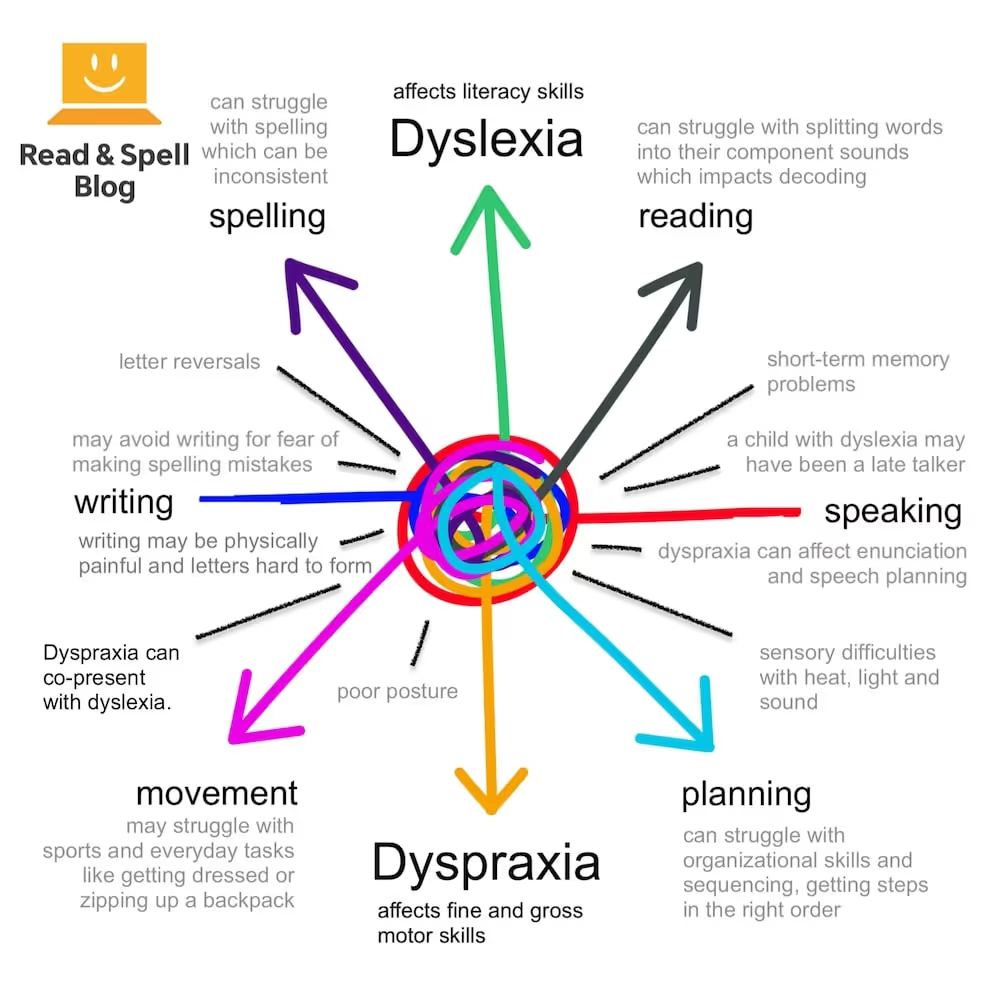
Dyslexia is typically thought of as a learning difficulty that affects the fluency of reading and causes problems with spelling. Its symptoms can include difficulty achieving phonological awareness, slow verbal processing speed, differences in information processing, and problems with short-term memory. A range of other illustrative effects might be involved, such as difficulty telling left from right, or on the positive side, the ability to think creatively and outside the box, having good spatial awareness, etc.
Dyslexia has nothing to do with how intelligent a person is. Moreover, when a learning difficulty is picked up at an early age and appropriate teaching strategies are implemented, many people see being dyslexic as an advantage, despite having initially struggled with learning to read.
Sources:
- https://en.wikipedia.org/wiki/Irlen_syndrome
- https://dyslexiahistory.web.ox.ac.uk/home
- Irlen Syndrome Foundation https://www.irlensyndrome.org/what-is-irlen-syndrome/
- Griffiths, P.G., Taylor, R. H., Henderson, L.M, & Barrett, B.T. (2016). The effect of coloured overlays and lenses on reading: a systematic review of the literature. Ophthalmic Physiological Optics, 28(1), 35-46.
- Tosta, S. (2017). You need to know about Irlen Syndrome. Learning Disability Today, Nov. 15.
- Irlen Syndrome Foundation https://irlen.com/is-irlen-syndrome-real-answers-for-skeptics-naysayers-and-everyday-people/