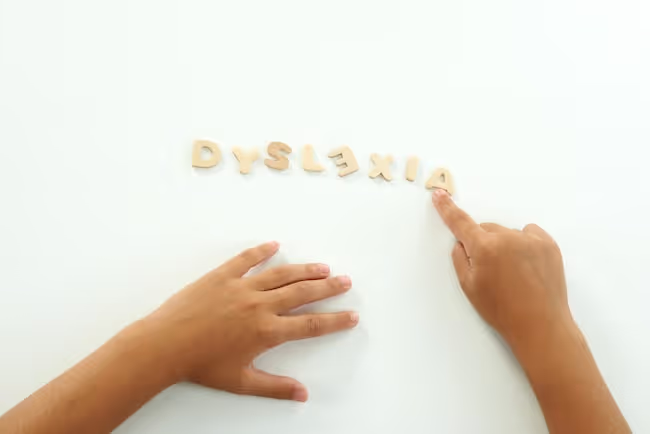



Dyslexia is a learning difficulty which often (but not always) affects reading and writing ability, spelling and the sounding out of words.
Children and adults with dyslexia may have highly developed interactive and oral skills and excel at design, problem solving and creative thinking, but they often experience frustration at school given the central role of reading and writing in classroom learning and teaching.
As reading is a receptive skill, the most visible signs can sometimes be related to productive language activities, particularly when it comes to dyslexia and spelling.
English spelling is already somewhat challenging for students to master. It is highly irregular, given English is a Germanic language which, due to Norman influence in 11th century Britain, also contains many words originating from French.
English has also borrowed vocabulary from languages as far reaching as Latin, Greek, Arabic and Hindi, adopting a variety of spellings to anglicize them.
In fact, English spelling rules are only accurate about 50% of the time, requiring first and second language learners to memorize countless spelling exceptions and struggle with early sound letter mapping.
This can make it hard for teaching staff to distinguish between students with learning difficulties and individuals who are still just learning to spell.

Signs of dyslexia
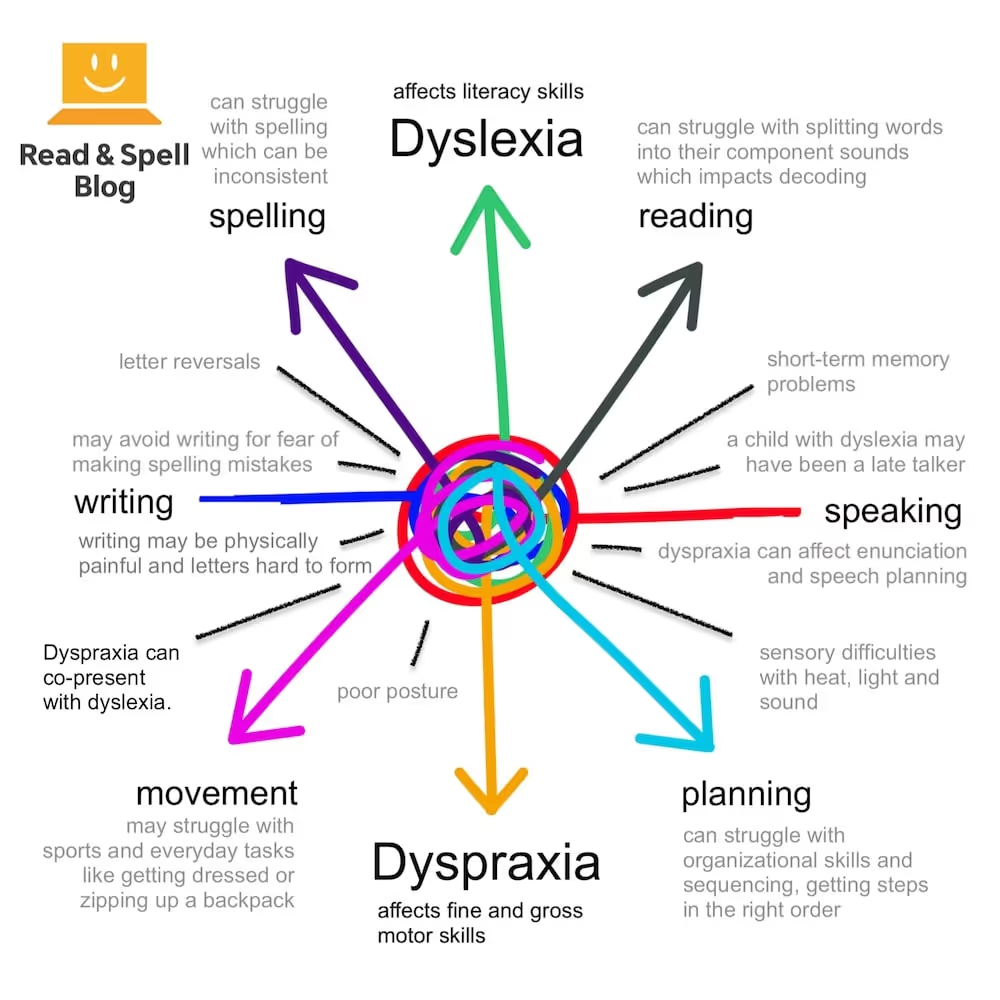
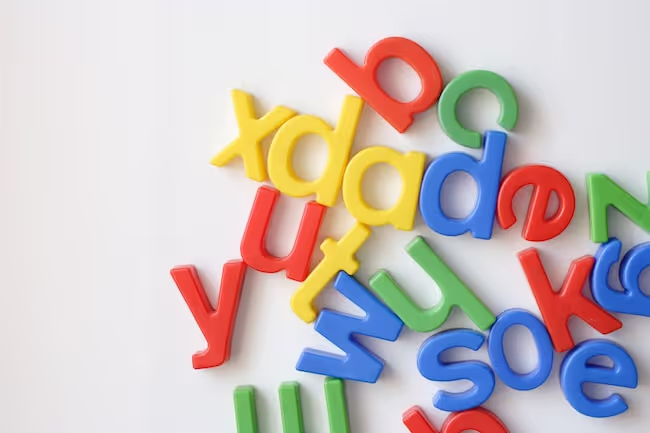
However, while every case is unique, individuals with dyslexia often exhibit certain trademark behaviors including confusing letters (such as interchanging b and d), spelling words with inverted consonant and vowel combinations, inconsistent spelling of the same word, spelling words phonetically, and experiencing difficulties with reading out-loud, reading comprehension and slow writing ability. Learn more about the signs of dyslexia.
It is important to understand that dyslexia affects every individual differently, because the earlier a diagnosis is arrived at, the sooner targeted help can be delivered.
Assessments in adults
If dyslexia is not recognized in childhood, undiagnosed individuals can sometimes feel they are not good at school or that the difficulty they experience with English language activities is somehow a reflection of their intelligence. This can have a serious impact on the education and career path someone chooses and cause self-esteem issues that persist into adulthood.
Adults who suspect they might be dyslexic should complete an online checklist which can help provide guidance as to whether or not dyslexia is present.
Keep in mind that an online test should never be considered a final diagnosis as only a trained professional can identify learning difficulties and help individuals to develop appropriate coping strategies.
Learn more about programs that can help adults who have dyslexia.

Recognizing dyslexia in children
Dyslexia in children is assessed in a somewhat different way depending on the child’s age. For young children who are learning the alphabet, difficulty with naming letters or identifying phonemes can be an early sign that something is not right.
Older students who are learning to sound out words may experience difficulties with handwriting and forming letters. Later on, dyslexic children will often struggle to spell words their classmates are already familiar with.
Teaching students to spell is a fundamental part of primary and secondary school curriculum and involves examining demonstrative word patterns in English. Yet, while it is important to spell a word correctly, teaching staff will also foster ideas development, organization and creativity in writing.
If learning to spell becomes a persistent challenge, a spelling diagnostic test can be used to identify which letters and phonemes are most difficult for the student and allow educators to concentrate teaching efforts accordingly.
However, it is best to consider a wider test battery which takes a more comprehensive approach to addressing a student’s individual learning needs.
Teaching students with dyslexia
Spelling is not always the most important aspect of a word to learn, but issues with spelling can signal underlying struggles with phonics and word recognition, which have far more serious consequences than the distraction posed by a misspelled word.
This is because part of reading involves matching sounds to letters and letter combinations in order to decode words. Incorrect mapping can cause students to misidentify English words and lead to comprehension difficulties.
What can you do if you think you may have a student whose struggles with spelling are related to dyslexia? First, ensure they have access to the proper assessment measures so both the student and his or her parents can better understand any learning difficulties that may be present.
Next, implement strategies based on diagnostic test results which point to the exact difficulties the student is experiencing. Introduce tools and resources which are known to aid performance in spelling, reading and writing tasks.
Finally, provide plenty of reassurance and support to keep students motivated, recognizing that working through learning difficulties can only happen one step at a time.
Learning strategies and software for dyslexia
Self-efficacy, or the ability to break a task down into manageable steps, is a crucial factor in determining whether or not a student with dyslexia can manage the challenges they face in an academic environment.
A popular approach for helping dyslexic children over age 7 is to introduce a self-directed course where practice can be delivered gradually, with plenty of praise and milestones to build confidence along the way. Learn more about touch-typing for individuals with dyslexia.
Multi-sensory touch-typing, spelling and phonics training is often a preferred route as it teaches individuals to recognize words and spell with their fingers. Much of this training can be delivered via computers and online programs like Touch-type Read and Spell, which means progress is made both at school and in the home environment.
Teaching individuals to look for patterns in words and spell using their fingers not only empowers students but can have extremely positive results with regards to English reading comprehension skills.
Do you have any experience with dyslexia and spelling? Send us an email and join the discussion!