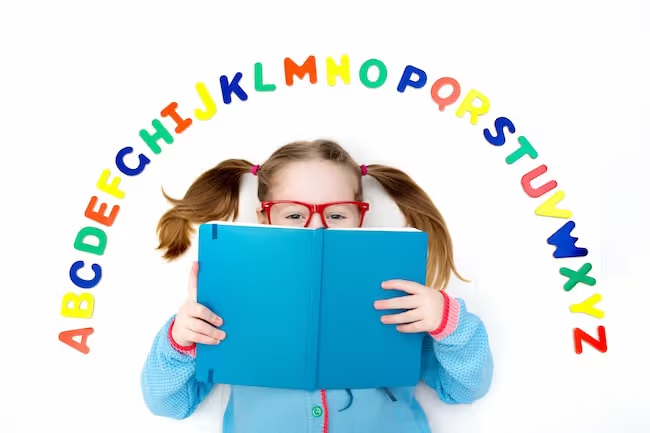




Most children begin to learn English spelling words and spelling rules in the first and second grades, at the same time as they are learning how to read and write. And while being able to spell is not necessarily a reflection of a child’s intelligence, it’s a skill that is important to master.
That’s because poor spelling habits will follow a student as they move into higher grades and their vocabulary grows. Misspelled words are distracting for teachers who are correcting assignments and can be embarrassing for adults who still make mistakes in professional communication.
More importantly, problems with spelling can alert teachers and parents to the presence of an un-diagnosed learning difficulty, such as dyslexia.
In a language in which there can be multiple ways to represent the same sound in writing, knowing the correct way to spell a word is not always evident.
There are some general patterns in English that have enabled educators to write lists of rules. However, there are also exceptions to these rules and plenty of notoriously hard to spell words.
Adult learners who did not master spelling at a young age will have fossilized errors they need to unlearn. ELL students also have the differences between British and American spelling to contend with.
For educators charged with introducing spelling words, explaining the rules, motivating learners and correcting a child’s early written work, teaching spelling may prove challenging. But with fun teaching strategies in place, spelling instruction is less tedious and can even be enjoyable, particularly when learners excel to the point of participating in whole school competitions and regional spelling bees.
How do kids learn spelling?
Kids learn how to spell in the first and second grades. Most early spelling words need to be memorized. This is particularly true of high frequency service words. Teachers will often group them in sets and provide weekly quizzes.
Rules will be explained and terms that follow the same rule may be taught together, to help learners recognize patterns. As students become stronger readers, they encounter familiar words more often. This helps them with spelling.
The more students use their words in writing activities, the greater the chances they will learn them by using the correct form, referencing it or making a mistake which they must later correct.
Sound-letter mapping
Children spend the first few years of life learning how to speak their native language. They acquire a certain amount of words in their vocabulary and then begin learning the alphabet and phonics.
In this way, they can identify the sounds words contain and match them to letters and letter combinations. These are essential pre-literacy skills that every child needs in order to start reading and writing.
As spelling involves sound-letter mapping, some words can be spelled by ear.
However, this requires learners to be able to hear every sound the word contains. Not everyone can do this. Children who have a hearing impairment, which often occurs in kids with Down syndrome, may struggle with spelling because they simply cannot pick out all of the sounds in a word.
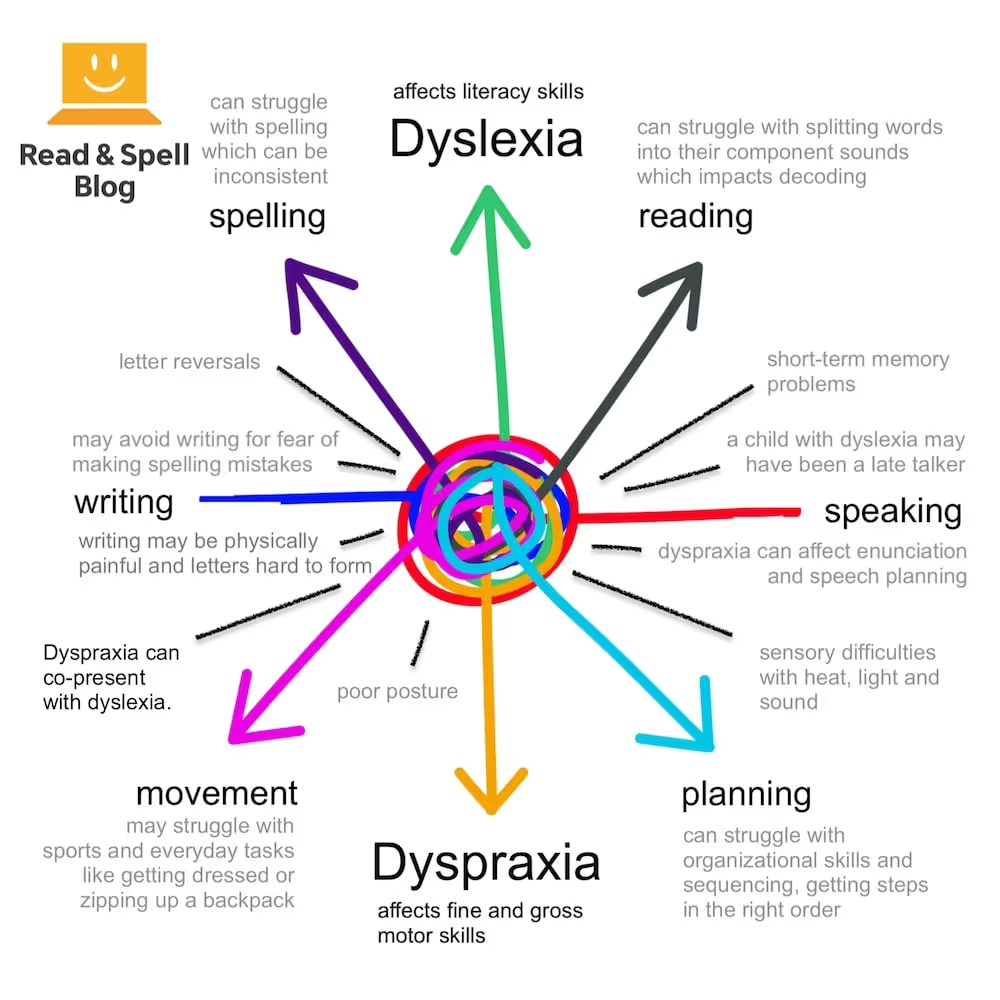
Identifying phonemes is also a particular challenge for children with dyslexia.
Dolch words
Many early spelling words come from the Dolch list, a selection of terms that make up 50-75% of all of the text in children’s books and school materials.
Also called Sight Words, learning to recognize and spell these words makes it easier for kids to focus on harder and less frequent terms in reading and writing activities. Made up of prepositions, verbs, adverbs, adjectives and conjunctions, there is an additional list of common nouns that teachers may choose to introduce. Learn more about teaching Sight Words in this article.

Tips for teaching spelling
Let them get creative
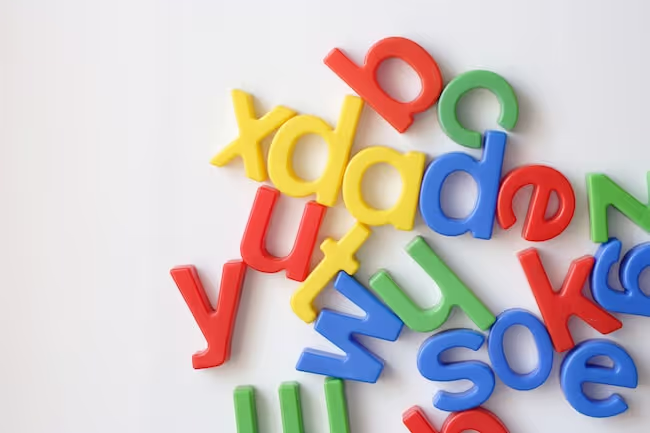
Break out the construction paper and markers. Alternatively, have students cut out letters from magazines and make a ransom note style collage of words. Learners might even create posters containing different illustrations of the words on their list. The more cognitive attention given to the task and the more fun they have, the more likely a word will be remembered.
Write words out by hand
Rote practice and memorization may be boring but they can do the trick when it comes to focus on form. Having students copy a word multiple times helps. However, if a student struggles with handwriting, such as in dyspraxia and dysgraphia, it may be better to have them type the words on a computer.
Encourage reading
The more learners see a word spelled correctly, the easier it is for them to transfer knowledge of form into long-term memory. Find stories that contain repeat examples of the words on your spelling list. You might even write up a worksheet and have kids underline or star the terms they recognize.
Spell the word out loud
Say words out loud and spell them out loud too. This encourages students to do the same. When kids spell out loud it helps them internalize the correct order of the letters using their ears as well as their eyes. This is also a good strategy for children who struggle with learning difficulties and helps in preparation for competitions like spelling bees.
Keep words on display
Put up as much print as you can manage in the classroom. Words that are in a child’s environment will be received as passive input, which over time will transfer to active knowledge.
Play games to practice
Crossword puzzles and worksheets are great for homework or quiet activities but getting the whole class involved in games such as hang-man, is even better. Why? Because students will be motivated to spell the word correctly in order to win. Delivering answers will also necessitate both written and spoken responses. Some games will also give them a chance to evaluate their fellow students’ responses and correct any misspelled words.
Teach typing
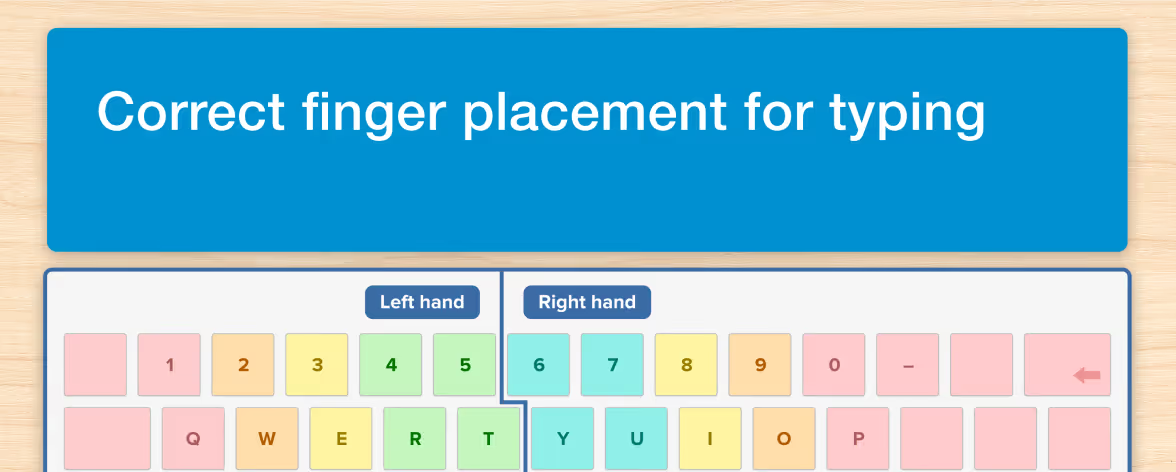
A great way to practice spelling is through a typing course. Students type and spell words over and over until they learn which letters keys represent, and how to reach for them in sequence. Typing gives students a chance to revise words they’ve already learned and learn the spelling of new words. They do this with the help of muscle memory in the fingers.
A multi-sensory approach like Touch-type Read and Spell's will also help with grapheme-phoneme mapping and strengthen reading skills.
Explain mnemonics
Some hard to spell words can be made easier for students if they use a mnemonic device to remember the spelling. This may entail inventing an anecdote where characters in the story stand for the letters in a word. A student may also want to use images that correspond to letters, to help them remember the spelling.
Learning how to recognize dyslexia
It is crucial to catch learning difficulties early on to prevent a child from falling behind his or her peers and help kids reach their full potential in the classroom. Students with dyslexia may have a hard time spelling words their classmates find easy.
They may reverse letters in handwriting activities or spell a word correctly one day and incorrectly the next. While spelling is impacted, dyslexia can also have serious implications for reading. Learn more about spelling strategies for dyslexic students in this article.

Students who struggle with spelling
Having excellent spelling skills doesn’t necessarily mean a child is smarter than other kids. Nonetheless, learning good spelling habits from the start is important.
For students who struggle with spelling, working through a typing course can be just the ticket to improving their skills and gaining more self-confidence and motivation along the way. That’s because students can practice their typing in and outside of the classroom. Moreover, typing is thought of as more of a computer skill, which is less embarassing than needing extra help for spelling.
A modular course, like TTRS, is made up of individual units that students can repeat until they have learned the material. This gives learners the chance to overlearn spelling, which may be exactly what they need. They can also learn at a pace that is just right for them. Learn more about teaching kids to type and give TTRS a try today!
Do you have any creative tips on teaching spelling words? Send us an email and join the discussion!