


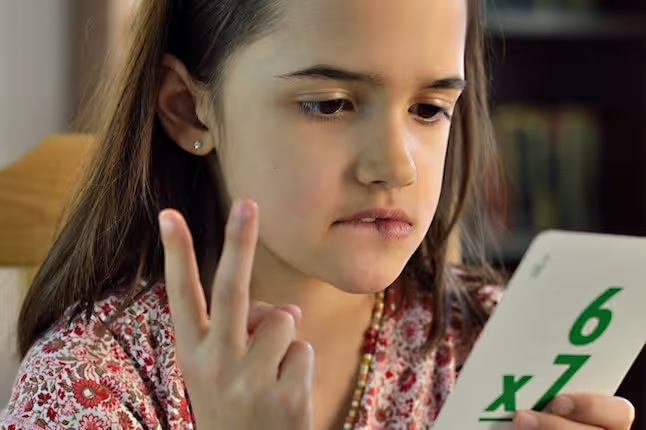
Math facts are basic calculations that children can learn in order to help them do arithmetic more quickly. By committing math facts to memory, they can be recalled fluently so attention is freed for working on higher order math functions.
Drills are often the first thing that comes to mind, but the goal for parents and teachers is to help children automatize these facts in as painless of a way as possible - even better if it can be fun!
Teaching math facts
What to teach first
Addition and subtraction math facts are typically learned first, followed by multiplication and division. As in most areas of mathematics, learning is cumulative, and one thing builds on another.
Teaching math facts to students
Math facts can be thought of as the basic building blocks of math.
The more fluent and accurate a child’s knowledge of them, the more confidently and quickly they can work through problems.
So, what’s the best way to teach them?
There is no one right way and the approach you take may be different depending on your learner.
First, information must pass from short to long-term memory. To automatize a fact, it then needs to be encountered and recalled frequently enough so production happens quickly and effortlessly.
One of the best ways for a teacher to ensure learning has taken place is to see if learners have productive knowledge of a math fact. Can they recite it aloud or write it out?
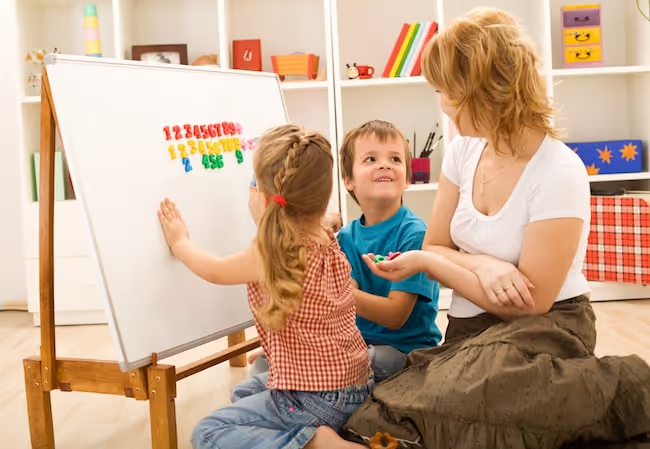
6 Ways for kids to practice math facts
- Write them out. Use a smartboard, a whiteboard, a blackboard, or even just a plain piece of paper and have a child write them out as you say them aloud. This is a basic exercise but there’s no reason why it can’t be effective. It works especially well for kids who are confident with handwriting. To add a sensory element, you can have them trace numbers and equations in the sand or on a foggy car window. This is a great way to practice on the go and the novelty can make a traditional drill like this feel more fun.
- Make use of magnetic numbers. Another tactile way of practicing math facts is with magnetic numbers. You can also use foam numbers on a wet surface or have them arrange wooden numbers on a table. The best part of learning and rehearsing facts this way is students’ errors are easily corrected through rearranging the numbers, avoiding the stigma of erasers and red pens. Just make sure to purchase two or more sets of magnetic numbers so you can create equations in which a digit appears more than once, for example 1 + 1 = 2.
- Say them aloud. Reciting math facts aloud is a great way to commit them to memory, especially for students who are auditory learners or those who struggle with processing visual information. Prompt the child to recite the entire fact then provide the correct answer orally if needed. Often students who are struggling to remember a fact can hear your voice or their own rehearsing it. Math education doesn’t have to take place at a desk. Rehearsing facts while on the go, in the shower or even at the supermarket can make for an engaging approach. In the classroom, a teacher may have learners chant the math facts as a group. You can even create a game in which two teams compete and must say the fact in a particular way, whisper it, sing it, shout it etc. This is a fun way to practice.
- Type them out. For kids who struggle with handwriting, and/or speech production, touch-typing is often an effective approach for practicing newly learned information. With the Touch-type Read and Spell platform, the math fact appears on the screen. It is then read aloud, and the student must type it out at the same time, using the correct finger positions. This type of multi-sensory drill has proven effective for committing information to memory. This is because it brings together visual, auditory and tactile stimuli to help math facts "stick."
It’s also a great way to work on number spelling! - Show them on a calculator. You can play a calculator game where a learner is given a sheet of facts to enter and must guess before confirming their answer on the calculator. This gives students a measure of control in checking their own work and makes it easier for the teacher to see where more practice is needed. In the classroom, a teacher can divide learners into two groups where each group is responsible for setting up a math fact equation for the other group to solve using the calculator.
- Arrange objects on a flat surface. From food to buttons, recreating math facts this way can help visual and tactile learners commit them to memory. Also note this can work well for students who struggle with hyperactivity as it gives them a chance to move during a lesson. Another kinesthetic learning activity is to give students flashcards and get them to arrange the cards (or themselves holding the card) in groups based on shared factors. Mixing up the order in which students learn and practice facts is important. It’s also good to allow learners a measure of creativity in an otherwise rote-learning task. For example, you could have learners illustrate math facts through drawing or painting.
You might get them to create their own rhyme or song, such as three little birds sat on a wall, two flew away and then there was one. Many nursery rhymes use this tactic to teach math but it’s always fun to give kids a chance to write their own.
What causes a child to struggle with math facts?
If you notice a child is having a hard time learning math facts, there may be a specific learning difficulty to blame.
Dyscalculia
Students with dyscalculia can take longer to master counting. They may try to count on their fingers instead of relying on learned math facts, and they often struggle with basic arithmetic.
It’s sometimes recommended that students with dyscalculia be given a calculator as a classroom accommodation to help them access high order math lessons.
Learn more about dyscalculia.
Dyslexia
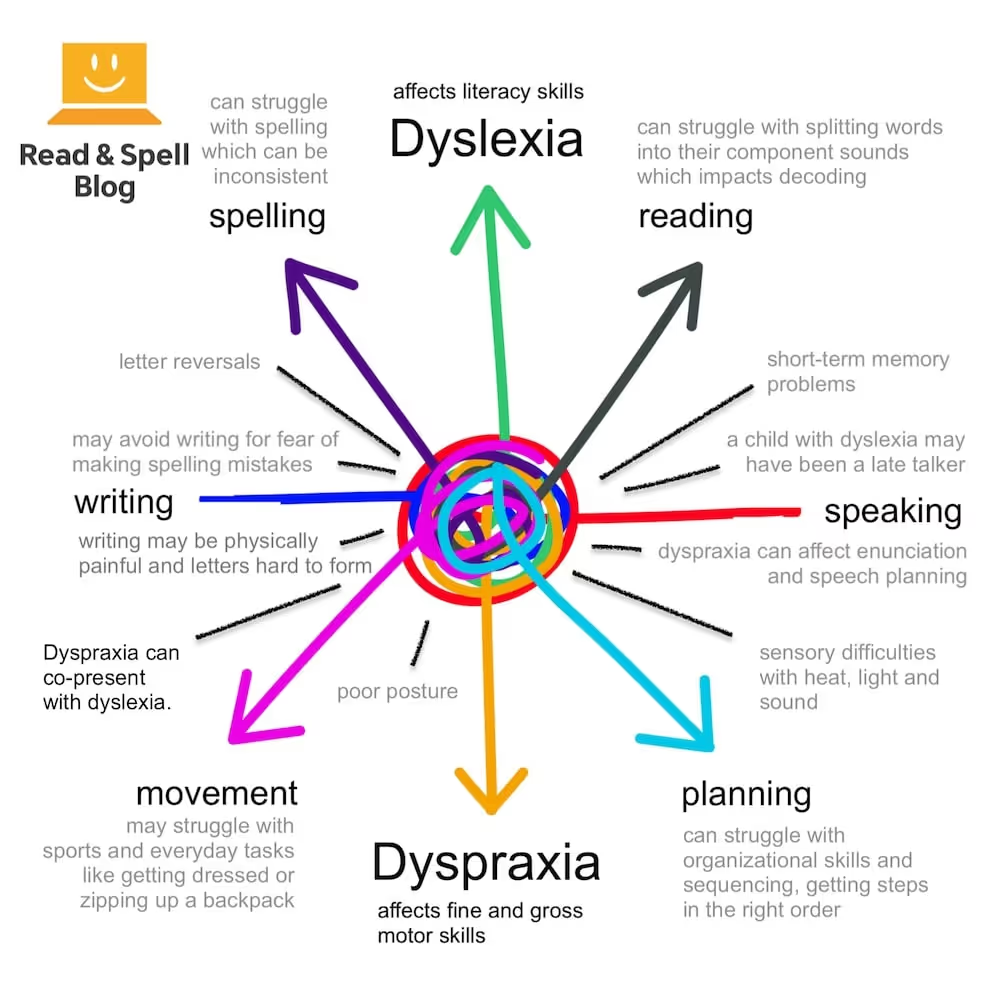
Individuals who have dyslexia may struggle with math facts. They can be prone to reversing digits and/or changing the order of numbers when working on an equation.
Word problems are often particularly difficult for students with dyslexia.
Visual processing disorders
Visual processing disorders affect an individual’s ability to makes sense of visual information.
This means learners have a harder time interpreting math symbols, including numbers and letters on the page.
Learn more about visual processing disorders.
Slow processing
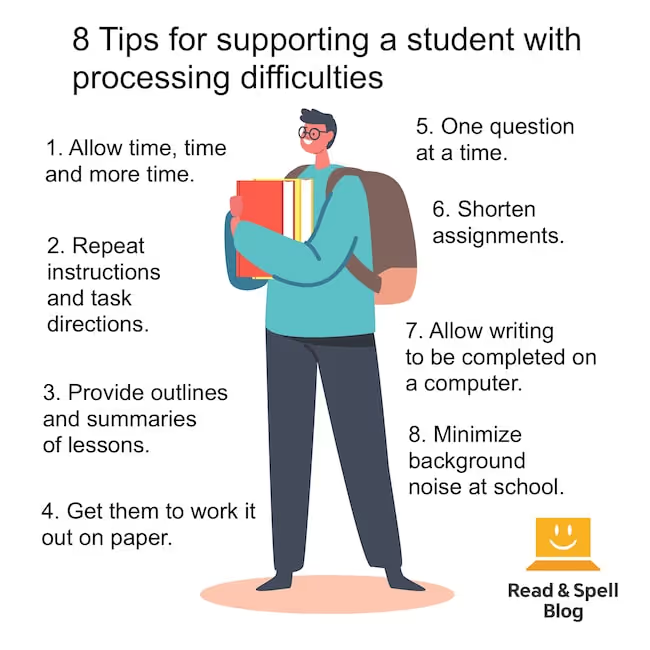
Children with slow processing speed can have trouble performing math operations as they struggle to hold multiple pieces of information in memory at the same time.
Learning math facts is especially important, but this too can take longer and require more drills and repetitions to automatize learning.
Math anxiety
Math anxiety can cause a learner to experience a mental block which may cut off access to learned information, like math facts. Anxiety typically affects learners during timed assessment situations.
Keep in mind, just because production is interrupted, it does not mean the individual has not learned the math facts.
Dyspraxia
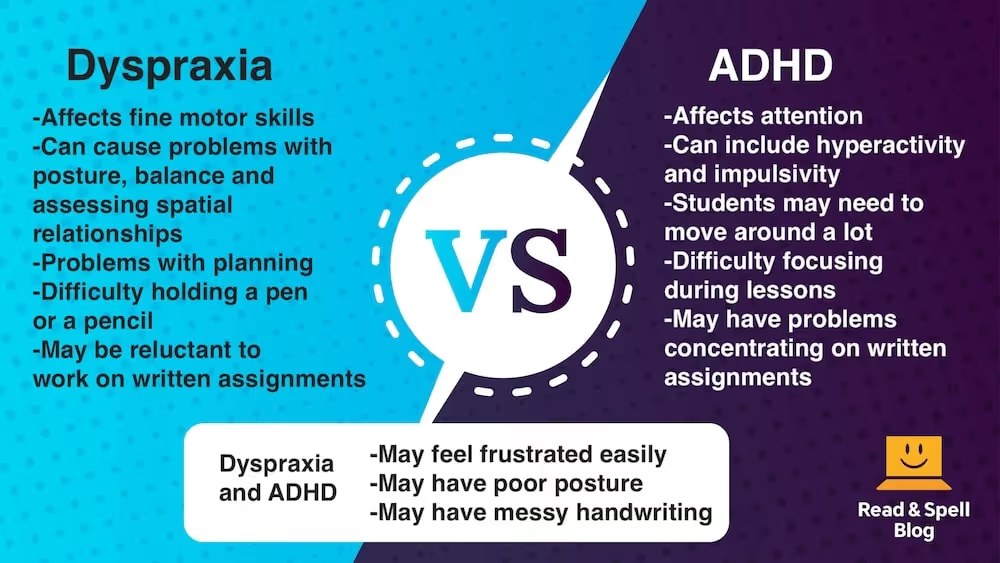
Dyspraxia is a fine-motor skills difficulty that can make writing by hand, painful. Individuals with dyspraxia may additionally have problems with sequencing, which can cause them to struggle in multi-step math problems.
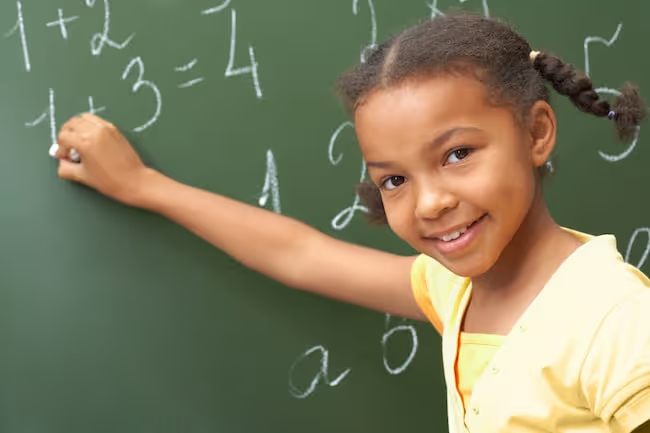
Tools for reinforcing math skills
Flashcards are a great no-fuss way to learn math facts. Shuffling a deck makes it easy to mix up the order in which students practice, a learner can study them together with a tutor, a peer, or on their own, and flashcards provide both visual stimuli and a chance for kinesthetic learning. Students can flip the cards over, stack them, or sort them into piles.
There are also a number of apps designed to help students learn math facts. Many of them use gamified approaches which may include drills that motivate students to practice, or actual games based around providing math fact answers and solving simple equations.
Touch-type Read and Spell is both a computer program and an app that teaches touch-typing. Originally designed to help learners with dyslexia, it uses an Orton-Gillingham phonics-based approach to learning in which students see words on the screen, hear them read aloud and type the corresponding keys.
Multi-sensory practice helps reinforce learning and short modules build knowledge and memory for math facts in a gradual and gentle way. TTRS also has a series of lessons on math subject skills that help students build confidence and reinforce classroom math education.