



Learning difficulties, known as learning disabilities in North America, are conditions that can affect an individual’s ability to gain knowledge and skill at the same rate as his or her peers. Having a learning difficulty does not make someone less intelligent, it just means they learn in a different way and traditional classroom activities might be less effective.
Children and adults with learning difficulties may require specific accommodations and/or strategy training in order to overcome the challenges they face and make progress in an academic or work environment. They can also benefit from additional support when it comes to motivation and encouragement.
That's because despite there being plenty of strengths that correlate with learning difficulties, such as enhanced creativity and out-of-the-box thinking, it's more common to hear about the negatives. Focusing on the positives for a change can make a big difference in encouraging people with learning difficulties to develop healthy self-esteem and increased self-confidence.
There's quite a range
The term “learning difficulties” includes conditions like dyslexia, which primarily affects reading and spelling skills, to dysgraphia which mainly impacts writing, and dyscalculia which affects math skills. Learning difficulties can affect people of all ages; however, they are particularly problematic for children who are learning to read and write as they may interrupt the development of the key literacy skills required for students to meet basic requirements in lessons.
No two individuals with a particular learning difficulty will have the same set of symptoms. This sometimes makes it harder for educators and parents to recognize the underlying cause of performance issues, such as slow reading or written production that doesn't seem to reflect what the student knows.
It’s also common for conditions to go undiagnosed. This can lead to students not receiving the help or attention they need.
Adult learners enrolled in an adult basic skills programs or individuals who struggle with spelling and reading may have faced learning difficulties as children but not received the proper support. When learning difficulties go undiagnosed it can result in a negative attitude toward learning and have serious consequences for young-adults who may not finish school and acquire the skills they need to be successful in today’s job market.
What’s in a name?
Labels change the way people with learning difficulties think about themselves and are treated by others. “Learning difficulties” was first used in the 1980s and along with "learning differences" is preferred in the UK given it addresses the difficulties experienced by an individual vs. what causes the difficulties.
Moreover, a difficulty can be overcome whereas a disability is a lifelong condition that handicaps a person.
You may also hear “learning disabilities, learning disorders, specific learning difficulties, and attention issues.” The key thing to remember is that you are discussing, first and foremost, people. That’s why it is preferable to say “the child with dyslexia” instead of the “dyslexic child.”
One common exception to this rule is when it comes to autism. Many people in the ASD community prefer to refer to themselves as "autistic" as opposed to "having autism" as they see it as a fundamental part of their identity.

Learning difficulties, ADHD, motor skills & processing disorders
Dyslexia
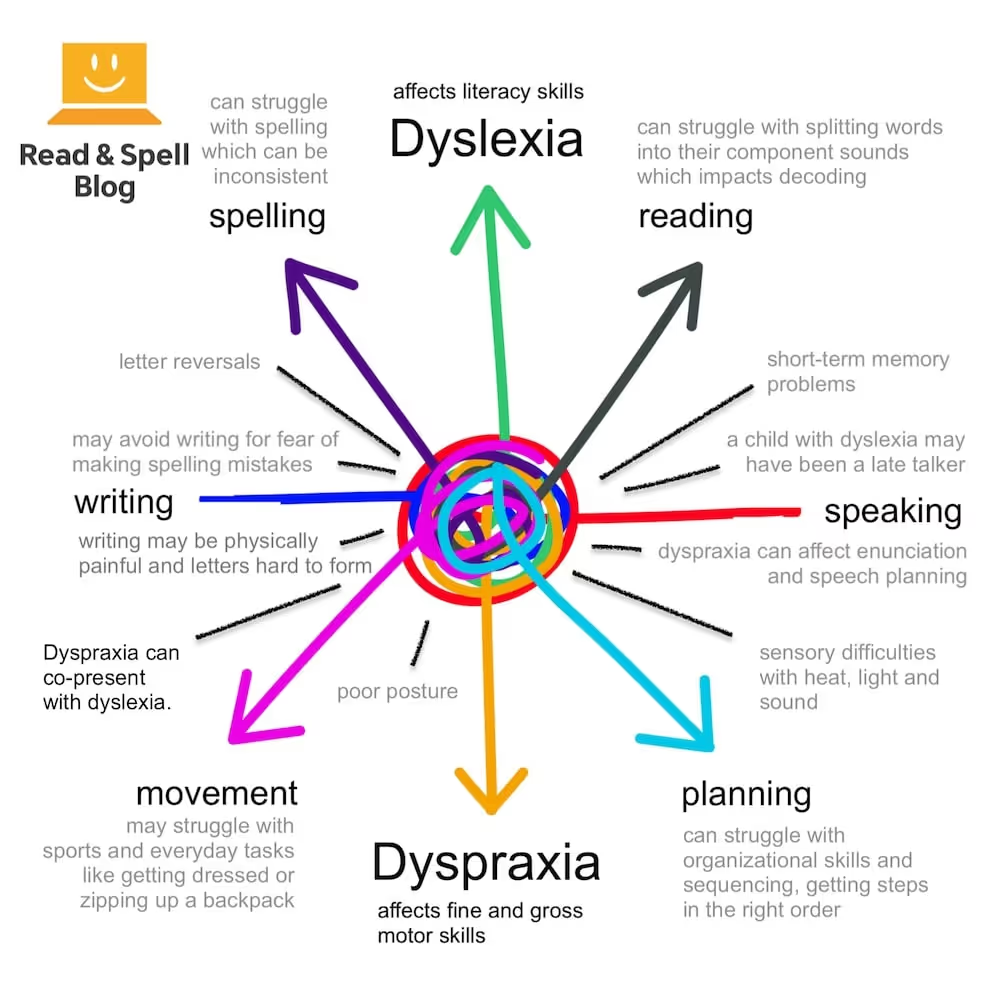
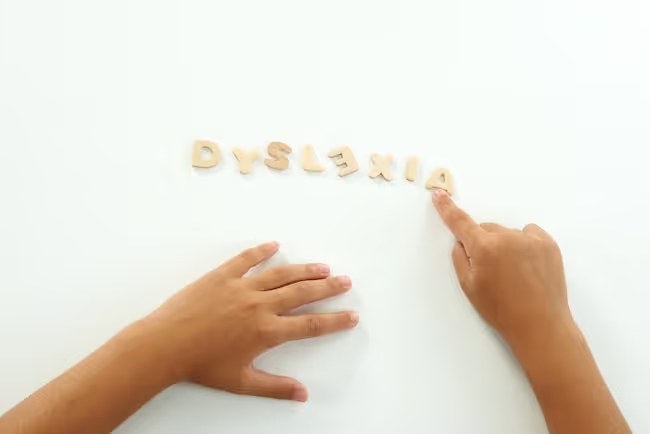
One of the most common specific learning difficulties, some estimates suggest that 10-15% of the population struggles with dyslexia. People with dyslexia often experience difficulty dividing words into their component sounds, which in turn affects reading and spelling ability. No two individuals will have exactly the same set of symptoms and dyslexia can range from mild to severe. Learn more about the strategies that can help students with dyslexia with spelling and classroom learning.
Dysgraphia
Dysgraphia refers to problems with writing that can range from handwriting difficulties which make writing physically painful, to issues with organizing ideas and getting thoughts down on paper. Children with dysgraphia may try to avoid writing. When forced to write, they often produce messy written work (similar to that of kids with ADHD) that does not reflect their ability to discuss a subject.
ADHD
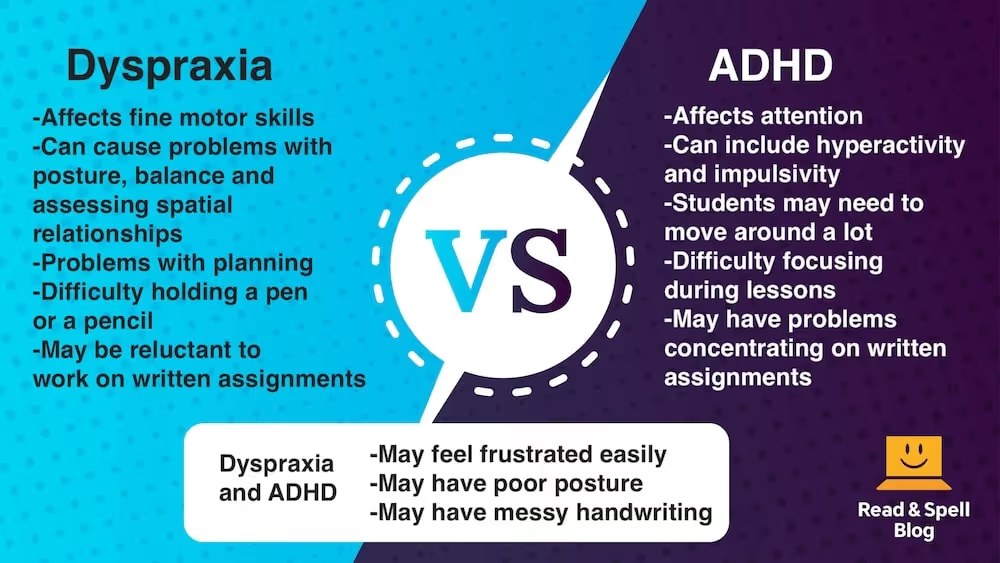
Attention disorders can commonly co-present with learning difficulties. You may recognize a child with ADHD for their impulsive behavior and/or inability to keep still. Nonetheless, attention deficit hyperactivity disorder (ADHD) can also come in a primarily inattentive presentation (formerly referred to as attention deficit disorder or ADD) . It's a lot easier to see a child when hyperactivity is present. That's because a learner who struggles mainly with attention issues may simply perform poorly and have their learning difficulty go unnoticed. Problems with attention can affect a student's ability to concentrate on their lessons and understand what they're reading.
Slow Processing
Students with slow processing issues may need more time to understand something than their peers. They can have trouble with reading comprehension and getting started on tasks and often struggle to complete assessments and other timed classroom activities. Learn more about slow processing.
Dyspraxia
While not classed as a learning difficulty, dyspraxia is a coordination disorder that affects motor skills and can make it hard for people to hold a pen or pencil in order to write by hand. It shares some symptoms with ADHD and has been known to affect planning skills. Dyspraxia sometimes shows up alongside dyslexia.
Additional things to keep in mind
Nature vs. nurture
Specific learning difficulties may or may not be genetic. For example, some studies on dyslexia show its tendency to run in families. Regardless of the origins of a learning difficulty, strategies exist to help people overcome challenges and reach their full potential in an academic environment.
Symptoms vary
There’s a wide spectrum when it comes to how severely an individual is affected by a learning difficulty and which particular symptoms he or she experiences. Diagnosing the issue and understanding the difficulty on a case-by-case basis is crucial so classroom activities can be adjusted to benefit the individual student. Also, note that the strategies and accommodations that work one month, might not work the next. It's important to reevaluate progress regularly and make changes as necessary.
Self-confidence and self-esteem
Someone who is struggling with reading and writing often experiences low self-esteem and a lack of confidence in the classroom. Receiving extra support and attention from teachers may also cause embarrassment in front of peers. Learn more about helping students with specific learning difficulties be more confident at school.
Motivation and self-efficacy
A learning difficulty can cause significant challenges for students to overcome. Helping individuals to stay motivated and break tasks down into manageable steps is key.
Technology
New technology exists to support students with learning difficulties by offering opportunities for multi-sensory learning and the ability to repeat lessons at a pace set by the learner. Take advantage of a wide range of resources until you arrive at a learning program that works.

Reading, writing and spelling skills
One way in which individuals with learning difficulties can improve reading, writing and spelling skills is through learning touch-typing. In fact, touch-typing is often the recommended approach for completing writing exercises in the case of dysgraphia (and dyspraxia). That's because it helps students translate ideas into writing without the distraction of forming letters.
A multi-sensory typing course will repeat a sound, display the corresponding letter and require the student to type the correct key. This helps with phonics training and uses muscle memory to assist with spelling. Repeat exposure to vocabulary also reinforces sight reading.
A modular course like Touch-type Read and Spell can be taken after school and help students build confidence slowly, as they progress at a pace that is right for them.