


Studies suggest that 1 in 10 adults in the US and UK has dyslexia, a learning difference that can affect working memory, reading, writing and spelling skills. In 60% of cases the dyslexia may be mild to moderate, but the remaining 40% of people can struggle with a severe form that interrupts literacy skills development when early support is not put in place.
Dyslexia is still called a learning disability in some countries, but in the UK it is increasingly referred to as a specific learning difference. The reason for this is dyslexia does not make you less able than your peers, it is simply a different way of processing language in the brain.
It’s also not related to intelligence, but dyslexia can prevent an individual from being successful due to the central role of reading and writing in mainstream education. Moreover, getting low grades at school or losing a job because of literacy skills can limit career options for adults, and may affect an individual’s confidence and self-esteem for years to come.
Fortunately, most problems can be overcome, even in adulthood, with the right literacy intervention, strategies and accommodations.
Screening vs. testing
It’s never too late for an adult to get tested and obtain the help and support they need to address their dyslexia. The difference between screening and testing is the former is a quick online test that cannot confirm definitively if you do or don’t have dyslexia. It will, however, let you know if further diagnostic assessment is recommended.
An assessment is a series of tests that can take several hours to a day to complete and will give you a more accurate picture of your strengths and weaknesses, so you understand how dyslexia affects you and which accommodations are most recommended. Dyslexia can take different forms but it is most frequently genetic, which means it can run in families.
One reason to get tested is to be better informed about the symptoms. This can help your own children, particularly if they also show signs of dyslexia or struggle with aspects of reading and writing.
To learn more about dyslexia screenings and assessments, visit our article on how they test for dyslexia. You may also find these articles helpful: Where to find support for adult dyslexia, Am I dyslexic?, Identifying Dyslexia in 3 easy steps
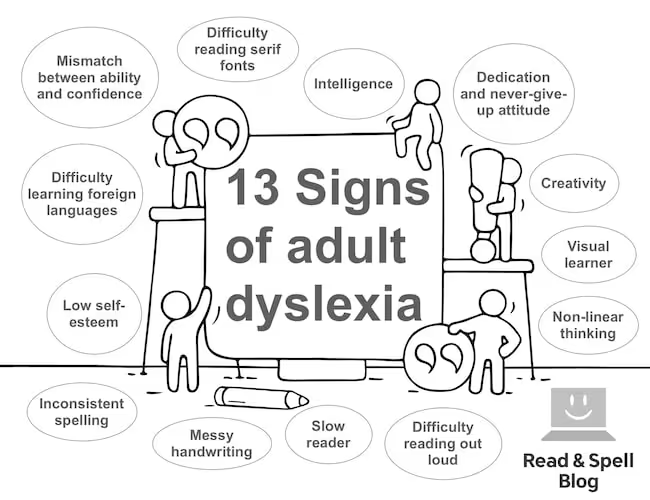
13 Signs of dyslexia in adults
1. Non-linear thinking
Some people refer to the dyslexic brain as nonlinear. This is because individuals with dyslexia tend to bring ideas together in a unique manner, which may give them an advantage in problem-solving activities. They often have the ability to see the bigger picture when others get lost in the details. Dyslexic entrepreneurs such as Virgin CEO Richard Branson have attributed some of their success to this nonlinear thinking, believing it helps them make better business decisions.
2. Inconsistent and troublesome spelling
Adults with dyslexia may have inconsistent spelling. This means they can spell a word correctly one day, but not the next. They may also misspell the word in a different way each time. Poor spelling can cause problems when it undermines confidence and gets in the way of fluency in written language production.
Thankfully spell-check, autocomplete, and speech-to-text technology exist to make life considerably easier for adults with dyslexia. It’s also possible to master touch-typing, which can improve spelling by transforming letter order into a series of key-strokes learned by muscle-memory. Learn more in our posts on spelling for adults and touch-typing for dyslexics.
3. Creativity
The out-of-the-box and non-linear thinking styles of dyslexic adults can help them develop a creative flair that others can’t help but pay attention to. They may excel in the arts, music, or even be talented authors and storytellers! Creativity doesn’t have to be limited by difficulties with literacy skills. Read more in this post on the strengths associated with dyslexia.

4. Reading out loud is problematic
Dyslexia affects the way individuals break words down into their component sounds. This is why spelling is tricky, but it is also why decoding or sounding out words in reading can be a struggle. Because of early issues with decoding, some adults with dyslexia may have developed coping strategies that include sight-reading, which relies on whole word recognition.
Problems can still show up, especially when reading unfamiliar words out loud or trying to decode nonsense words in children’s books. Going through a phonics program, even as an adult learner, can help build decoding skills for individuals who would like to improve their reading ability.
5. Messy handwriting
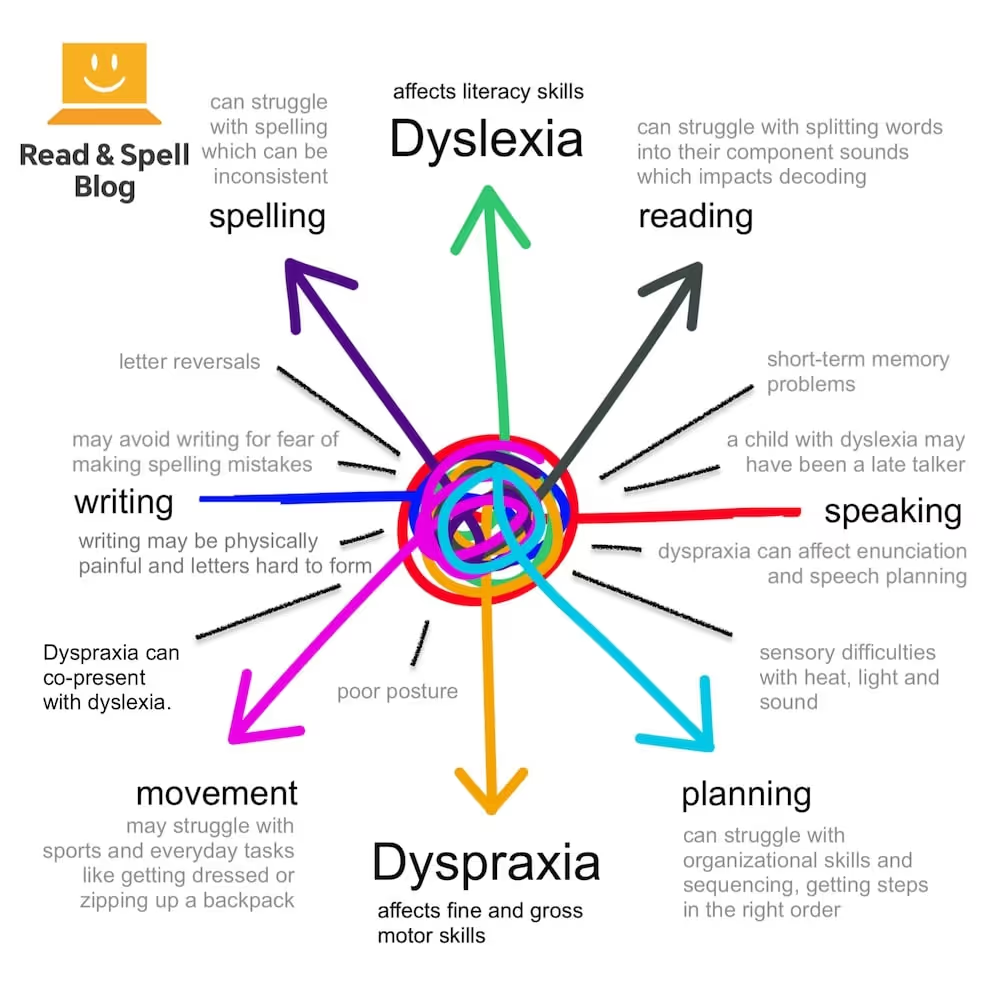
Not everyone with dyslexia will have poor handwriting, but many individuals find it difficult to write neatly because they are distracted by problems associated with spelling. There’s also a tendency for dyspraxia and dyslexia to co-present. Dyspraxia is a motor-skills difficulty that can make handwriting painful, which in turn results in messy handwriting. Learn more in these posts on handwriting difficulties and the difference between dyslexia and dyspraxia.
6. Intelligence
There’s a widely held misconception that individuals who struggle with literacy skills are less intelligent than their peers. In reality, dyslexia and intelligence are not linked and many dyslexic children and adults actually test quite high on non-verbal measures of cognitive ability – some are even in gifted programs!
7.Difficulty with serif fonts
Serifs are small decorative bits that can distract from basic letter shapes and make for a busy visual. Adults who have dyslexia may struggle to read text when it is printed in a font with numerous flourishes. That’s why creating and printing documents in sans-serif fonts is generally recommended, to help dyslexic individuals with decoding and word recognition.
There is even a font entitled Open Dyslexic which may be the best option for someone with dyslexia, though every individual is different. Experts recommend experimenting until you find the font with the highest readability for you. It may also help to have documents printed or displayed in an off-white background.
8. Visual learner
Many adults with dyslexia are visual learners. This means they are more likely to succeed when material is presented with the addition of visuals, such as slides or illustrative charts. It’s also why learning in a multi-sensory way can be so effective. Discover more about multi-sensory approaches.
9. Reading takes longer
Because of decoding issues, reading can be a time-consuming and laborious task for someone with dyslexia. A dyslexic reader may find they lose their place easily or are always rereading the same bit of text in order to fully process its meaning.
An easy way around this is to listen to audiobooks, or to try running a ruler down the page to keep your place and add a kinesthetic element to the task. Read more about strategies for struggling readers.
10. Dedication and a never-give-up attitude
Dyslexia is only a disability in name and many adults who have struggled to acquire early literacy skills go on to achieve great things in higher education and business. Nonetheless, they may initially have had to work harder than their peers to overcome the reading and spelling problems posed by their dyslexia. This extra work can build determination and inner-strength, qualities that help people with dyslexia go far, no matter what they choose to do.
11. Foreign languages are a struggle
The same decoding problems that can come up in English have also been shown to affect individuals who pursue second language study. However, there is a caveat: some languages may be easier for people with dyslexia than others. That’s because a more 1:1 phoneme grapheme mapping system and less irregular approach to spelling can make acquiring fluency in the written language easier.
There’s also some evidence that learning a language without an alphabet, such as Mandarin, may be easier for dyslexics. Learn more about dyslexia and foreign language study, including which languages are considered the easiest to learn, in this article. If you're really interested in learning a language, sign up for TTRS and try the new "Learning a new language" subject which is full of helpful tips and strategies for dyslexic learners.
12. Mismatch between ability and confidence
Individuals with undiagnosed dyslexia may lack confidence because of past educational failures. For adults with mild dyslexia who are generally able to manage their literacy problems through self-developed coping strategies, confidence can still be an issue.
For example, some people feel a secret sense of shame and doubt their own abilities, which can hold them back and keep them from pursuing promotions at work or positions where a certification test must be passed. That’s when it’s useful to have a diagnosis of dyslexia, which can be used to secure additional time and accommodations, such as the ability to use a computer for writing.
13. Low self-esteem
When dyslexia goes undiagnosed, it can cause an individual to believe they are somehow lacking and less intelligent than their peers. Over time, this may not only undermine their confidence, but cause them to think poorly of themselves and their own abilities.
Symptoms of low self-esteem include a negative self-image, self-doubt, and depression. That’s why it’s so important to recognize the signs of learning difficulties in adults, to help everyone get the support they need to achieve their full potential.

Typing programs and tips for success
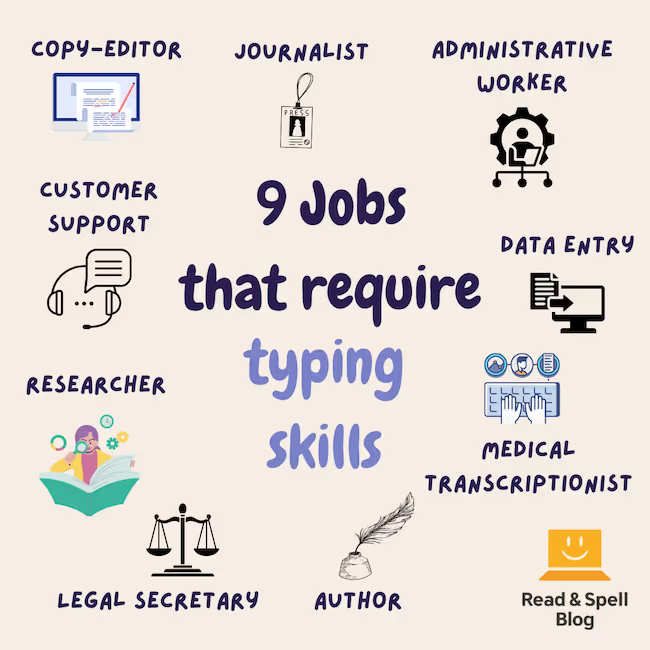
Touch-type Read and Spell is a literacy-based typing solution that was developed to help individuals with dyslexia learn typing skills and improve reading and spelling abilities at the same time. Typing is a great skill to have for working adults and mature learners, as it can facilitate written production.
Typing automatizes the process of recording thoughts in language, so words become a pattern of key-strokes saved by muscle memory. Ideas flow through the fingers and onto the screen, improving fluency and making it easier and faster to create written documents.
Discover a typing program for adults with dyslexia
The problem with most typing programs is they put an immediate focus on developing speed over accuracy, which can be frustrating for individuals with dyslexia who may need more time and opportunities to repeat lessons in order to learn keyboarding skills. TTRS takes a multi-sensory approach in which the user hears the word spoken aloud, sees it on the screen, and then types the correct sequence of keys. Learners can follow on-screen hand guides, delivered at the pace and choice of the individual. This helps to embed the learning in memory.
The curriculum also follows a carefully structured program of whole-word phonics. So by learning to type particular words in a set sequence, reading and spelling skills are gradually built up. Using TTRS consistently can help build confidence and is a great way for adult learners to address their dyslexia without the embarrassment associated with purely literacy-focused tools.