



Dyspraxia is a neurodevelopmental condition affecting motor coordination and planning. In certain cases, processing speed, attention and memory may also be affected. Because no two people will present with the same set or severity of symptoms, every dyspraxic individual has different needs. For example, it can be helpful for some students to have task instructions broken down into individual steps and lesson material chunked into more manageable sets.
Folders, agendas and calendar tools may help a working adult stay organized and meet deadlines, and in cases in which writing by hand is painful, it might be recommended that someone with dyspraxia learn how to touch-type. Dyspraxia is a lifelong condition, but with a positive strategy and correct programs in place alongside access to the right accommodations, most adults can navigate challenges effectively and thrive at work or at school.
5 Things to know about dyspraxia in adults
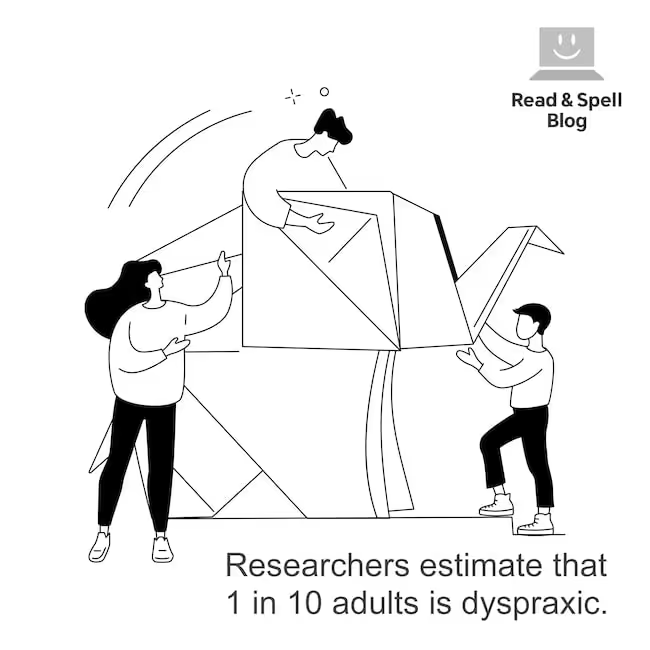
- It’s estimated that one in ten adults is dyspraxic. Some estimates suggest up to 10% of the population has dyspraxia. It is more commonly found in men than in women and researchers suspect there is a genetic component, but no dyspraxia gene has yet been isolated. Despite its prevalence, dyspraxia is not well understood by the general public and is less commonly diagnosed than for specific learning disabilities like dyslexia and ADHD. This means working adults may be less willing to disclose their disability to employers and can have a harder time gaining access to the help and support they need.
- It goes by many names. Dyspraxia is often used interchangeably with Developmental Coordination Disorder, or DCD, but according to the Dyspraxia Foundation USA, they’re not exactly the same. In the past, dyspraxia was referred to as Clumsy Child Syndrome, a term which is now outdated and considered inappropriate and misleading.
- There’s a physical and an emotional component. Dyspraxia can cause people to experience stress and frustration when they struggle with day-to-day tasks that require coordination, such as getting dressed, cleaning, cooking and driving. Dyspraxic adults may also walk with a different gait, bump into things frequently and/or have trouble participating in sports. In some cases oral language skills are affected. These issues can lead to feelings of frustration and embarrassment in social situations. Over time individuals may begin to lack confidence, feel isolated and develop low self-esteem.
- It can affect your ability to learn. While dyspraxia has nothing to do with intelligence and is classed as a motor learning disability, not a specific learning difficulty, it can affect the way an individual learns. That’s because coordination difficulties make it harder to write by hand, which may compromise note-taking ability, essay writing and performance on tests. Dyspraxia can also make it harder for some people to stay organized and follow instructions. When short-term memory and slow processing are an issue, an adult may need more time to learn something than his or her peers and can struggle to stay on top of assignment deadlines and requests or demands from supervisors.
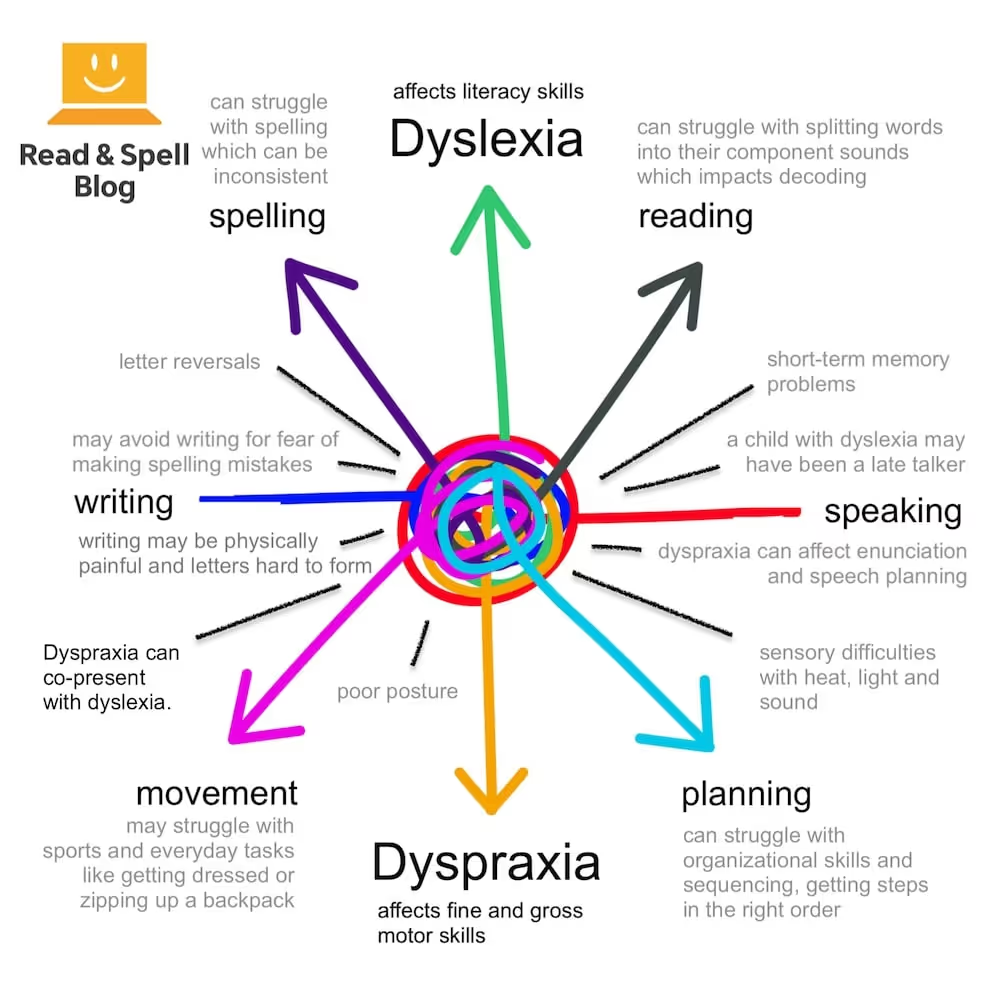
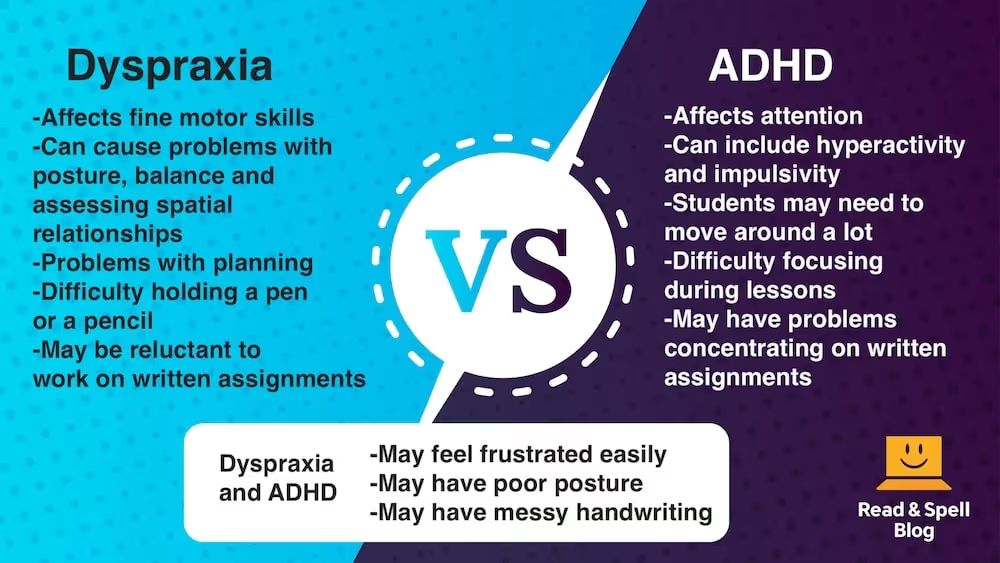
- It may co-present with other specific learning difficulties. Dyspraxia is commonly identified alongside dyslexia – some reports even suggest that half of dyslexic children exhibit symptoms characteristic of dyspraxia. Attention difficulties and dyspraxia may also co-present, as can dyspraxia and autism spectrum disorder. Learn more about dyspraxia and dyslexia, dyspraxia vs. ADHD, and dyspraxia and autism.
More questions answered
How do you know it’s dyspraxia?
In dyspraxia, movement and coordination difficulties are not the result of any muscle damage, nerve or tissue problems, nor are they to do with visual impairments.
Can doctors diagnose it?
Children with dyspraxia will have motor skills delays as compared to same-age peers. These delays may be noted by doctors, but a diagnosis is not always pursued.
Are there any other symptoms?
People with dyspraxia may experience heightened sensitivity to sensory input such as sound, light, or touch, and may also encounter challenges with balance. Differences in spatial awareness can make it harder to judge distances accurately, which may result in bumping into objects or navigating spaces differently. Some individuals may also find it difficult to distinguish between left and right, a common aspect of dyspraxia that simply reflects a different way of processing spatial information.
Is dyspraxia the same as apraxia of speech?
While apraxia of speech and dyspraxia both involve motor planning difficulties, they are distinct conditions. Apraxia specifically affects the ability to coordinate the movements required for speech.
What are the strengths associated with dyspraxia?
Children and adults with dyspraxia can be extremely bright, clever and creative individuals who possess a good sense of humor and a strong sense of empathy for others. They may be adept at finding new ways to learn and can be exceptionally motivated and determined, especially when it comes to problem solving.

Tips for success
Understand how dyspraxia affects you
People don’t “grow out of” their dyspraxia, but many adults with undiagnosed conditions have developed coping skills to help them get by. Nonetheless, it only takes a change in circumstances, such as a new role at work, or going back to school, to render previously helpful strategies ineffective. In certain cases this can cause an individual to seek out a diagnosis in order to qualify for support.
There are online screening tests you can take in the form of checklists that will tell you what the probability is that you have dyspraxia. However, diagnostic testing done by a qualified specialist can provide you with more specific answers on how dyspraxia affects you, including your strengths, weaknesses and a program of accommodations that can help.
Consider the possibility of secondary difficulties
Dyspraxia has been known to co-present with other specific learning differences. If you have motor coordination difficulties and also experience reading challenges, or find it hard to sustain attention and sit still, you may want to learn more about the signs of dyslexia, dysgraphia and ADD/ADHD. Consider doing a self-screening test to rule out the possibility that something else is going on, as a secondary issue can affect your dyspraxia diagnosis.
Enquire about support at work or at school
Get in touch with your school’s SENCO or contact your employer to learn more about help for people with disabilities and diversity in your workplace. With a diagnosis, you may have access to government subsidized training courses and other useful support. If you encounter a lack of awareness in your workplace, remember that advocating for your needs is valid and may also help improve understanding and inclusivity for others.
Try different strategies and accommodations until you have a system that works
Depending on the severity of the dyspraxia, an occupational therapist might be able to assist an individual in developing routines for performing everyday activities. Regular speech and language therapy can be useful if spoken language production is an issue. Thick grips on pens and pencils, using markers as writing utensils, and textured paper may assist with handwriting. It’s often recommended that longer and more demanding writing projects be undertaken with a computer, which allows for working in drafts and provides access to spelling and grammar-checks.
This is particularly true given the physical act of writing by hand may require additional cognitive effort from people with dyspraxia, which can take away from the quality and organization of the content. If typing is not possible, speech-to-text applications are an alternative. For some adults, making lists and checking things off is a way to build organizational skills. Other dyspraxic adults find color-coded folder systems or even step-by-step visual instructions make the difference.
Join local associations and groups for support
While local dyspraxia associations are relatively new in comparison to support groups for people with language based learning difficulties, you may still find there are regional meet-ups or online forums where it’s possible to exchange ideas with other dyspraxic adults, ask questions, and share your story.

Dyspraxia and typing
Many adults who are dyspraxic or suspect they may be dyspraxic can benefit from using a computer to assist with school and work-related projects, especially those that involve writing. This is because coordination difficulties can cause dyspraxic people to struggle with letter formation, writing in a straight line, and producing text that is the same size and/or clearly legible. Writing on a computer removes these issues and can help an individual focus on the quality and content of his or her writing.
Nonetheless, using a computer is far more efficient when people possess touch-typing skills. At first it may seem that learning how to type is an impossible feat for individuals with coordination difficulties. However, the TTRS course has been developed to help people with learning, motor and language difficulties improve their typing skills and strengthen spelling and reading skills at the same time.
It does this by taking a multi-sensory approach and prioritizing accuracy over speed in the early stages, so users can take their time and learn without pressure. Building up speed comes later. Content is broken down into bite-size modules so adults can fit their training into an already busy schedule, and study can happen on a personal or shared computer whenever you're connected to the Internet and have time.