



Gifted children are often precocious learners who can master counting, reading, and writing skills from a very early age. They will generally have a large vocabulary, advanced grammar and adult-like communicative abilities.
But while many do exceptionally well in academic pursuits, there are cases in which how best to support these special children, as they require help in areas in which they are underperforming and stimulation to encourage and nurture their giftedness. Moreover, some gifted children have difficulty making friends with same-age peers.
This can result in feelings of isolation, low self-esteem and a lack of confidence in social situations. That’s why it’s important to recognize problems early on, to ensure every child gets the help they need to reach their full potential.
No two children with giftedness are exactly alike. Some will present with high ability across the board whereas others find their giftedness is concentrated in a specific area such as math, science or arts. Nonetheless, most gifted children are highly intelligent students who score 130 or above on an IQ test.
They tend to be self-study learners who can teach themselves new skills and are always curious to know more about the world around them. They may have a very good memory for facts and highly developed reasoning skills, which often leads them to be critical thinkers and opinionated learners.
When giftedness is nurtured at home as well as at school, gifted students can make rapid progress as compared to same-age peers. The resulting intellect gap may make it hard for them to relate to other children. This is one reason why some families choose to send their children to special schools where they can learn alongside other gifted classmates.
Gifted vs. bright children
Gifted children and bright children will likely be at the top of a class in terms of performance and grades, but there are some important differences between them. Bright children tend to be interested in project requirements and understanding how to complete an activity in order to please the teacher.
A gifted child is more likely to focus on the learning itself. They may be critical of task requirements and choose to ignore those they don’t find necessary. These children may also focus their attention on just one part of a project or choose an alternative route to solving a problem than that which was specified by the teacher.
They can sometimes go beyond an assignment’s requirements, particularly where research is concerned, or teach themselves new material before it is covered in class.
Giftedness can also result in children only needing to hear or see something once in order to learn it, so they may do very well on quizzes and exams without having to study or review. This is compared to bright students who can learn new information in as little as 3 or 4 exposures but do need to complete homework and prepare for exams in order to achieve the same grades.
Learn more in 7 signs of a gifted child.
The “twice-exceptional” child
When a child is both gifted and has a learning difficulty, they may be referred to as “twice exceptional.” Learning difficulties can range in severity and no two children will present with the same symptoms. In certain cases, gifted children teach themselves coping strategies or request accommodations to help them overcome any challenges they experience. However, this is contingent upon the learning difficulty being recognized by the student and/or the school.
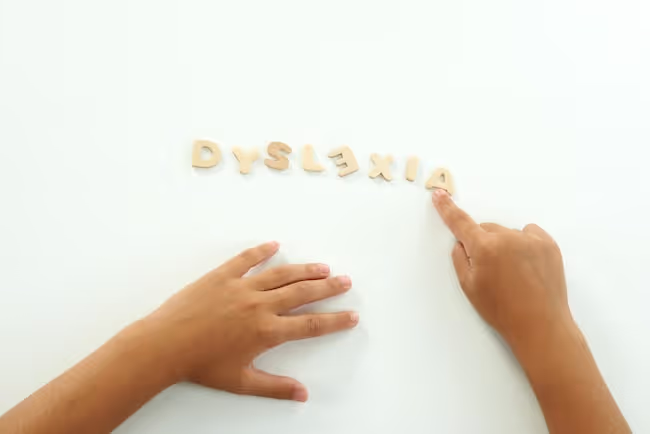
Sometimes the problems caused by a learning difficulty overshadow a child’s giftedness. This may be the case if behavioral issues as a result of ADHD are present, or reading and writing ability are affected by dyslexia. In these situations, it’s essential for educators and parents to understand that learning difficulties are simply differences in the way the brain processes information and do not affect intelligence.
A child may be gifted in one area and have a lower ability in another. That's why it is essential to customize a learning program to suit the child's individual needs.
6 Problems at school
- Difficulty following directions and failure to complete assignments. A gifted child is an independent learner and may choose not to fulfill all of an assignment’s requirements because they don’t see the point of them. They can also take their own approach to problem solving or be side-tracked by an idea that they find more interesting than their homework. This can lead to low grades or being reprimanded by the teacher. It’s important to make all educators at the child’s school aware of the giftedness to ensure they assume a more tolerant approach.
- Trouble instigating and sustaining social interaction with peers. It can be difficult for a gifted child to make friends. He or she may feel more comfortable interacting with the teacher and other adults rather than same-age peers. This can lead to anti-social behavior or even bullying. It can help to offer a gifted child counseling on how to find common subjects to talk about and connect with others. Remind them that many children at school experience social problems and they are not alone.
- Emotional maturity and self-esteem. Giftedness can sometimes be accompanied by asynchronous development when it comes to maturity. This means that while the child is extremely intelligent he or she still has difficulty dealing with emotions, which can put a strain on parents and teachers when it leads to inappropriate behavior. It’s crucial to remember that gifted children can be confident discussing advanced topics and engaging in conversation with adults, but they don’t always know how to interpret or make use of the information they pick up on. Providing coping strategies and modeling interactions can lower the risk that they will suffer negative consequences as a result of any emotional immaturity.
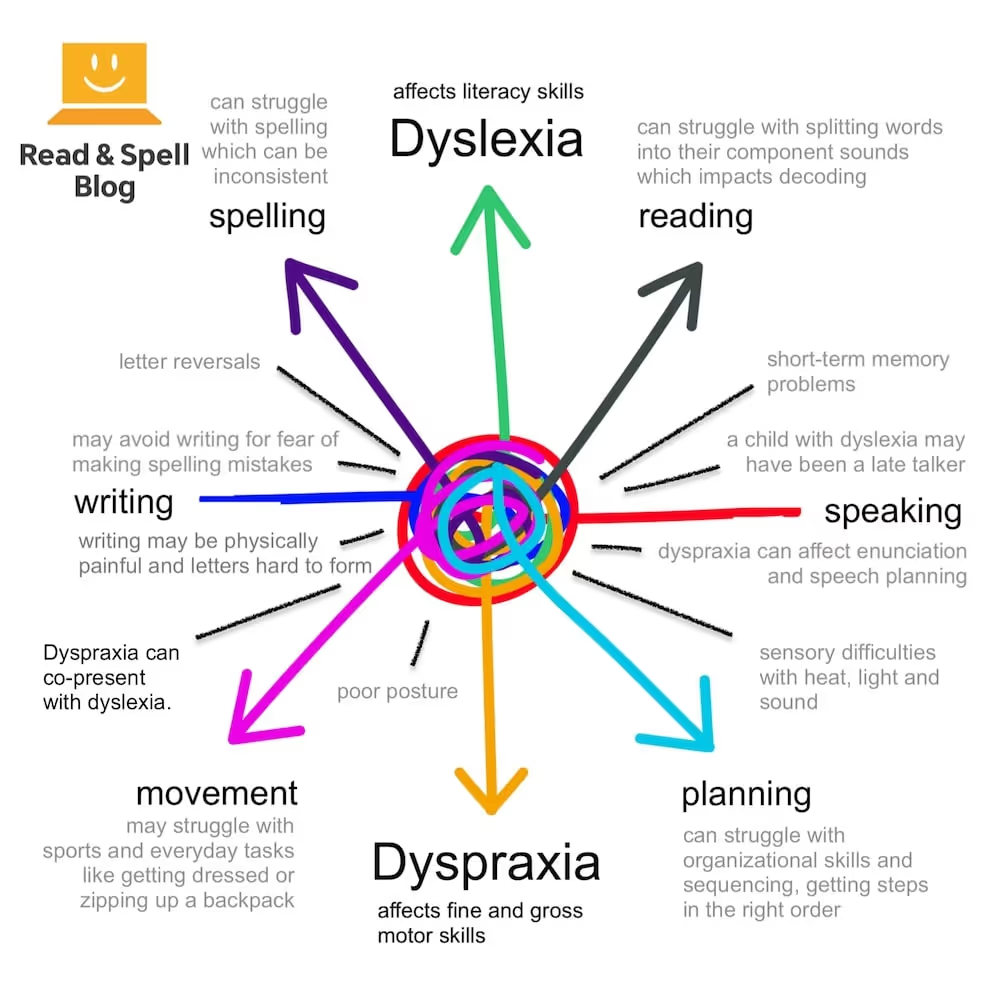
- Dyslexia that affects literacy skills. Estimates suggest that 2-5% of school age children may be twice exceptional, meaning they are both gifted and struggle with a learning difficulty. Dyslexia is a different way of processing language in the brain that can cause problems sounding out words and spelling.
Recognizing giftedness in dyslexic children is about listening to oral vocabulary, observing creativity and problem solving skills, noting a wide range of interests and advanced sense of humor and finding a general curiosity in the child and ability to learn through experience. Helping a child develop coping strategies is essential, as is providing resources that can build phonics knowledge and improve reading and writing ability – learn more about assisting dyslexic students in the classroom. - Dyspraxia and motor skills deficiencies that can affect handwriting. Dyspraxia may affect a child’s planning skills in addition to interrupting fine motor skills. The child can be somewhat clumsy, unable to use scissors or participate in certain sports and experience pain when writing by hand.
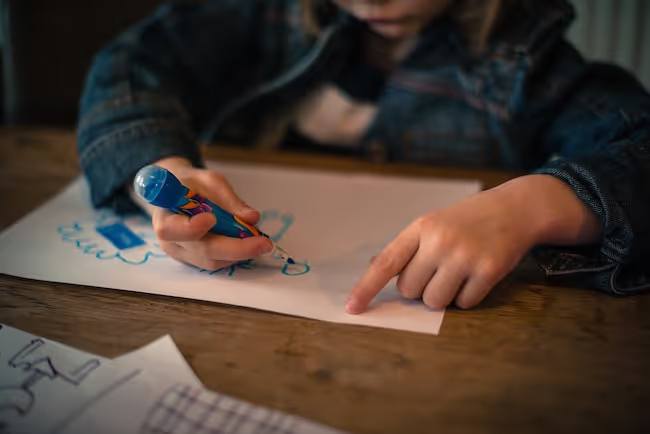
Thicker writing utensils may help, as can teaching dyspraxic children how to touch type. Facilitating writing is especially important for gifted students so they can express their ideas on paper and demonstrate their giftedness. Learn more about helping dyspraxic learners.
- Attention and behavioral issues including ADHD. It may be the case that a gifted child also struggles with attention difficulties. These can include selective attention in which they are able to focus on specific subjects of interest but struggle to follow classroom lessons. Schoolwork may be hard to complete because of a difficulty in keeping the brain on task, and when hyperactivity is an issue there may be impulsivity, outbursts at school or acting out. Learn more about strategies for helping a child with ADHD.
Learning resources and support
Offering a gifted child a combination of emotional counseling, strategy training and access to accommodations, such as using a computer at school, is important, as is tailoring the approach to the individual child.
Touch-type Read and Spell has a touch-typing program that teaches keyboarding skills in a dyslexia-friendly way. It can be used from age 7 on and has a more grown-up interface which may benefit gifted children who can find some solutions too baby-ish. In addition to being used by the British Dyslexia Association, the program has worked for students with dyspraxia, ADHD, and other learning difficulties, including dysgraphia.
By practicing multi-sensory phonics exercises, phonemic awareness is enhanced and bite-sized lessons make it easy for students to build momentum and gain confidence.