



Dysgraphia is a specific learning difficulty that affects writing skills. While no two individuals will experience the same set of symptoms, dysgraphia can cause difficulty with forming letters, spacing words and even organizing text into complete sentences. Students with dysgraphia may struggle with taking notes in class, completing homework and long-term assignments, and performing well on traditional assessment measures.
Producing text by hand is often both difficult and painful, causing everything from cramping in the muscles of the hand to excessive sweating and high anxiety. Over time, this can lead to poor performance and falling behind in lessons due to an inability to take notes. It may also result in avoidance of school and extra-curricular activities that involve writing.
Fortunately, there are strategies and classroom accommodations for dysgraphia that can help. These include allowing the use of audio-recorders in the classroom and teaching touch-typing so computers can be used as an alternative to handwriting.
Note children who are just learning how to write will often exhibit many of the symptoms associated with dysgraphia, such as poorly formed letters and awkwardly spaced words. These symptoms will eventually go away as they become more skilled writers.
However, children with dysgraphia will continue to struggle when it comes to holding a writing utensil. They can have difficulty with letter formation, spacing, writing left to right, staying inside margins, spelling, punctuation, lower-case and capital letters and producing longer compositions in a set time frame.
Parents and teachers may observe awkward hand and arm placement during writing and holding the pen or pencil in an unnatural way.
Often their written work is difficult to read, either due to messiness and/or poorly formed letters. It can also be hard to follow. Young-adults and older children with dysgraphia may write below their ability level or produce text that doesn’t express what they would like to say.
When a writing disorder is present, written work will not match an individual's ability to present information verbally and demonstrate their full understanding of a subject. Children with dysgraphia may also overly rely on vision to guide them and can have trouble with copying exercises.
TOP TIP: Children with dysgraphia can greatly benefit from early intervention and the introduction of coping strategies. One of the first steps is learning how to touch-type. Learn more about teaching kids typing.
The process of writing
Writing is a cognitively challenging activity that requires brainstorming ideas, translating them into language, accessing the orthographic encoding of words and then physically recording them on paper or a computer.
Good writers engage in a constant process of drafting and then revising text to ensure it flows and can be followed by a reader. When the process of translating ideas into written language is interrupted by dysgraphia, writers can lose their train of thought and have difficulty expressing themselves.
Language may be disordered or ungrammatical and text can fail to conform to accepted conventions for written work.
If the activity is stressful or produces anxiety and pain, students may experience a mental block and be unable to put any words down on paper. Similarly, they can be embarrassed by the number of red marks on a composition or their inability to earn a high grade despite spending an extensive amount of time and effort on a written project.
Learn more about motivating children and encouraging kids with learning difficulties in these articles.

Dysgraphia and other learning difficulties, attention disorders, and more
Dyslexia
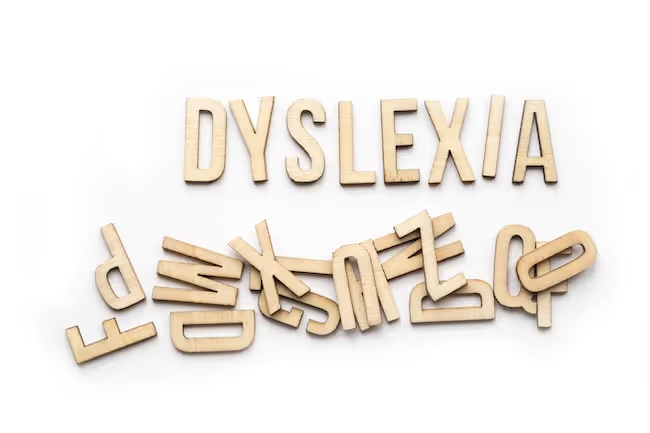
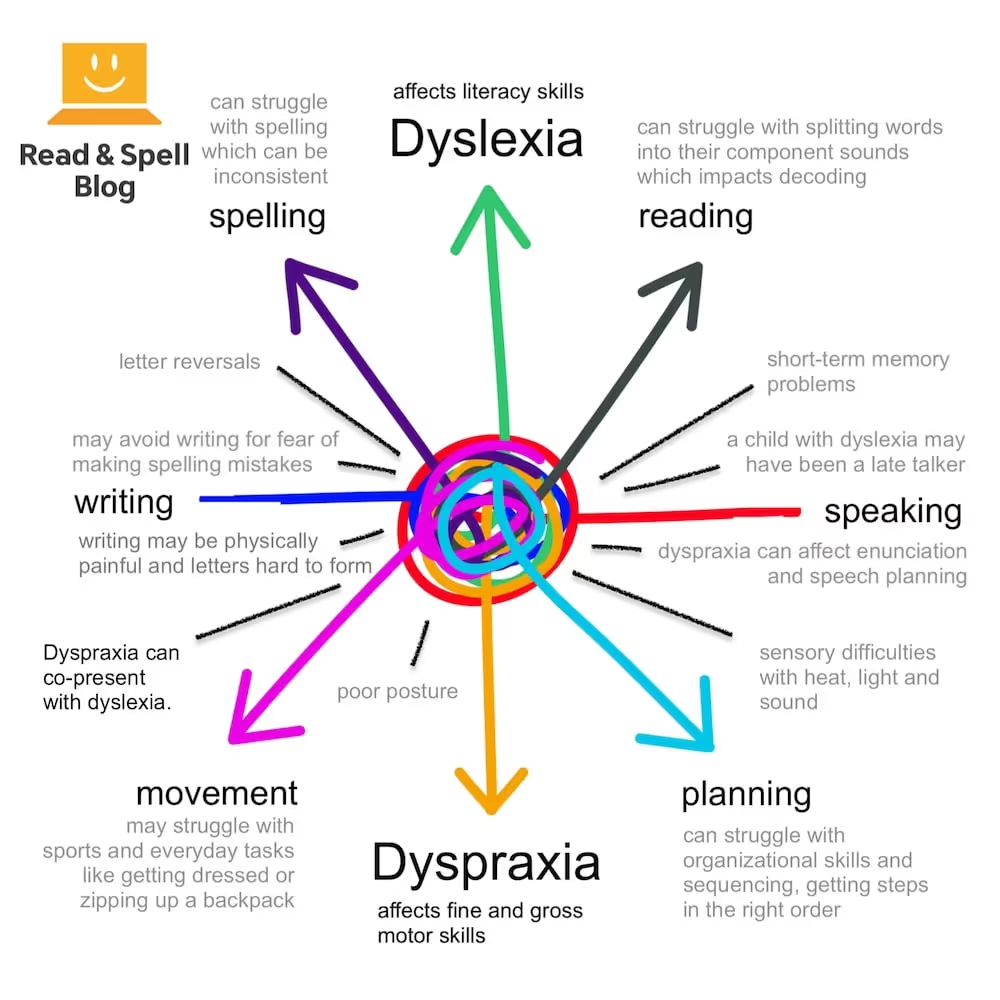
Dysgraphia is not as well known as some specific learning difficulties, such as dyslexia. But whereas a dyslexic child may struggle to split words into their component sounds and then map those sounds to letters, dysgraphia affects orthographic encoding or choosing the correct letter shape to match the sound.
ADHD
Dysgraphia can sometimes occur with ADHD. Children who struggle with attention disorders may produce messy written work and when dysgraphia is involved it can also be painful for them, particularly where handwriting is concerned.
Dyspraxia
Dyspraxia is similar in that it affects the fine motor skills that are involved with handwriting and other school activities like using scissors or playing an instrument. However, dyspraxic children may also have issues with planning; these are not present with dysgraphia. Read more about dyspraxia vs. ADHD and helping dyspraxic children in the classroom in these posts.
Autism
Dysgraphia can present in individuals who have autism spectrum disorder and may already struggle with expressing themselves in speech or writing. When dysgraphia goes untreated, a student can miss out on information communicated during classroom discussions, perform poorly on assessment measures and develop low self-esteem and a lack of confidence in the classroom. Learn more about self-esteem and the importance of helping students build confidence in these posts.
9 Tips for students with dysgraphia
- Stretch out your hands. Before you begin an activity such as typing or handwriting, it’s a good idea to shake your hands out, rotate your wrists, wiggle your fingers and maybe even squeeze a stress ball. Some people press their fingers into putty, anything to get the blood flowing and prepare the muscles.
- Learn to touch-type. Computers are recommended for people with dysgraphia because they reduce the number of variables that need to be controlled including letter formation, letter and word spacing and even writing text left to right along a straight line. Moreover, they allow for ease of correction without the stigma of erasure marks and they provide access to spell-checkers. An individual who learns how to touch-type is even better off because they can use muscle memory in the hands to help with spelling and enhance literacy skills, such as decoding and sight-reading.
- Use cursive vs. print. If you must write by hand, many experts see cursive as an easier medium than print because there is more connectivity between letters. This reduces the distraction caused by spacing. Cursive script also has fewer reversible letters and requires a steady movement and flow, which can be beneficial to individuals who struggle with fine motor skills.
- Request accommodations. Students who struggle with dysgraphia should request accommodations in the classroom including being able to record classroom discussions and their teacher’s instructions with an audio recorder, or use a computer to take notes and complete written assignments. Keep in mind dysgraphia can get in the way of performance, therefore, assessment measures might also need to be adjusted. For example, a short answer section could be replaced by multiple-choice questions that don’t require text-based answers.
- Try different paper and pens. It can sometimes make a difference to write by hand on paper that has thick or raised lines. Paper of different colors may also be beneficial. Fine motor skills affect the way an individual grips a writing utensil, thus consider using a thicker pen or a pencil with a rubber grip.
- Make audio-recordings. Writing is a cognitively taxing activity for individuals that is made even more difficult when they have to both receive information during a lecture and write it down. Even copying text from the board is hard for someone who struggles with dysgraphia. That’s why it is recommended that individuals bring an audio recording device or be provided with handouts that cover what was discussed. It can also be useful to pair a dysgraphic student up with a note-taking buddy.
- Recite word spelling out loud. Spelling can sometimes be challenging because dysgraphia affects orthographic encoding or translating words into their component letters. Spelling out loud is not affected, therefore individuals should complete spelling quizzes verbally and recite a word’s spelling quietly to themselves before attempting to write it down. It also helps to learn touch-typing as repeat drilling of a word means spelling is learned via muscle memory in the hands.
- Brainstorm ideas before writing. When composition is affected at the phrase, sentence and paragraph level, it is often because there is difficulty in translating information and organizing it on paper. It can help to access prior knowledge of a topic and brainstorm ideas before you begin as this activates them in the brain and helps you prepare for writing.
- Use outlines and multiple drafts. When organization and expression are still difficult, a student with dysgraphia may wish to make an outline that organizes ideas in a clear manner. Working in multiple drafts means there is less pressure or stress for getting something right on the first try. It’s also a more natural approach to writing. Reviewing previous information and re-writing and adapting to ensure a reader can follow a train of thought are habits found in good writers.

Touch-type Read and Spell
Learning touch-typing can have a positive effect on the performance of individuals with dysgraphia because it makes it easier to express ideas in writing. Words flow through the fingertips and onto the screen without the disruption of manipulating a pen or correctly spacing characters.
Touch-type Read and Spell teaches touch-typing in a multi-sensory way via a modular approach that allows each student to progress at a rate that is right for him or her.
Discover a typing program for students with dysgraphia
Built-in feedback and the opportunity to repeat lessons encourages self-directed study. Moreover, successfully completing a course and acquiring a new skill can help enhance self-esteem, build confidence and ease the anxiety and frustration students experience where writing is concerned.
Do you have any tips or strategies to add? Send us an email and join the discussion!