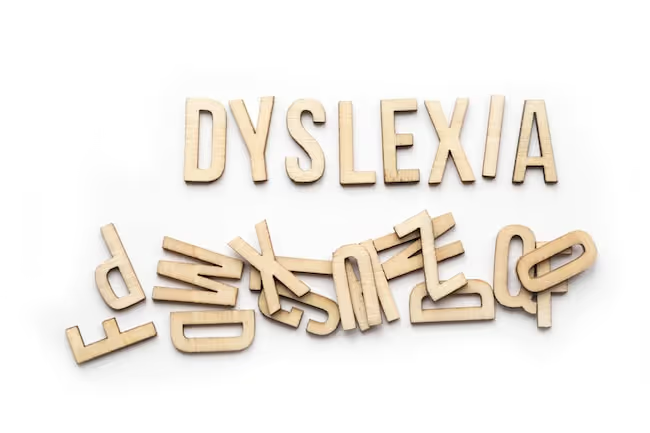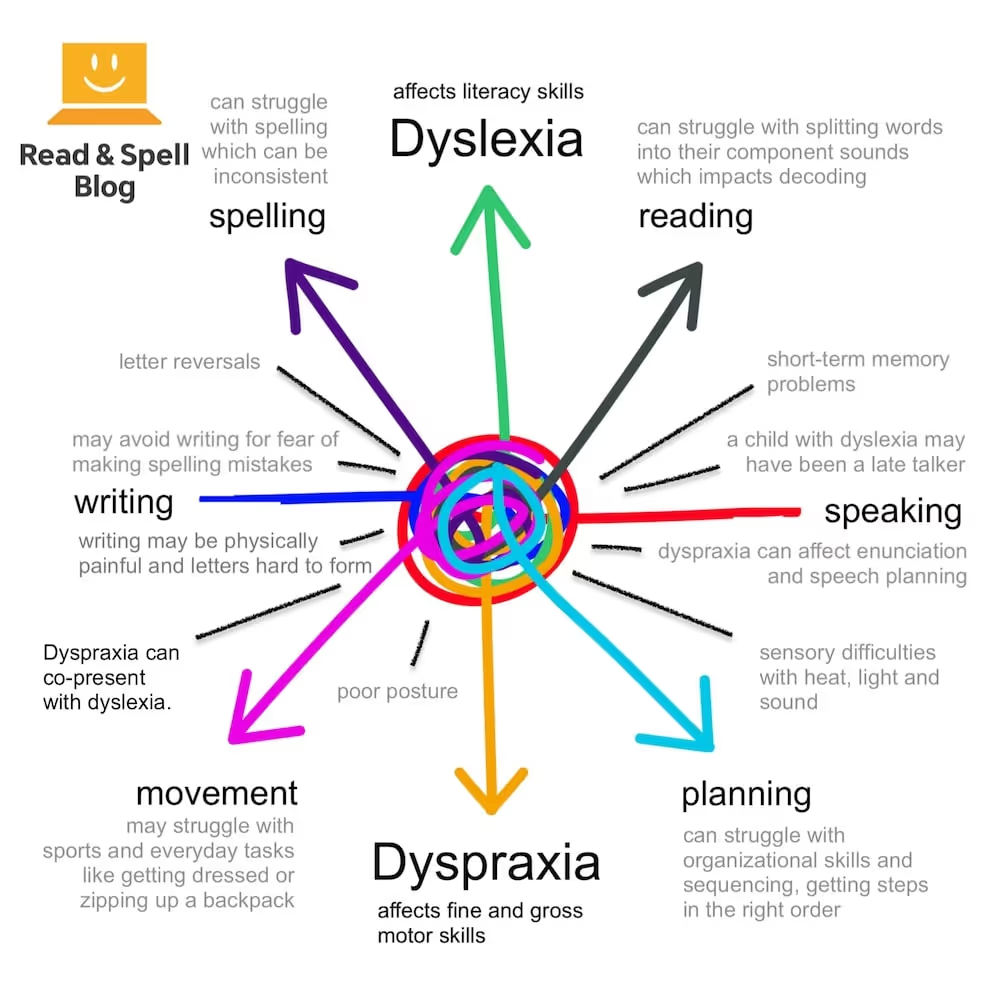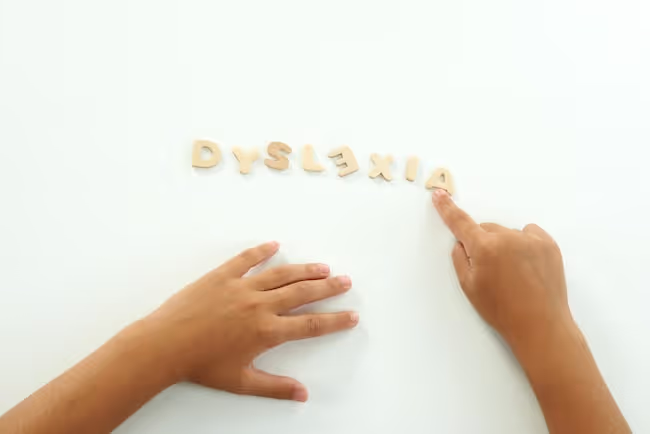




Dyslexia is one of the most common language-based learning differences. While everyone learns to read and write at different rates, children with dyslexia usually have a harder time sounding out words and sight reading than their peers. They may be inconsistent when it comes to spelling, writing a word correctly one day and incorrectly the next, and can take longer to stop reversing letters in early writing. When the dyslexia is mild, individuals can often “get by” at school and may go on to have ordinary careers.
Nonetheless, children and adults with mild dyslexia tend to have a harder time manipulating the sounds in words, including rhyming words. Spelling ability might be below average and reading will often take them more time.
They may be reluctant to read out loud or commonly misread words if they do participate in group reading activities. Memorizing new language, particularly service words that aren’t as amenable to mnemonic devices, can be problematic, as can be remembering and reporting details.
But while dyslexia is commonly associated with literacy issues, it has nothing to do with intelligence and can also enhance ability in creative pursuits. Dyslexics are known for their out of the box thinking – in fact many famous entrepreneurs attribute their success to their dyslexia. People with dyslexia may also have keen problem solving skills.
That’s why it’s important to carefully consider the language used to discuss dyslexia. Branding it a “learning disability” carries with it the connotation of impairment and deficiency whereas “learning difference” implies the individual is simply not neuro-typical. Learn more about the strengths associated with dyslexia in this article.
Why get assessed for dyslexia?
The National Institute of Health in the US estimates 1 in every 10 children may be dyslexic and the British Dyslexia Association suggests 1 in 10 people in the UK struggles with some form of dyslexia. Yet less than half of these cases are severe and it’s possible for individuals with mild dyslexia to not even know they are dyslexic.
Of course a learning difficulty may be suspected when a student needs to put in more time and effort than others to complete reading and writing assignments, but if he or she successfully finishes school and can do okay in the workplace, there may not be a reason or need to pursue a dyslexia assessment.
That is until circumstances change and the person can no longer employ the coping strategies that were allowing him or her to get by in the first place. In these cases, a dyslexia strategy intervention may be helpful, or even required. The good news is that the main difference between mild and severe dyslexia is that putting a lot of effort in usually leads to noticeable results and improvements in performance.
Being assessed for dyslexia can also open up access to accommodations, such as having more time on tests and exams or the option to use a computer to take notes in class. In certain cases, an official diagnosis can also give individuals access to disability benefits. Learn more in "Is dyslexia a disability?"

7 Strategies and accommodations to consider
While people with mild dyslexia may not need accommodations or strategy instruction, they may still benefit from them. Keep in mind dyslexia can look different for everyone and no two individuals will struggle with the same set or severity of symptoms.
This also means there is no one size fits all solution. We recommend learning more about the different accommodations and strategies available and then trying them out until you find a combination that works.
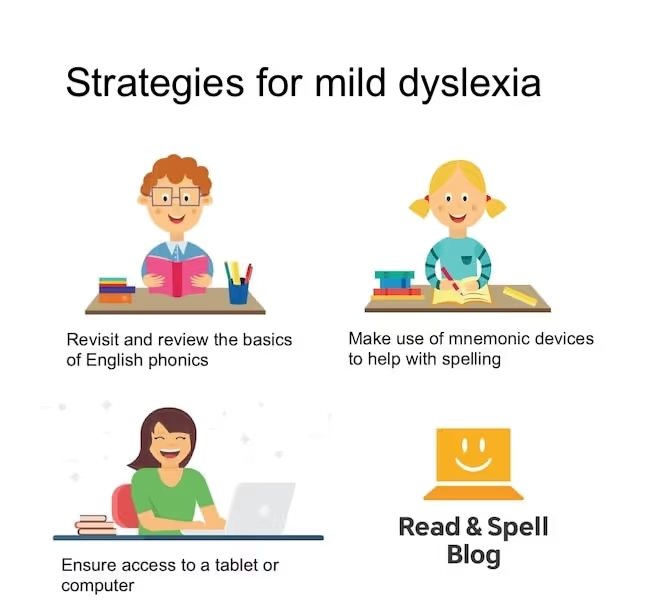
- Ensure access to a tablet or computer in the classroom/workplace
Technology alleviates many of the problems that plague individuals with dyslexia, from correcting spelling and grammar issues to facilitating draft-writing and review of written production. When the surface level aspects of writing are taken care of by a computer program, it is easier for an individual to focus on the content of his or her writing. It also speeds things up and reduces any embarrassment experienced because of messy handwriting or crossing out answers. Erasing and rewriting on the computer is as simple as pressing a few keys.
- Revisit and review the basics of English phonics
A lot of the issues dyslexic individuals face when it comes to sounding out words are to do with a poor understanding of English phonics. Phonemes are the smallest units of sound that carry meaning and phonics is the study of how phonemes combine to form words. Taking a course that provides a solid review of English phonics can help you understand more about how sounds connect and how to pair sounds with letters. This, in turn, can strengthen reading and spelling skills for both children and adults with mild dyslexia.
TOP TIP: Touch-type Read and Spell is a typing course based on the Orton-Gillingham approach and the book ‘Alpha to Omega’ by Dr. Bev Hornsby et al. It uses a structured program of phonics to guide its typing modules and provide instruction in the basics of word formation in English.
- Memorize sight words
Most of the words we read fluently as adults are not sounded out but rather read as a whole. We do this by recognizing the letter combinations in familiar terms and then recalling our memory of what a word sounds like and means. You can dramatically enhance your fluency in reading, particularly when dealing with subject specific vocabulary, if you memorize and drill high frequency words until you can read them automatically by sight.
TOP TIP: Did you know there’s a list of 300 words that make up as much as 50%-75% of all English texts? Learn more about Dolch Words and sight-reading.
- Use top down strategies
Enhancing your ability to decode vocabulary and sight read are both bottom-up strategies that make you more skilled at reading words on the page. However, good readers also employ top-down strategies that help them make inferences and predictions about the text before they begin reading. This facilitates the activation of prior knowledge of a subject, which can have a positive effect on comprehension.
Give the title of a text and chapter headings a closer look, skim the first few paragraphs to get a sense of the main idea and use any images or additional context on the page to help you make a more informed guess about what you are about to read.
- Make use of mnemonic devices to help with spelling
There are certain words that dyslexic individuals find particularly problematic, and they can vary from person to person. While spelling is a somewhat superficial element of language, it is still important in a professional and academic context and English spelling is notoriously difficult for people to master – particularly when they struggle with mild dyslexia.
If you don’t have access to a spell-checker, try using a mnemonic device to help you learn and remember the correct spelling of a word. You might want to break the word down into parts and use imagery and sound to help you process it on a deeper level. This will help ensure you can recall its written form when you next need to. For example, you might imagine a bride celebrating her wedding on WED-nesday.
Top Tip: Discover more spelling strategies for learners with dyslexia
- Learn how to touch type
One of the best things a dyslexic individual can do is learn how to type. This is because it will not only make them more efficient on the computer but harness muscle memory in the fingers to assist with spelling. With keyboarding words are translated into a series of movements and ideas and language flows through the fingertips and onto the screen, without the disruption of hunting for letters and arranging them in the right order. Just remember that not any typing program will do—you’ll want to find one that gives you plenty of time to master the skill by presenting the incremental steps in a dyslexia friendly-way, and encouraging accuracy over speed.
Top Tip: TTRS is recommended by the British Dyslexia Association and used by dyslexic learners worldwide to master touch-typing and improve reading and spelling skills at the same time! It also has the effect of making learners feel and be successful from the very beginning, which is great for self-esteem.
- Access multiple sensory channels
To improve memory and become more efficient at learning new words, it’s recommended that individuals with mild-dyslexia adopt a multi-sensory approach to learning. This involves combining visual and auditory stimuli with movement to bring a kinesthetic aspect to the learning. You may find it useful to trace a word’s form in the air or say it out-loud as you write it down.
Learn more in helping dyslexic students in the classroom and strategies for coping with dyslexia in the workplace.
If mild dyslexia is negatively affecting a child at school
While literacy difficulties can often be overcome when the right strategies and accommodations are put in place, mild dyslexia can still have a negative affect on a child’s self-esteem and confidence at school.
This is particularly true when deficiencies in spelling and reading prevent a child from participating in classroom activities such as reading out loud, taking their turn at writing on the board, or group work that requires writing. Below average performance, embarrassment, fear of failure and social stigma can all come together to create a negative association with school and learning, which in turn only makes achieving success at school more difficult.
Parents and teachers can help by keeping a close eye on learners and providing plenty of emotional and academic support. Watch for signs that a more intensive intervention is necessary and remember to keep a child motivated and help them understand that dyslexia doesn’t mean they are less intelligent than their peers, only that they process language in a different way.
Typing for learners with dyslexia
Touch-type Read and Spell is used by dyslexic learners around the world to improve reading and spelling ability, learn keyboarding and boost confidence and self-esteem.
Discover a typing program for individuals with dyslexia!
It’s a multi-step platform that’s easy to use, helpful from the get-go – you’ll be typing real words from day one - and builds English phonics knowledge gradually over a period of months. Progress is easy to see in graphs and score reports focus on accuracy over speed.