



Adult learners approach education in a very different way than younger students. Many will be studying part-time as they continue to work and support their families. They tend to know more about their individual strengths and weaknesses as students, have set attitudes toward school, and be more intrinsically motivated.
An adult can bring real world experience into the classroom, which often enriches lessons. Older learners may also carry negative emotions, including reservations about entering college later in life and some fear and anxiety about being students again. However, with the right approach to study, every learner, no matter what their age or situation, can reach their full potential in the classroom.
These days there are countless reasons for returning to school. A college degree can make you more attractive to employers, help you capitalize on work experience and reach the next level in your career or give you the skills you need to feel more confident in yourself and your abilities.
Regardless of the reason, it is helpful for adults to reflect back on previous experiences with education in order to prepare themselves. College is a very different environment from high school and things may have changed significantly in the past 10 to 20 years due to advancements in technology.
TOP TIP: If you feel your computer skills are lacking, there are plenty of courses to get you up to speed.
The trick is to stay calm and keep insecurities at bay as you start this new chapter in your life. School can feel overwhelming for everyone, younger students and teachers included. Remember why you signed up for your course in the first place and be kind to yourself.
Every learner goes through an adjustment period and there is nothing wrong taking some time to feel comfortable as a student again.
Motivation to learn
Two things that correlate strongly with success at school are motivation and self-efficacy. Self-efficacy is the ability to take a larger task, like earning your college degree, and break it down into manageable, bite-size steps. That means focusing on one class, credit or even assignment at a time.
As for motivation, there are different types. It may be you have the kind where you are pushing yourself to return to school because of an innate desire to learn. It can also be extrinsic when someone else, such as your employer, has asked you to take a particular course.
Try to remain positive no matter what your reasons. Going back to school is exciting and the more upbeat you are, the easier it will be to reduce stress and stay motivated.
If you are going back to school to improve your literacy skills, you may be interested in our posts on spelling for adults, adult basic education and becoming a stronger reader.

9 Tips for adult learners
- Manage your learning. You probably have some awareness of your own strengths and weaknesses in the classroom and that means you can take more responsibility for how you learn. If you know you don’t do well with class lectures, prepare by doing the reading in advance. If the exercises the teacher assigns don’t seem helpful to you, create your own practice routine.
- Go above and beyond. Perhaps in your earlier studies you were content to sit back and let the teacher lead the way, but things are different now. Pursue topics that interest you outside of class, ask questions and read beyond the syllabus. Your teacher will appreciate your enthusiasm.
- Challenge yourself. Don’t shy away from something if it is difficult. Remember that you can always get help when you need it. Ask your teacher, department head or anyone else at the college and if you require a personal tutor—get one!
- Stay organized. Managing family life and a job on top of school can be a challenge for the average adult student. The key to success is staying organized so you ensure you prioritize different tasks effectively and switch between them more efficiently.
- Make time to study. There’s a lot more independent action expected of you as a college student, particularly when it comes to reading and reviewing material at home. College classes meet less frequently so it’s up to you to maintain a regular study routine.
- Be more strategic. Study smart and save time by being more strategic in your approach to learning. This means discovering how to take better notes, engage with the material in a productive way, quickly assess the gist of a text and scan for more detailed information.
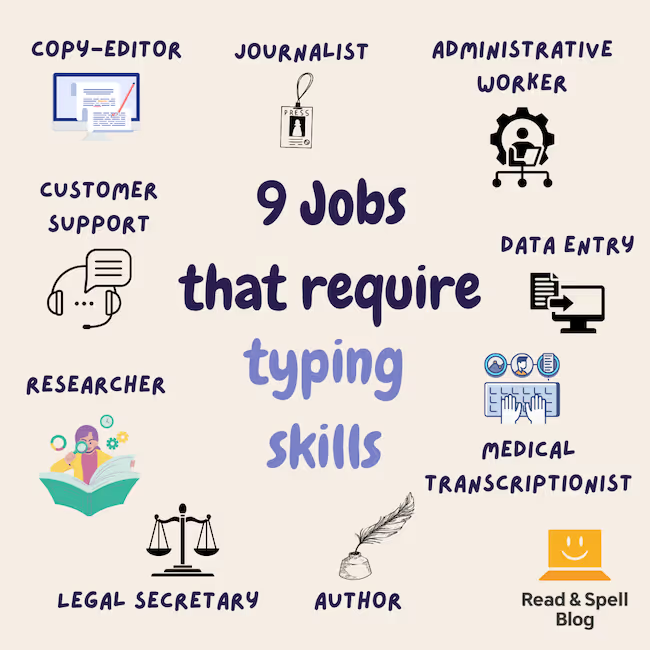
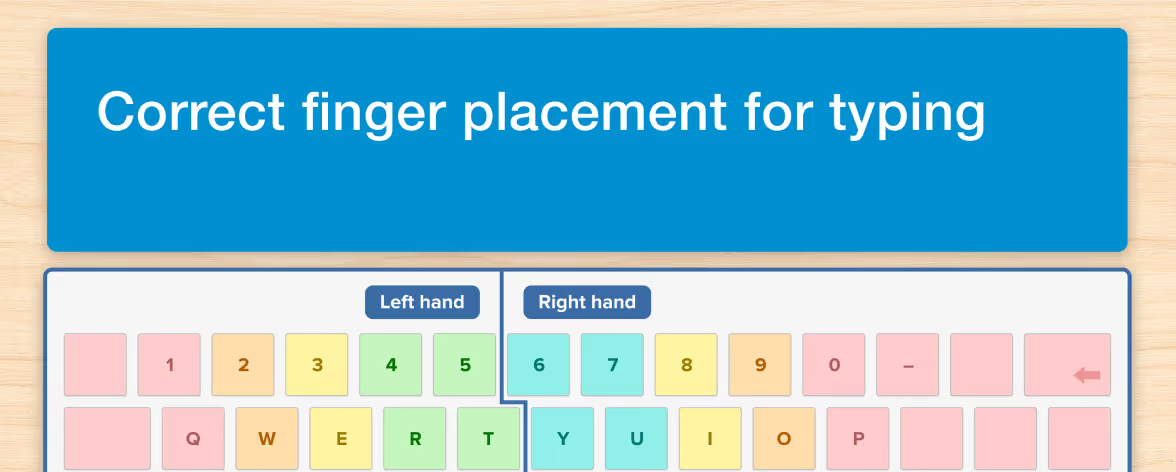
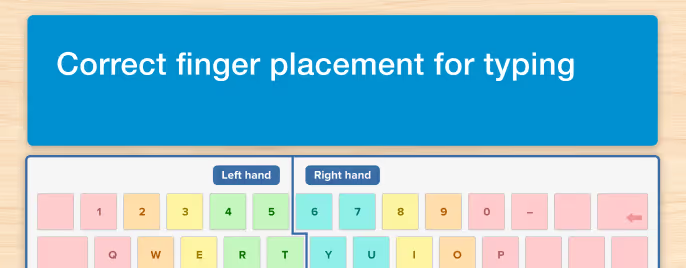
- Increase your skill set. In addition to study strategies, developing the skills you need to be an effective researcher are also important. Computer skills such as knowing how to touch-type are crucial given the amount of writing that will be expected of you. Learn more about improving writing skills.
- Get online. For busy adult learners, trips to the library may not always be practical. There are a wide variety of library resources available online today so make sure you know how to log-in to your school or college’s network and access them from home.
- Meet other students. Just because you’re a few years older than other learners it doesn’t mean you can’t socialize with your classmates. Getting together to discuss the lessons or share notes helps reinforce learning in memory and commiserating about assignments and exam results can reduce anxiety.
More resources
If you’re an adult learner who has recently enrolled in college, there are plenty of apps and programs that can smooth your path and make the “back to school” transition easier.
- Schedule apps and organizers keep you apprised of deadlines and assist you in putting together a weekly study routine. Enter personal and work related commitments to ensure you are achieving a work-life-study balance.
- Typing programs give you an edge on your peers when it comes to computer-based assessments and make drafting longer assignments and essays more fluent. They also open up access to spell checkers and other automated reviews that save you time which can be used to focus on the content of the message vs. its form. This is particularly important if English is not your first language.
- You may consider signing up for a free flashcard service so you can store information electronically in a way that makes it easier to review. Spaced Repetition Software (SRS) learns your personal forgetting curve and only presents the information you need to see on a given day.
- Reference software allows you to keep track of what you are reading so life isn’t as hard when you come to the end of a paper and need to cite all of your sources.

Touch-type Read and Spell
Touch-type Read and Spell (TTRS) is available for your computer or iPad and can help you learn typing skills so you can type more easily, accurately and quickly – a crucial skill for college students and teachers alike.
Discover a touch-typing program for adults with dyslexia
In addition, adults who struggle with learning difficulties like dyslexia will find TTRS makes spelling and sight reading easier due to its phonetic approach and modular design.
Do you have any tips for the adult learner headed back to school? Send us an email and join the discussion!