



Dyslexia is a specific learning difficulty that affects both children and adults. While no two individuals will struggle with the same set of symptoms, some people with dyslexia experience high levels of frustration navigating written language. They may have to work harder than their peers and need more time to read or write a given text.
For students, this can pose a significant challenge. However, the situation can be just as stressful for working adults who have the added pressure of performance goals and feeling confident and capable at work, especially in front of clients, co-workers and managers.
Fortunately, technology can help people overcome many of the challenges posed by dyslexia in the workplace. Mobile devices and tablets have text-to-speech and auto-complete functions and there are plenty of podcasts and audiobooks that provide information in a more dyslexia-friendly format. Computers have made typing the norm and opened up a world of online forms, Google Docs, and spell checkers. More importantly, being neat and submitting handwritten reports is no longer a priority.
Adults with dyslexia will often benefit from knowing how they process information best and then letting co-workers and superiors know. For example, hand-outs that are printed on color paper may be easier to read, and voicemails may be preferred over written notes. It's also important that people with dyslexia develop a repertoire of coping strategies.

7 Tips for dyslexia at work
- Let co-workers and superiors know you have dyslexia. Most countries have laws in place to protect people with learning difficulties from workplace discrimination. Remember, dyslexia has nothing to do with intelligence. Dyslexic individuals are often bright, creative and capable workers. If possible, be upfront and honest about your dyslexia as it is nothing to be ashamed of.
- Adjust your computer settings. Not everyone realizes that certain fonts can actually make it easier for dyslexic people to read text on a computer screen. They are weighted differently so the letters and numbers are easier to read. Adjusting the background color of a screen can also reduce distractions and make it faster to navigate a desktop.
- Become a student again. There is nothing shameful about taking a course outside of work to strengthen your literacy skills. In fact, many managers and companies take pride in helping workers enhance their abilities. A program that teaches you a secondary skill, like touch-typing, is a great ideas as it can help you write faster and with greater accuracy.
- Work your words. Figure out which vocabulary words are important at your job and find a program or an app to help you review them regularly, to ensure you feel confident with their spelling.
- Plan for extra time. Time is a major factor at work and knowing how to wield your schedule means allotting extra hours for tasks that may take longer to complete with dyslexia.
- Use more charts and diagrams. You may find that it’s easier to process information if you turn tables into charts and text instructions into diagrams. Try printing them on different color paper as it may make them easier to discuss in meetings and during presentations. You can also ask your boss if presenting reports via video or audio summaries is a possibility.
- Stay organized. Stress affects everyone in the workplace but it can be particularly crippling if you are already struggling with a learning difficulty. To avoid feeling overwhelmed, stay organized and manage your tasks wisely. This is especially important if you also struggle with dyspraxia. If you know you have a difficult project to work on in the morning, take a long lunch break or plan a different focus for the afternoon to give your brain a chance to recover.
Dyslexia in the classroom
Estimates suggest 70% of dyslexic children and adults experience phonological dyslexia which makes it hard to split words into their component sounds.
This complicates sounding out words in early reading and impacts spelling skills. Dyslexic children may avoid reading tasks or write at a level that does not reflect their spoken vocabulary.
Dyslexia has nothing to do with intelligence, but if reading and note taking abilities are compromised, students can miss information in lessons and perform poorly on exams.
Confidence and self-esteem
Poor performance eventually undermines an individual’s confidence and trust in his or her own skills and abilities.
This translates into low self-esteem and depression. When dyslexia goes undiagnosed, the effect is even more tragic as students may be told they are “lazy,” “careless,” or simply “not smart,” which further perpetuates the cycle of avoidance and “not trying” and sometimes even leads to acting out.
This is often the case when dyslexia presents with ADD, ADHD or dyspraxia. Learn more about building students’ self-confidence.
Adult basic skills
Many dyslexic individuals who didn’t receive proper strategy training or coaching carry negative beliefs about their own reading abilities well into adulthood. Dyslexia can cause them to miss out on opportunities for higher education, choose less fulfilling careers or fail to achieve promotions at work. Learn more in is dyslexia a disability.
Poor spelling skills may be embarrassing. Plus, difficulties with reading can lead to frustration and feelings of inadequacy when it comes time to help their own children with reading and homework. Note, problems navigating numbers and doing basic arithmetic can cause similar issues if dyscalculia is present.
That’s why it is so important to get a diagnosis if you suspect you are struggling with a specific learning difficulty. There are adult basic skills programs that can help with improving spelling skills, strengthening reading abilities, and catching up in other areas of the curriculum. Learn more about developing literacy skills for adults.

Touch-typing
Learning to type without looking at the keyboard can help you write at a faster pace, which is always helpful when it comes to emptying an email inbox. However, it can also improve the quality of your writing.
That’s because thoughts flow more freely through the fingertips and onto the screen, bypassing the distraction of hunting for keys or forming letters. You have more time to focus on your ideas, proofread for errors and organize information in the most effective manner.
Discover a typing course for adults with dyslexia
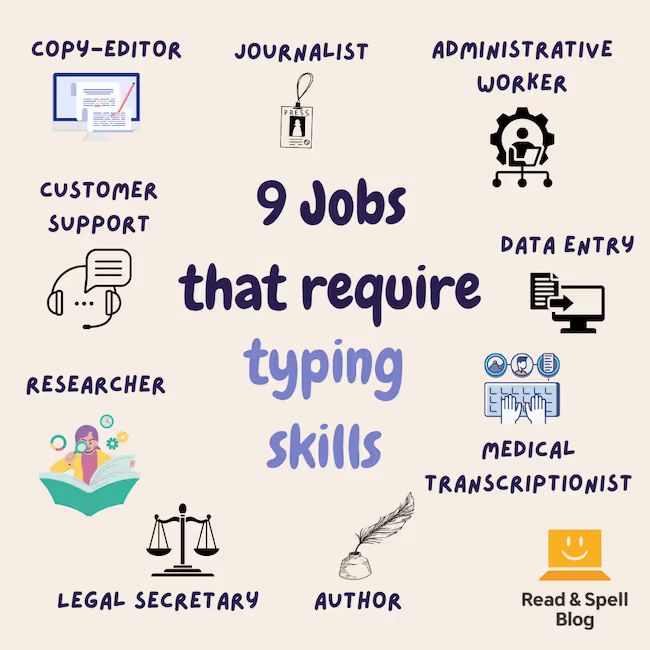
Typing also opens up new careers and taking a multi-sensory course will reinforce spelling, phonics and sight-reading skills.
Most importantly, mastering typing and improving literacy skills can give dyslexic children and adults back the confidence they need to be successful in the classroom and workplace.
Do you have any tips to add on overcoming the challenges of dyslexia in the workplace? Send us an email and join the discussion!