



Spelling is one of those skills that a lot of people find challenging to master. This is particularly true if English isn’t your first language. One of the main reasons spelling is so hard to learn is that English is a highly irregular language. It has borrowed words from many other tongues and anglicized their spelling in an inconsistent way.
Spelling rules such as “i before e except after c” do exist in English, as in the words receive and receipt. But there are also plenty of exceptions to these rules, such as in species and science. Moreover, knowing a rule doesn’t always mean you can operationalize it in an automatic fashion when you need to write words quickly and accurately, for example during an online work chat or timed quiz.
Thankfully, spell-check, auto-correct and auto-complete exist to provide technology users with plenty of assistance in writing and to catch mistakes before they become a printed typo. Yet there are still reasons you may want to improve your spelling skills in English. For example, if you have children who are learning how to read and write at school, you’ll want to be able to help them study for spelling quizzes and proofread their writing. It’s also great to be able to answer their questions without having to look a word up in the dictionary every time.
It might be that you feel your poor spelling skills are a weakness you’ve always had to hide and are no longer willing to put up with. For adults who are going back to school, looking to pass a standardized exam or earn a promotion at work, having good spelling skills may be important. Spelling is not related to intelligence but if your writing is riddled with mistakes, it can make a poor impression and distract teachers and managers from assessing what you have learned.
It can be hard to know where to begin when you start looking for help. Most of the phonics games and spelling apps are designed for children who are learning how to write and they may not always suit your purpose or be appropriate if you’re an adult learner looking to develop your skills. That’s why we’ve put together a few lists of practical, fun and easy tips that can help you get started – and they don’t require you to sit down and memorize a list of rules!
If you like this post, you may also be interested in these related articles on English spelling: The hardest words to spell in English, Developing strong spelling skills, How to teach spelling

5 Tips for working adults
There is nothing wrong with using supportive technology for writing. However, there's no reason why you can't work on improving your spelling skills at the same time. Here are some simple and practical exercises that can make a difference when you do them regularly, over an extended period.
- Try transcription
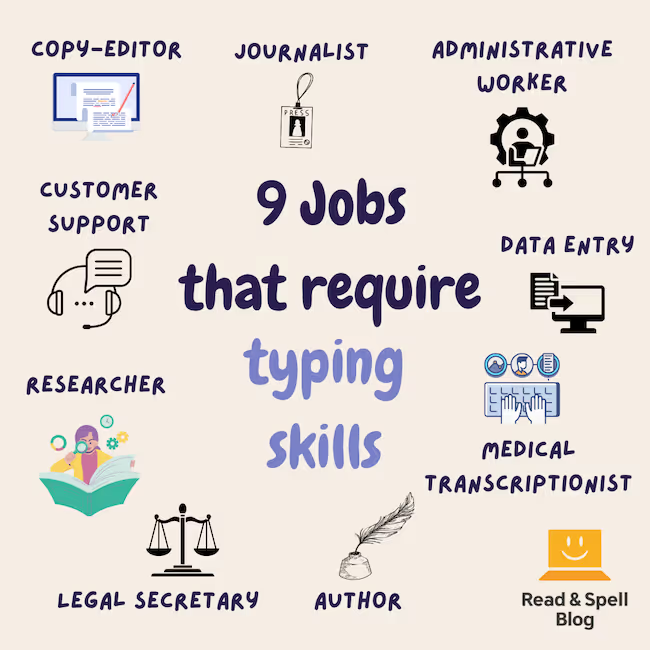
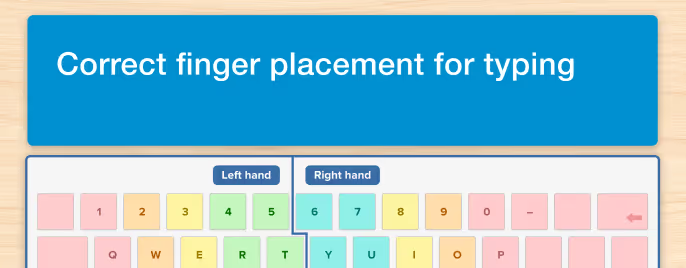
When you hear a word and write it at the same time you are connecting the sounds with the letters that represent them and this can strengthen your English encoding and decoding skills. An easy way to do this is with a multi-sensory typing program like Touch-type Read and Spell – you’ll additionally learn typing which is a great skill to have for completing longer or timed writing tasks for work or school.
- Drill vocabulary
If you work in an industry with vocabulary that’s highly specialized, it’s likely many of the words you struggle with are low-frequency in general English. This means they'll be harder to spell because you have less experience with them, particularly if you’re relatively new to your job. Create a list of the most difficult words that you encounter and then actively study them. You could use flashcards, make posters to put up around your house, or even create a desktop background so the words are in constant rotation in your field of view. The more you see a word, the easier it will be for your brain to call up an image to help with spelling. The Touch-type Read and Spell platform also allows you to add your own vocabulary to create custom typing modules. Typing a word repeatedly can help establish the spelling of specialist words in your long term memory.
- Analyze your mistakes
Everyone has words they commonly confuse. Use your smartphone or a notebook to keep a running list of your mistakes, then every so often sit down to copy the correct version next to them. Have a closer look at each word to see which letters you got wrong. Get a piece of paper and try to relearn the correct form of the word by writing it multiple times (or typing it). Use a different colored pen when writing the letter or letters you mixed up. This will help you notice the correct spelling and remember it in a visual way. If you struggle with homonyms, try to come up with visual images to tell them apart. Note, if you find that you misspell a word in different ways on different days, you may consider getting screened for dyslexia. Inconsistent spelling is a common symptom of adult dyslexia. Learn more in this post: How do they test for dyslexia.
- Test yourself
An easy way to test yourself when it comes to spelling is to simply fold a piece of paper in half. On one side copy the correct form of the words you struggle with, one word per line. Use the other side to cover the words up and then re-write them from memory. You can easily compare the two versions and flag any words that need more attention.
- Use imagery, rhymes and chunking
When you have an English word you just can’t seem to master, try developing a mnemonic where you combine imagery and rhymes to help you remember the correct letters and sequence. For example, you may think to yourself she got married on a Wed-nesday to help you remember to include the silent d. You can also break words down into chunks, such as Wed-nes-day. You’ll find many of the starts and ends of words are recognizable prefixes and suffixes that commonly show up in English words.
- Browse magazines and read
The more you encounter words in their written form, the better, because your brain will strengthen its receptive knowledge of them. This makes words easier to produce and spell correctly. Just flipping through a magazine or a newspaper can be effective spelling practice. If you’re reading content that contains industry specific language, even better.
Top Tip: If you have a learning difficulty, like dyslexia or dysgraphia, or an attention disorder like ADD/ADHD, you may be eligible for language support including accommodations and strategy-training at work.
Discover a typing program that helps adults with spelling
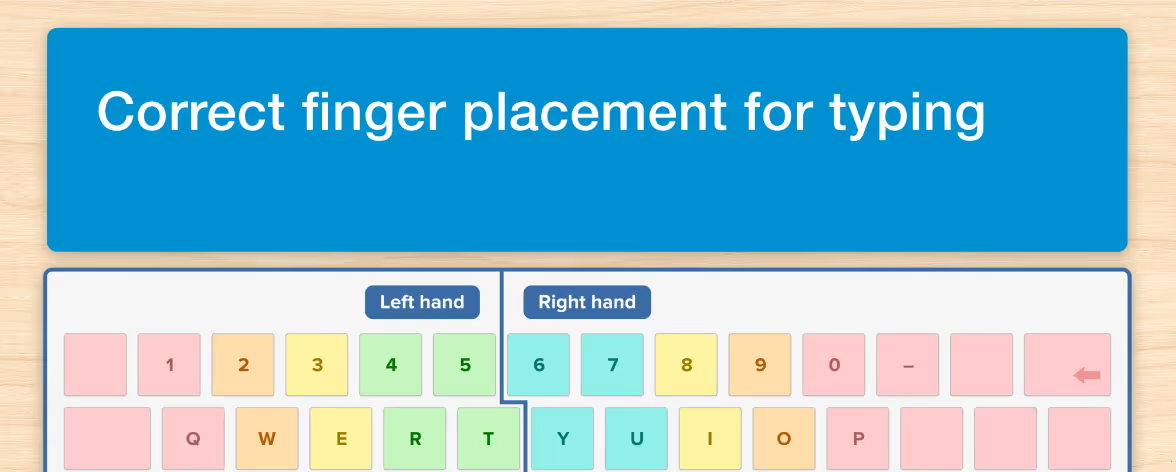
Why does touch-typing help with spelling? Because it uses muscle memory in the fingers to encode a word’s spelling as a sequence of movements. You learn in the same way as when you remember how to dial a phone number. The more you type a word, the more it becomes automatic and you can recreate the sequence of the keys quickly and easily. Learn more in our posts: Is dyslexia a disability?, Touch-typing for dyslexics
More easy ways to boost spelling skills
Get a sand garden for your desk
Have you ever seen those office trinkets designed to help you relax? They typically include a little tray and a packet of sand with a rake that you can use to rhythmically soothe yourself when you feel stressed. Another good use for them is a multi-sensory spelling exercise. Take a stick or a pen and trace a word as you say it, then look up the correct spelling. Saying each letter as you write in the sand can help reinforce learning in memory. Rake it out when you're finished and get started on a new word!
Play with fridge magnets
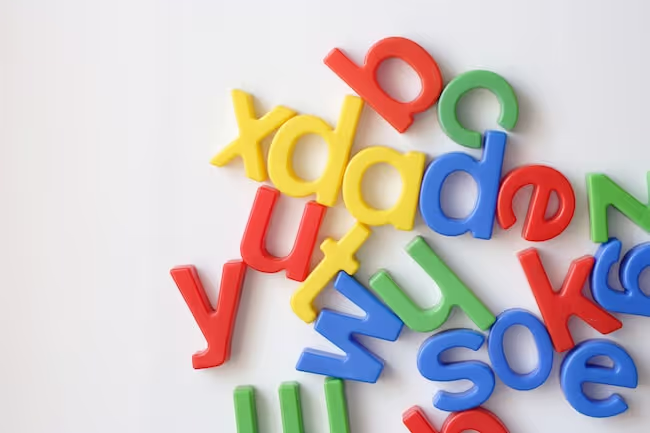
You can either go for child-friendly, colorful, alphabet magnets or magnetic poetry packs. Decorate your fridge and spend five minutes a day playing around with the words. The more you manipulate language, the more conducive it is to building strong spelling skills.
Turn closed captioning on
Make TV time double as a spelling workout by turning closed captioning on so you see words at the bottom of the screen as you hear them spoken by the actors. This will help stimulate your subconscious and reinforce the correct spelling of the words in memory.
TOP TIP: This is especially useful for English as a Second Language Learners who want to learn more English vocabulary. Discover more writing tips for English as a Second Language learners.
Practice in the shower
Take advantage of every pocket of time in your day and turn your shower into a spelling booster with some foam letters. They may be meant for children but who cares? Write out the word or words you are struggling with then try closing your eyes and spelling out loud. The acoustics are so good you may even decide to sing them! Adding this auditory and tactile element can help reinforce the correct spelling in memory.
Lear more multi-sensory learning techniques in this post or try these 7 fun and creative approaches to spelling.

What about reading?
Have you ever wondered why English words are so hard to sound out? It’s because English has more sounds than it does letters – the ratio is almost 2:1! This means the same letters can be used to represent different sounds. Reading and spelling skills are linked so chances are if you struggle with spelling you might also have difficulty with decoding in reading. This is especially true for individuals who struggle with a learning difference like dyslexia.
Touch-type Read and Spell
Touch-type Read and Spell is a typing program designed to teach typing in a unique way and boost literacy skills at the same time. The words used in the course help you learn the location of the keys but are also carefully organized into a program of English phonics. This means they support spelling and reading skills development too. Modules are short so you can complete one or two in a ten-minute session that fits into your busy schedule. A multi-sensory approach helps you learn through diverse sensory input: you’ll see a word on screen, hear it read aloud and then type it. Take a module as many times as you need until you’re ready to move on, or turn it into a dictation exercise where you have to type it from listening alone. There’s no pressure or stress and your skills will develop gradually through regular practice.
The best part is TTRS can be used by the whole family as it is appropriate for users aged 7 through adult.
Which words cause you the most difficulty in spelling? Which strategies have you tried? Send us an email and share your story with us.