


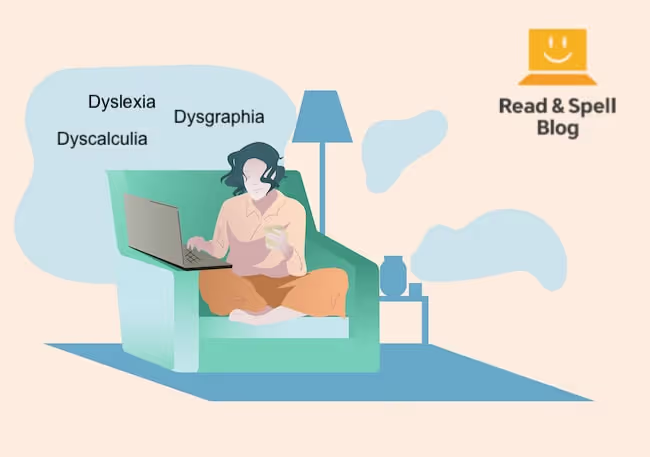
Learning disabilities are neurological differences in the way the human brain processes, stores and communicates information. Some estimates suggest that over 10% of the world’s population is affected by a learning disability such as dyslexia, dysgraphia and/or dyscalculia. These conditions can also co-present with processing disorders, attention difficulties (ADHD) and/or a fine motor skills disorder like dyspraxia. In extreme cases, they can cause individuals to miss out on literacy and math skills development, particularly when schools do not recognize the symptoms early on.
For adults, having an undiagnosed learning disability can affect career choice, limit job advancement and lead to a number of psychological and emotional issues, including depression and feelings of low self-worth. This is particularly true when the person interprets his or her past educational failures as personal faults and experiences feelings of embarrassment and shame because of a perceived intellectual deficiency.
The tragedy is that with the right diagnosis, coping strategies and accommodations can be put in place to help every individual with a learning disability achieve their full potential.
Many adults struggle openly with learning disabilities, informing family, friends and employers, and taking steps to address and manage their condition. Nonetheless, the percentage of undiagnosed and unreported cases is said to be extremely high.
Some estimates suggest that 1 in 6 adults struggles with reading. It’s also estimated that a high percentage of teenagers who leave school early have learning disabilities, and that up to a quarter of all inmates in our prison systems are functionally illiterate because of an undiagnosed learning disability.
To complicate the situation further, social stigmas about learning disabilities and attention difficulties can falsely equate conditions like dyslexia and ADHD with low intelligence. This can make it harder for an adult to accept a diagnosis and seek out treatment.
Disability, difficulty or strength?
In reality, many individuals with learning disabilities have a higher than average IQ, they just process information in a different way. Dyslexics are often said to possess exceptional creative skills and an ability to bring together ideas from different domains. Being an original and out of the box thinker can foster advanced problem solving skills and help adults with learning disabilities do well in entrepreneurial pursuits.
For example, Virgin CEO Richard Branson has dyslexia, as does Tommy Hilfiger. Part of the issue comes down to the terminology we use to discuss them. Learning disabilities is a common phrase in the US, but learning difficulties and learning differences are more frequently used in the UK and Europe.
The difference between them may seem subtle but it centers on the idea that a learning disability impairs an individual in some way. "Disabilities" are lifelong conditions that render a person "less-able." The use of this word disempowers adults, whereas "difficulties" implies a challenge that can be overcome. "Differences" takes it one step further and makes it easier to associate conditions with strengths as well as symptoms.
Learn more about the strengths associated with dyslexia or have a read through a list of famous adults who struggle with learning disabilities in these articles.
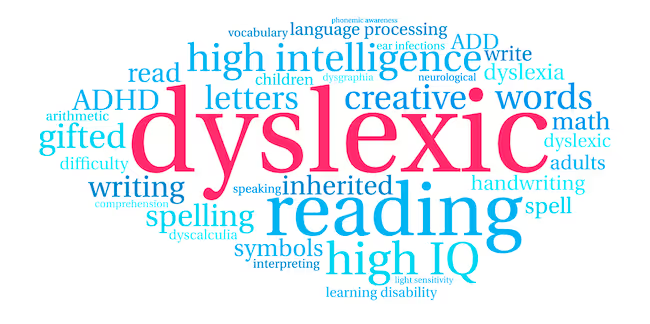
5 Common learning disabilities, attention difficulties and processing disorders
- Dyslexia. Dyslexia affects a person’s ability to break spoken words down into their component sounds. This causes difficulty in sounding out words in reading and developing spelling skills. When children are not able to read and write, it can cause them to quickly fall behind their peers. Over time this may lead to low performance across the curriculum and a negative attitude toward school and learning.
- ADHD. The term ADHD includes attention deficit hyperactivity disorder and inattentive presentations which were formerly known as attention deficit disorder without hyperactivity. ADHD is associated with impulsive behavior, acting out, and difficulty sitting still, all of which can make it harder for a child to concentrate at school. Inattentive presentations may be tricky to spot but individuals will often struggle to follow lessons and complete assignments.
- Dyspraxia. While officially classed as a motor disorder, people with dyspraxia can have trouble doing routine tasks that require fine motor skills, such as zipping up a backpack, combing their hair and even writing with a pen or pencil. They can also struggle with planning skills. Due to its impact on writing and organizational skills, performance at school is sometimes affected.
- Dysgraphia. When writing is problematic, dysgraphia may be to blame. It’s a learning disability that can make it hard to form letters, space them appropriately and even line them up along an x-axis. Ideas may be harder to translate into written language and the content of a person’s writing can be out of order or difficult to follow. In most cases, it will be far below the level one would expect based on an individual's spoken language ability. Learn about handwriting difficulties and strategies for people who struggle with dysgraphia.
- Processing disorders. A processing disorder can affect how our brain deals with information. More time may be needed for an individual to make sense of a stimulus and follow a series of steps or ideas. Visual processing disorders are when the information taken in by the eyes is not understood correctly by the brain, which can make it difficult to read and write.
Recognizing the signs
The first step in helping an adult with a learning disability is to identify the issue that is causing the problem and encourage them to get help and get tested. Here are some of the signs to look out for:
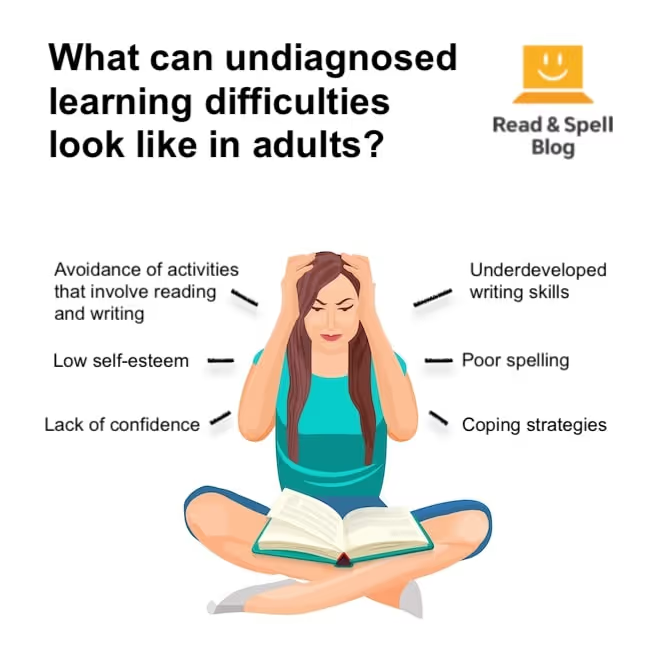
Underdeveloped writing skills
When an adult cannot express themselves in writing the way they do in conversation, there may be a learning disability present. You might observe ungrammatical sentences, simplified vocabulary or an inability to correctly use English capitalization or punctuation rules. Complaining that the muscles in the hand hurt after writing with a pen or pencil can also be a sign of a problem. Do you know someone who writes in all caps? Learn which conditions make capital letters easier to read and write.
Avoidance of activities that involve reading and writing
Some adults avoid reading and writing because they doubt their abilities. This can lead to them taking on jobs that are below their ability level. They may also say no to attending social events or gatherings that might expose any lacking literacy skills.
Poor spelling
In today’s day and age, auto-complete and spell-check are taken for granted and can resolve an abundance of typos. However, if an adult is still inconsistent with their spelling, spelling a word one way on one day and another the next day, there may be a disability to blame. Finding high frequency words difficult to spell or struggling to sound out words may also be a sign of a learning disability. Learn more about spelling abilities in adults.
Coping strategies
It’s often the case that adults with undiagnosed learning disabilities have developed a repertoire of coping strategies to help them deal with their condition. This may be true even if they are not fully aware of what they are doing. Coping strategies can include creating charts or step-by-step lists to help with poor planning skills as a result of dyspraxia. In the case of dyslexia, you may find the person relies heavily on voice-to-text software, voicemails and audio memos instead of emails and handwritten notes. Coping strategies are not necessarily a bad thing, but it’s worth uncovering the underlying cause so the person can get more information and find out which additional accommodations may make things easier for them.
Low self-esteem
Feelings of low self worth and a negative view of one’s self and one’s abilities is a classic sign of an undiagnosed learning disability. These feelings can be deeply rooted and may have begun when the person was a child of 7 or 8 and first experienced challenges keeping up with peers in reading and writing activities at school. When a school fails to notice a disability and teachers blame poor performance on a lack of effort, the resulting emotions may be even more troubling for the individual to deal with. Learn more in this article on self-esteem.
Lack of confidence in certain areas
It is by no means true that adults with undiagnosed learning disabilities lack confidence, it may simply be that they are more confident in some areas than others. If you know an adult who excels at his or her job but refuses to apply for a higher position due to fear of having to complete paperwork or write reports, there may be a learning disability getting in the way.
Next steps
Every individual with a learning disability will experience a unique set and severity of symptoms which can make diagnosing a condition difficult. It’s also possible for people to have more than one learning disability. Nonetheless, if a learning difficulty is suspected, it’s worth getting tested. In certain cases a diagnosis can lead to a greater quality of life for an adult who no longer needs to deal with the private shame or embarrassment of struggling with reading and writing.
In a legal sense, it can also open up access to disability funding, strategy training or accommodation allowances, such as technology that can teach coping strategies and improve performance at work and school. Learn more about the legal implications of a learning disability.
Resources and providing support
When offering support, don’t forget that many adults can interpret efforts to help as patronizing. It’s important to respect the individual’s privacy, even if it is a family member or close friend who you may not expect to be overly sensitive about the issue. Also keep in mind that adults learn in a different way than children and they have a number of other priorities when returning to school, including making a living, raising children and fitting learning into a busy schedule.
For more information, have a look at these articles on helping adults develop literacy skills, volunteering to teach adults to read, going back to school as an adult learner and adult basic skills training.
Touch-typing and literacy
When getting a literacy tutor is not an option, a self-study program that can be followed at home or on a computer at work may be the best option. Touch-type Read and Spell offers a touch-typing course that teaches people how to type by following a multi-sensory program of English phonics.
Discover a typing program for adults with dyslexia
The method takes advantage of muscle memory in the fingers to teach spelling and improves reading ability through visual and audio input paired with kinesthetic learning. It also enhances exposure to high frequency words to improve sight-reading.
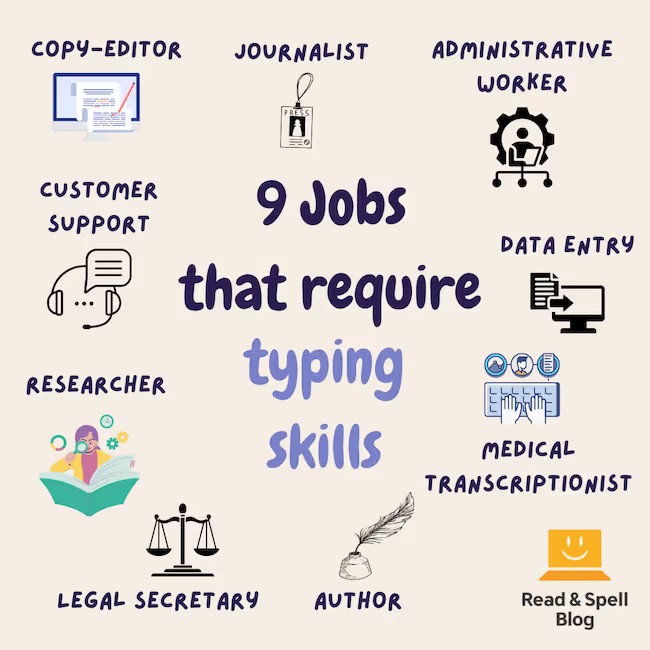
Small modules make it easy for adult learners to build momentum and gain confidence as they work through material at their own pace. In addition to improving reading and spelling skills, users also learn how to touch-type which can go on their resumes and help them write in a more efficient and effective manner when using a keyboard.